
Learning a new language opens doors to travel, career opportunities, cultural connections, and cognitive benefits. In 2026, language learning apps use AI, speech recognition, native speaker videos, and spaced repetition to teach you more effectively than traditional classroom methods. Whether you want conversational Spanish for your next trip, business Japanese for work, or Arabic to connect with family, the right app matches your learning style and goals.
We tested and ranked the 13 best language learning apps for Android and iOS, covering gamified lessons, structured courses, audio-based methods, conversation exchange platforms, reading-based learning, and vocabulary builders. Each review explains the teaching method, available languages, pricing, and which type of learner benefits most. For organizing your study schedule, check out our digital planner apps guide. And if you are a graduate student learning languages for academic research, we have a dedicated guide for you.
Table of Contents
- Duolingo (Rating 4.7)
- Busuu (Rating 4.7)
- Beelinguapp (Rating 4.6)
- Babbel (Rating 4.6)
- LingQ (Rating 4.6)
- Mondly (Rating 4.5)
- Lingvist (Rating 4.5)
- Memrise (Rating 4.4)
- Drops (Rating 4.3)
- Pimsleur (Rating 4.2)
- Tandem (Rating 4.1)
- HelloTalk (Rating 3.4)
- Rosetta Stone (Rating 2.8)
- How to Choose the Right Language App
- Tips for Learning a Language Effectively
- Frequently Asked Questions
1. Duolingo (Rating 4.7)
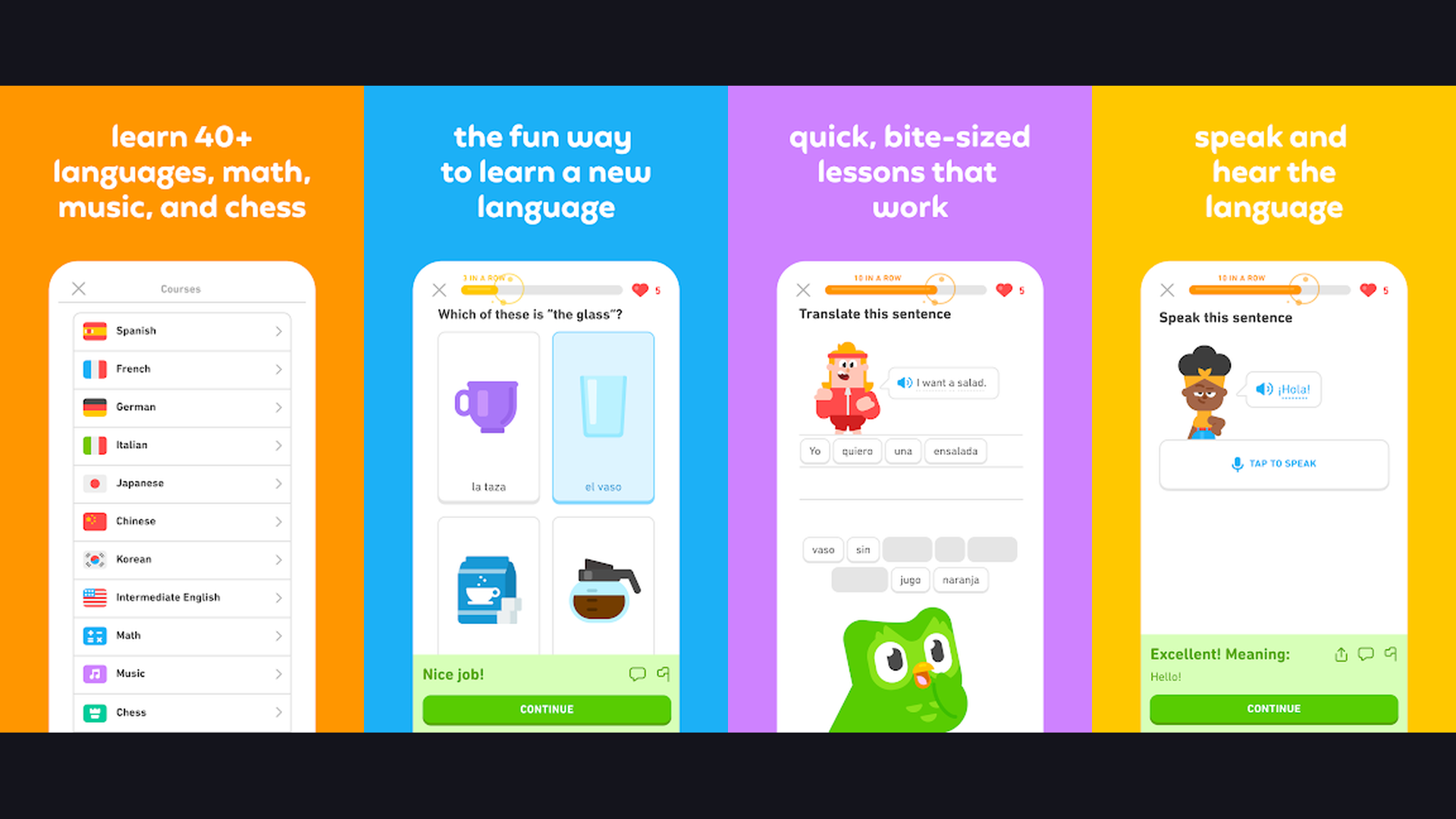
Duolingo is the most popular language learning app in the world, used by over 500 million learners. The gamified approach makes daily practice addictive: earn XP, maintain streaks, compete on leaderboards, and progress through skill trees that cover vocabulary, grammar, reading, writing, listening, and speaking. Duolingo offers over 40 languages including Spanish, French, German, Japanese, Korean, Chinese, Arabic, Hindi, and even endangered languages like Hawaiian and Navajo. Each lesson takes 5-10 minutes with bite-sized exercises that fit into any schedule. Duolingo Max (powered by GPT-4) adds AI-powered features like "Explain My Answer" that gives detailed grammar explanations and "Roleplay" that creates interactive conversation scenarios. The speech recognition engine evaluates your pronunciation in real time. Duolingo Stories provide reading and listening comprehension with engaging narratives. The free tier is substantial and covers all core lessons; Super Duolingo ($6.99/month) removes ads and adds unlimited hearts. For beginners building daily language habits, Duolingo is the most engaging starting point.


2. Busuu (Rating 4.7)
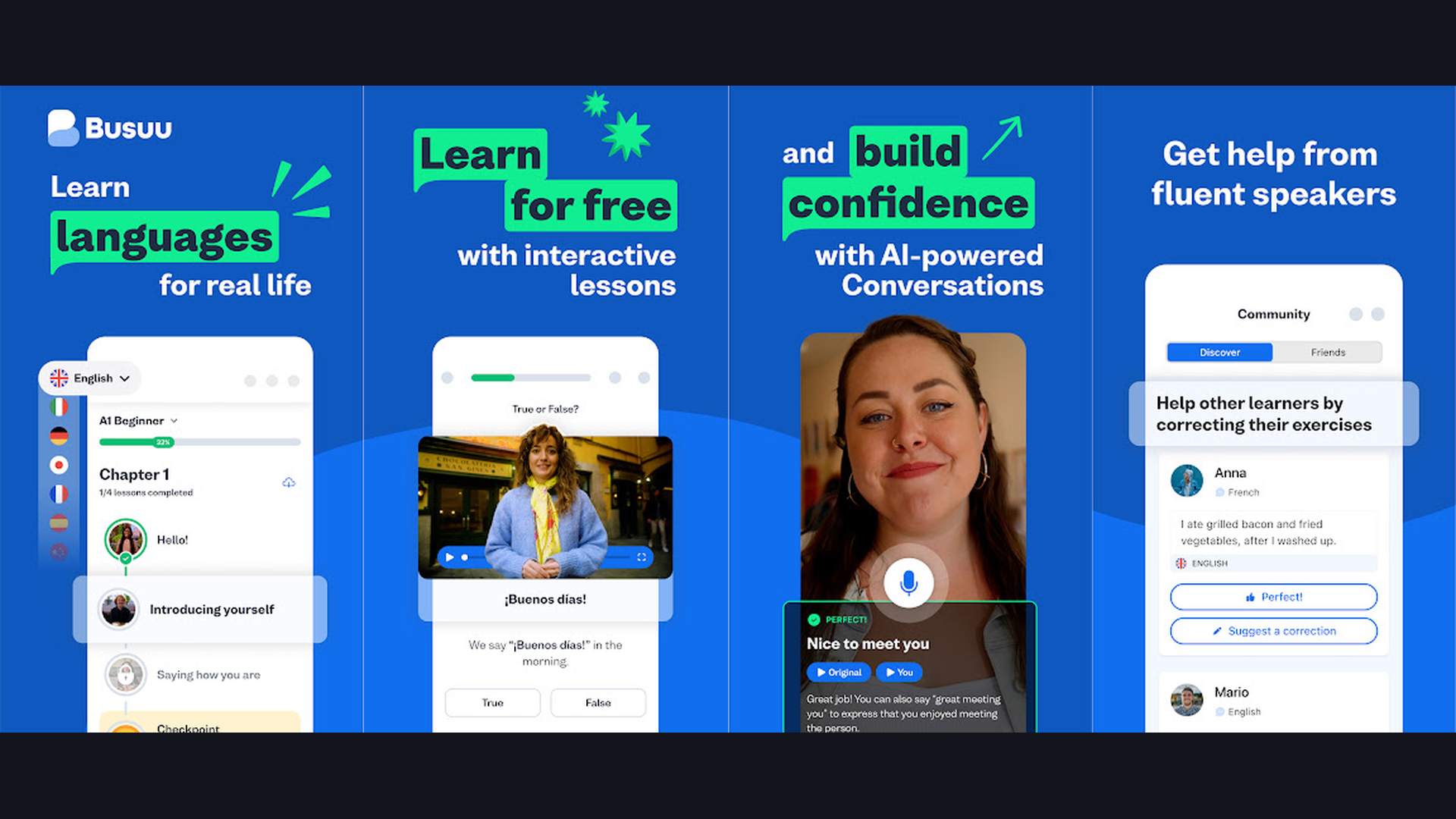
Busuu is a structured language learning platform with CEFR-aligned courses and native speaker feedback. Courses follow the Common European Framework of Reference (A1-B2), giving you a clear progression path from beginner to upper-intermediate. What makes Busuu unique is the community correction feature: submit writing exercises and receive corrections from native speakers of your target language. In exchange, you correct exercises from people learning your native language. Busuu offers 14 languages including Spanish, French, German, Italian, Japanese, Chinese, Arabic, and Turkish. Lessons cover grammar, vocabulary, conversation, and pronunciation with clear explanations and practical dialogues. The Study Plan feature creates a personalized schedule based on your goals and available time. Busuu integrates with McGraw-Hill Education for official certification. AI-powered grammar reviews adapt to your weak areas. The free tier includes core lessons; Premium ($6.99/month) unlocks grammar reviews, offline mode, native speaker feedback, and certificates. For learners who want structured academic progression with human feedback, Busuu is excellent.
3. Beelinguapp (Rating 4.6)
Beelinguapp is a unique bilingual reading app that teaches languages through parallel text stories. The app displays text in your target language alongside your native language, letting you read stories, news articles, fairy tales, and science texts with instant reference. Tap any word for pronunciation and translation. The audio narration by native speakers plays alongside the text, improving both reading and listening comprehension simultaneously. Beelinguapp supports 14 languages including Spanish, French, German, Portuguese, Chinese, Japanese, Korean, and Arabic. The learning method is natural and immersive, similar to how children acquire language through stories. The "karaoke-style" text highlighting follows along with the audio, helping you connect written and spoken words. This approach is particularly effective for intermediate learners who want to build reading fluency and expand vocabulary through context. Beelinguapp is free with limited content; Premium ($6.99/month) unlocks all stories and features. For learners who enjoy reading and want a relaxing, story-based approach to language learning, Beelinguapp is a refreshing change from flashcard-heavy apps.
4. Babbel (Rating 4.6)
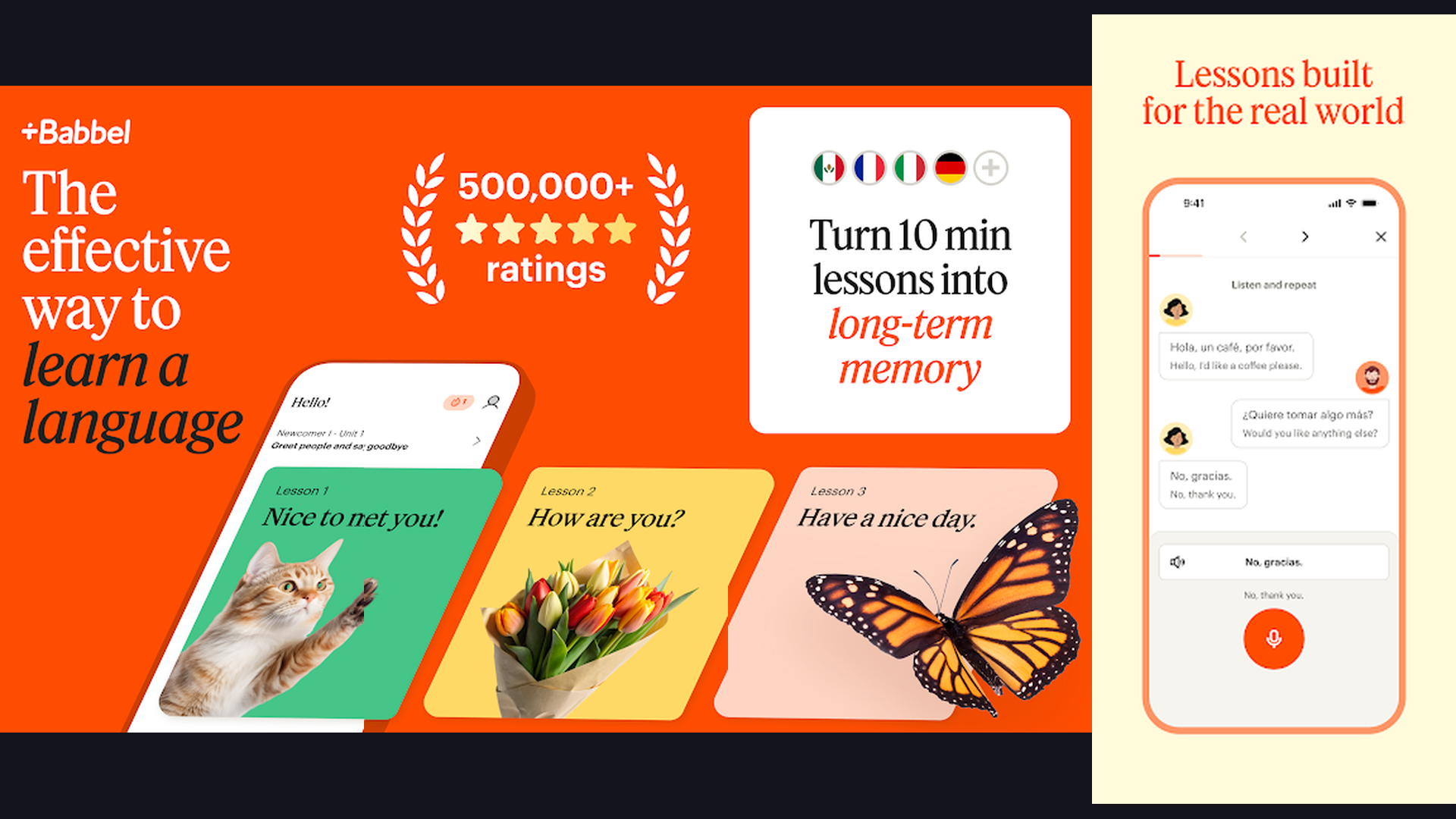
Babbel is a linguist-designed language learning app focused on practical conversation skills. While Duolingo gamifies learning, Babbel takes a more structured, classroom-style approach with courses created by over 150 language experts. Each 10-15 minute lesson teaches vocabulary and grammar through real-life dialogues and scenarios like ordering food, asking for directions, making small talk, and business conversations. Babbel speech recognition technology evaluates your pronunciation and provides instant feedback. The review system uses spaced repetition to reinforce vocabulary at optimal intervals. Babbel offers 14 languages including Spanish, French, German, Italian, Portuguese, Russian, and Indonesian. Babbel Live adds live online classes with certified teachers for interactive conversation practice. The app integrates with podcasts and games for supplementary learning. Babbel does not offer a free tier; subscriptions start at $6.95/month (annual plan). For adult learners who want to learn practical conversation skills with structured grammar explanations rather than gamified exercises, Babbel is the most efficient choice.
5. LingQ (Rating 4.6)
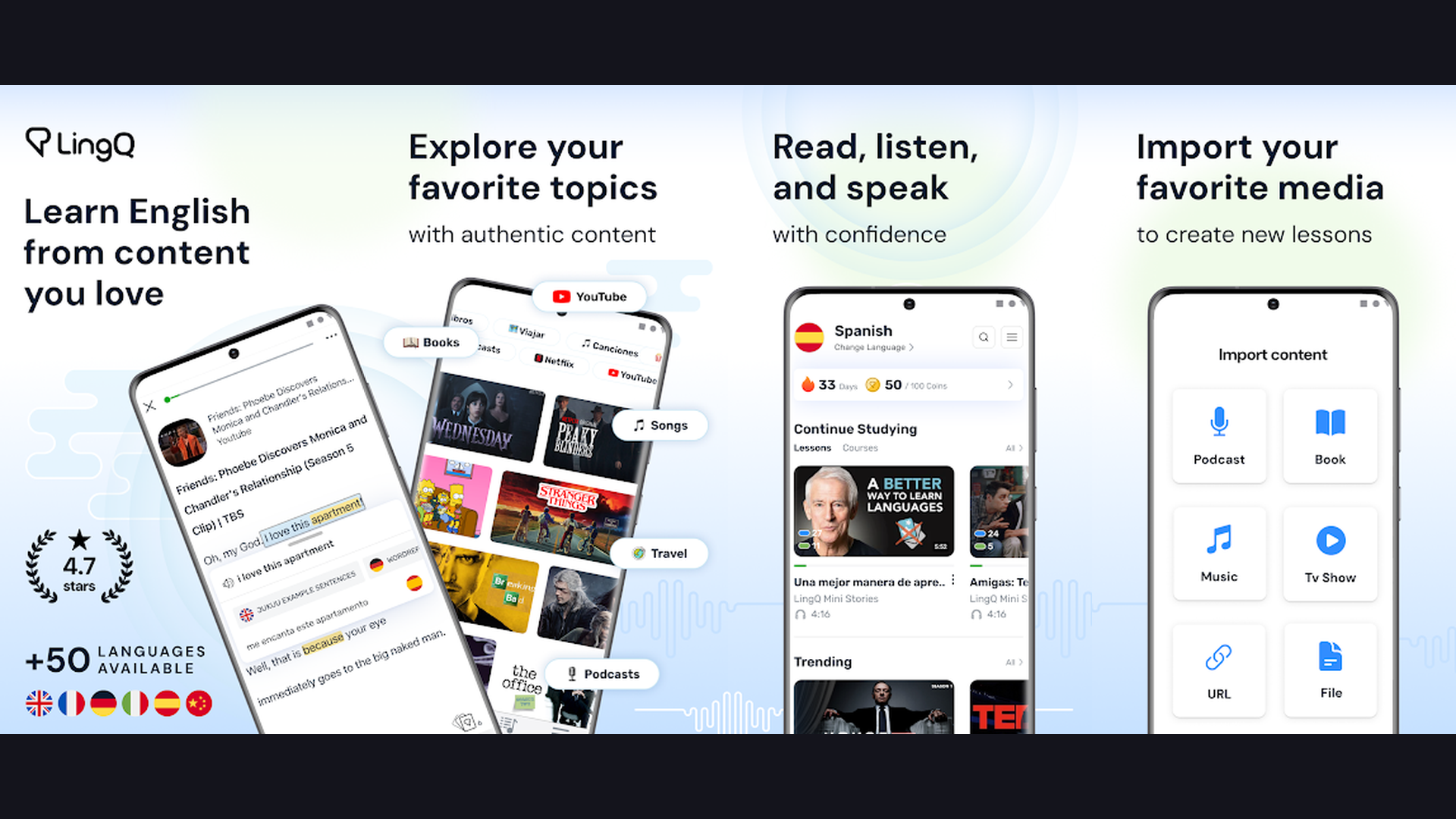
LingQ is a content-based language learning platform built around reading and listening to real-world material. Created by polyglot Steve Kaufmann, LingQ takes a fundamentally different approach: instead of structured lessons, you learn through authentic content like articles, podcasts, books, and interviews in your target language. The reader highlights unknown words (called LingQs), which you save and review through spaced repetition. As you encounter saved words in new contexts, your understanding deepens naturally. LingQ supports over 40 languages and provides a massive library of content organized by difficulty level. You can import any web content, YouTube subtitles, or ebooks into LingQ for study. The word tracking system shows your progress with statistics on known words, LingQed words, and reading volume. For intermediate and advanced learners who have outgrown beginner apps, LingQ provides the path to fluency through massive input. The free tier is limited; Premium ($12.99/month) unlocks full features. For serious language learners who want to build real comprehension through authentic content, LingQ is transformative.
6. Mondly (Rating 4.5)
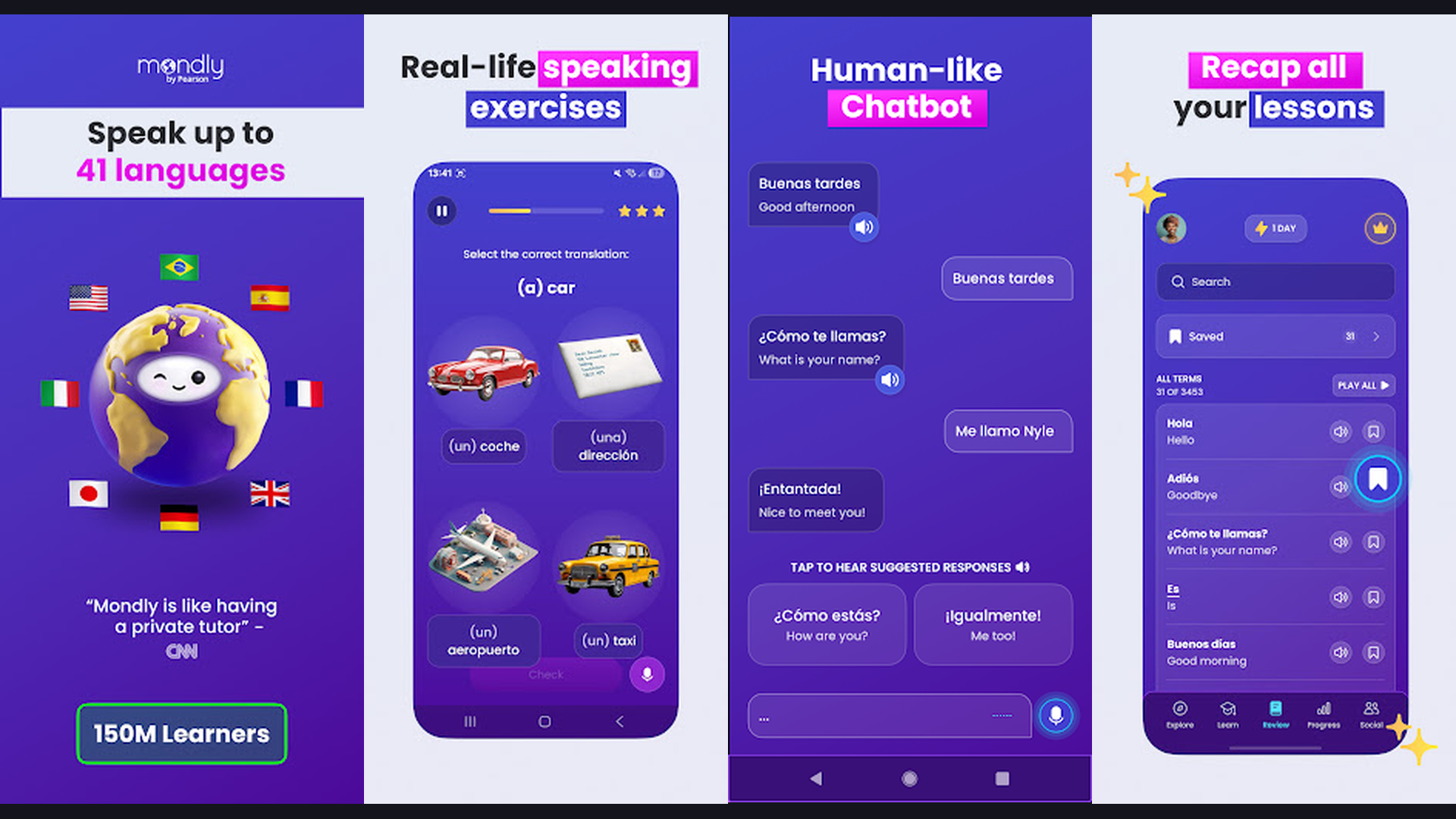
Mondly is a conversational language app with AR and VR features for immersive practice. The app teaches 41 languages through short daily lessons built around practical conversations. The chatbot feature simulates real conversations with AI, providing a safe space to practice speaking without the pressure of talking to a real person. Mondly AR uses augmented reality to place a virtual teacher in your room who introduces vocabulary with visual objects in 3D space. The Mondly VR experience (for compatible headsets) creates immersive scenarios like ordering at a restaurant or checking into a hotel in your target language. Lessons focus on topics including travel, business, family, and everyday situations. The speech recognition evaluates pronunciation accuracy. Weekly quizzes and monthly challenges keep motivation high. The free version includes one daily lesson; Mondly Premium ($9.99/month or a popular lifetime deal) unlocks all lessons and languages. For tech-savvy learners who want innovative AR/VR language practice, Mondly offers a unique experience no other app matches.
7. Lingvist (Rating 4.5)
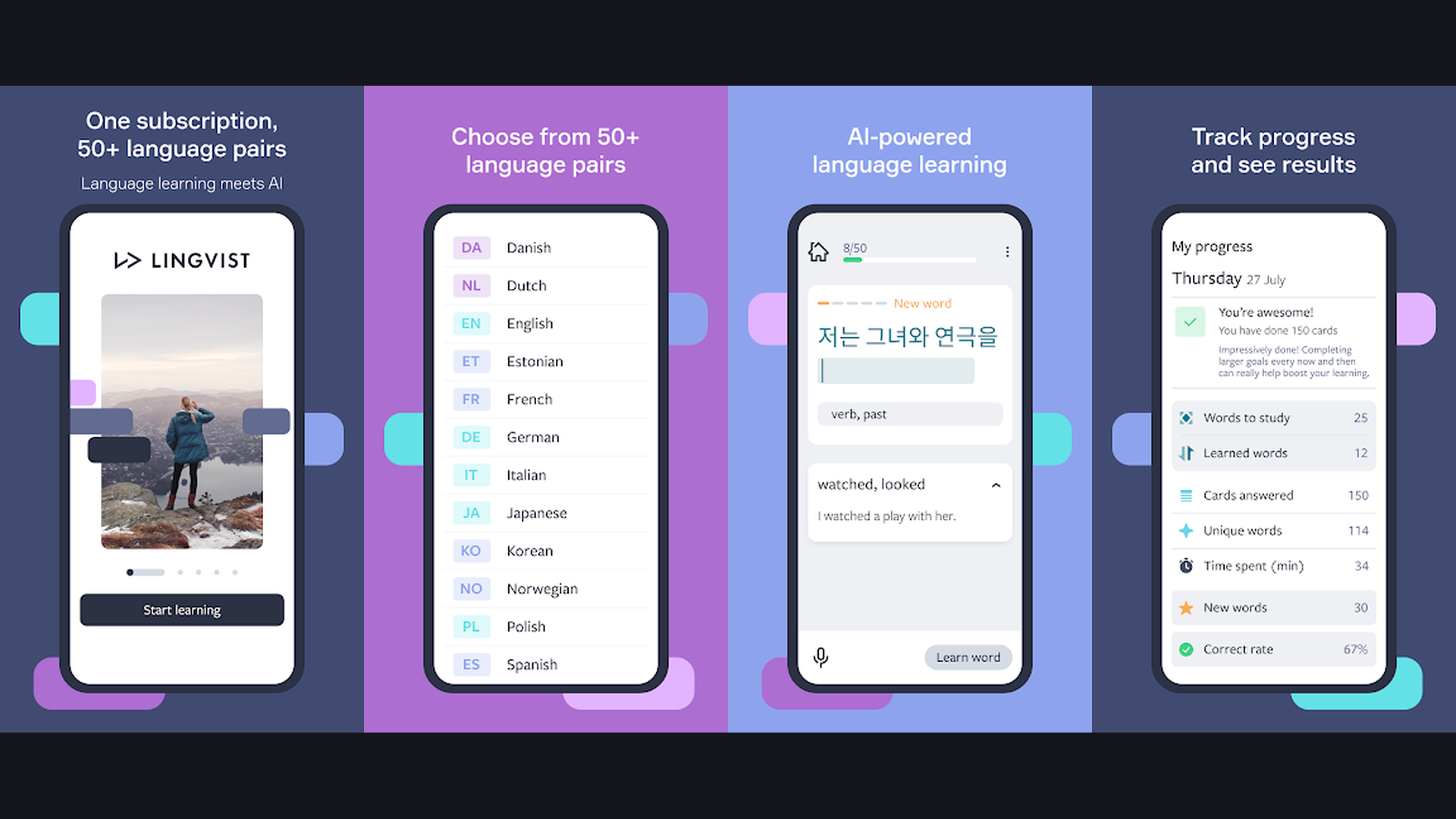
Lingvist is a data-driven vocabulary learning app that uses AI to optimize your study pace. The app analyzes your learning patterns and continuously adjusts difficulty and review intervals to maximize retention with minimum time investment. Lingvist claims to teach vocabulary 10 times faster than traditional methods by focusing on the most frequently used words in context. Each card presents a sentence with a missing word that you fill in, teaching vocabulary through contextual comprehension rather than isolated translation. The app tracks your learning speed, accuracy, and vocabulary size with detailed statistics. Lingvist offers themed courses for specific scenarios like business English, travel French, or medical Spanish. The speech recognition feature helps with pronunciation. Lingvist currently supports French, Spanish, German, Russian, and Portuguese from English. The free tier includes 3,000 words; Unlimited ($9.99/month) removes word limits and adds all courses. For learners who want the fastest vocabulary expansion with scientific efficiency, Lingvist is remarkably effective.
8. Memrise (Rating 4.4)
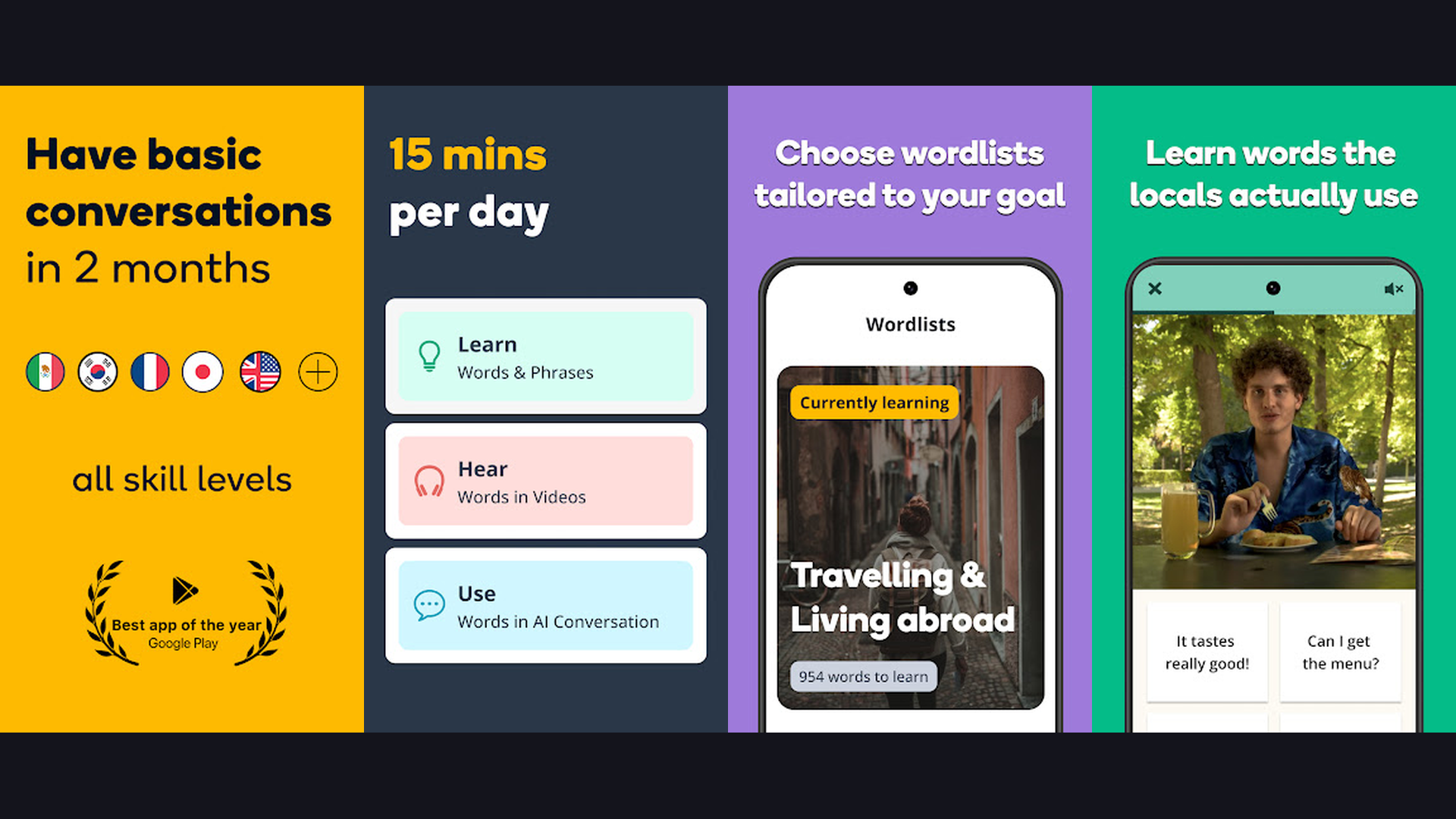
Memrise is a video-based language app that teaches real-world phrases using clips of native speakers. While most apps use text-to-speech or studio recordings, Memrise features thousands of short video clips showing real people using phrases in everyday contexts. This approach trains your ear to understand different accents, speeds, and speaking styles. The spaced repetition system ensures vocabulary is reviewed at optimal intervals for long-term retention. Memrise offers 23 languages including popular choices and less commonly taught languages like Mongolian, Yoruba, and Slovenian. The "Learn with Locals" mode presents video-based listening challenges. Memrise AI provides personalized conversation practice with an AI chatbot that adapts to your level. The community-created courses allow user-generated content for niche vocabulary and topics. The free tier includes core lessons; Pro ($8.49/month) adds AI conversation, difficult word review, and offline access. For learners who want to understand real native speech patterns rather than textbook pronunciation, Memrise offers the most authentic listening experience.
9. Drops (Rating 4.3)
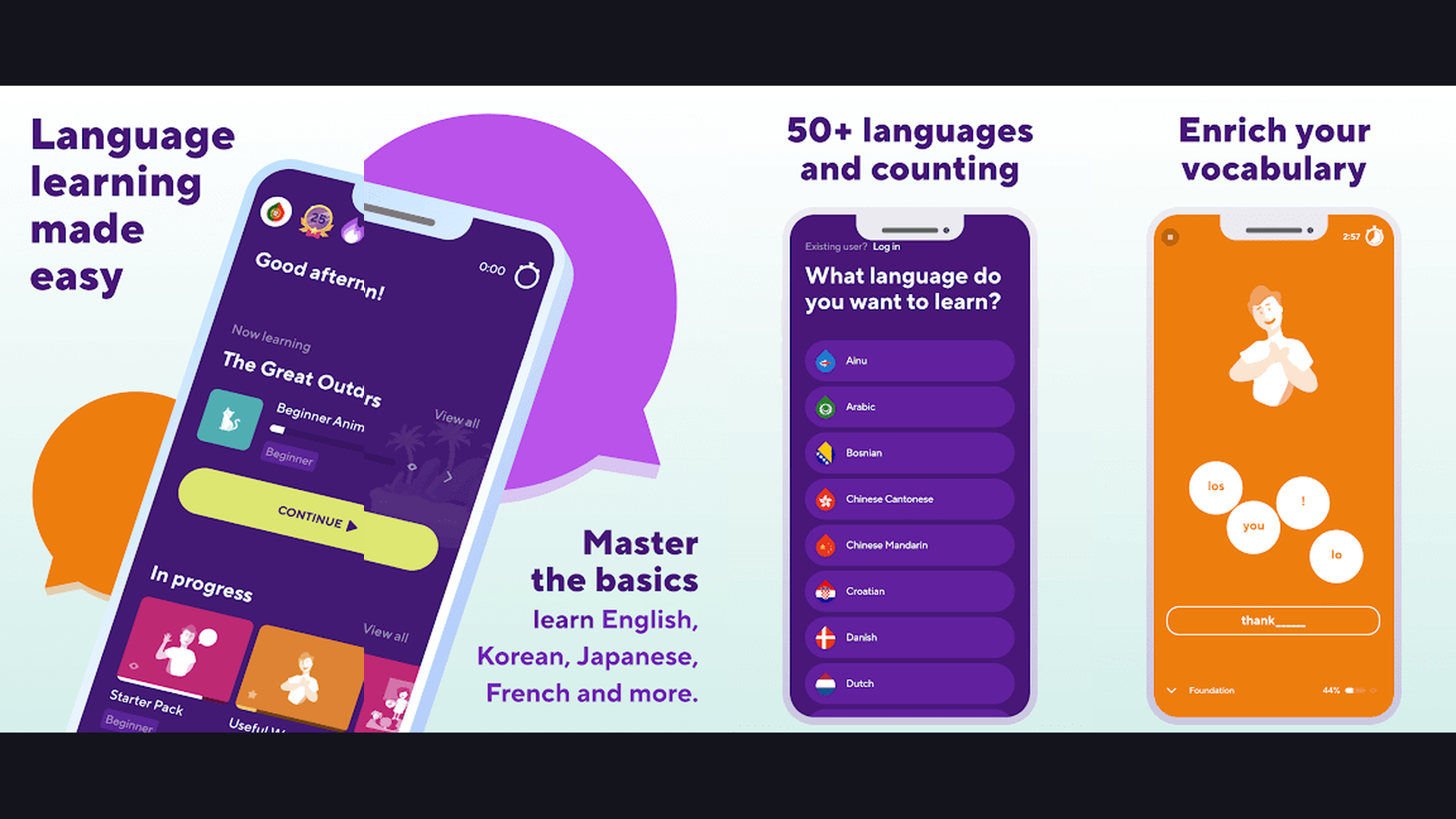
Drops is a beautifully designed vocabulary app that limits sessions to 5 minutes for maximum consistency. The core philosophy is that short, daily practice is more effective than long, irregular sessions. Drops teaches vocabulary through swipe-based visual games, matching words to illustrated icons rather than translations. This visual association method helps you think in your target language rather than constantly translating. Drops supports 50+ languages, one of the largest selections of any app, including rare options like Maori, Ainu, and Samoan. Each language includes topic-based vocabulary covering travel, food, business, nature, and culture. The script learning feature teaches writing systems like Japanese Hiragana/Katakana, Korean Hangul, and Arabic script through tracing exercises. Drops limits free sessions to 5 minutes per day (a deliberate design choice); Premium ($8.49/month) removes the time limit and adds review features. For visual learners who want to build vocabulary in short, consistent daily sessions with beautiful design, Drops is the most aesthetically pleasing learning tool available.
10. Pimsleur (Rating 4.2)
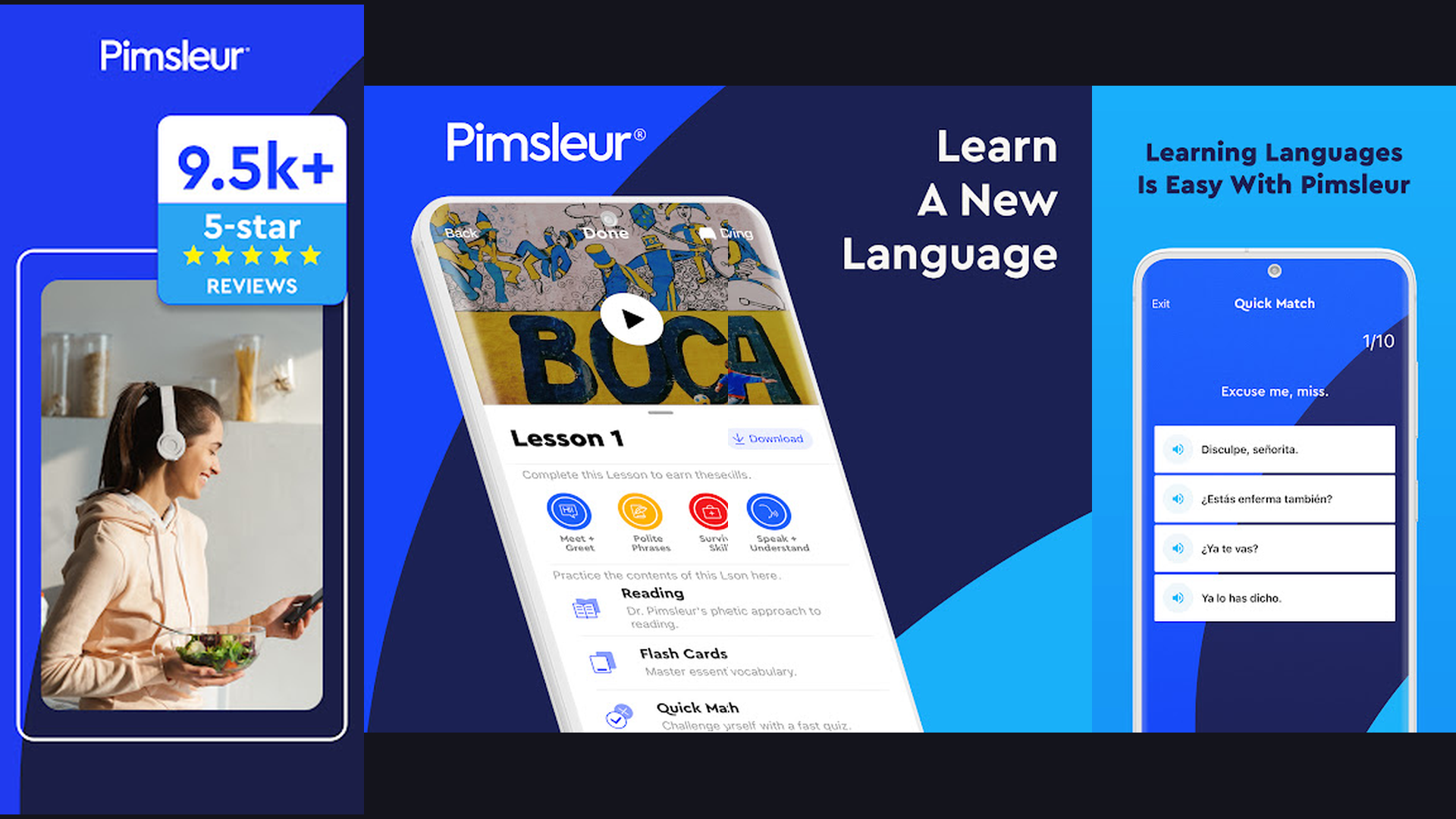
Pimsleur is the best audio-based language learning method for developing speaking and listening skills. Based on Dr. Paul Pimsleur research into memory and language acquisition, the method uses 30-minute audio lessons that teach through call-and-response practice. You listen to native speakers, repeat phrases, answer questions, and gradually build conversational ability through graduated interval recall. Pimsleur is exceptionally effective for commuters, runners, and anyone who wants to learn while multitasking. The method focuses on core vocabulary and natural speech patterns, prioritizing speaking confidence over comprehensive grammar knowledge. Pimsleur offers 51 languages with 30-150 lessons per language. The app adds reading lessons, flashcards, and voice recognition to complement the audio core. Pimsleur costs $14.95/month for one language or $20.95 for all languages. While expensive, the method is trusted by government agencies, military, and diplomats for rapid spoken language acquisition. For auditory learners who want to develop spoken fluency while driving or exercising, Pimsleur is the gold standard.
11. Tandem (Rating 4.1)
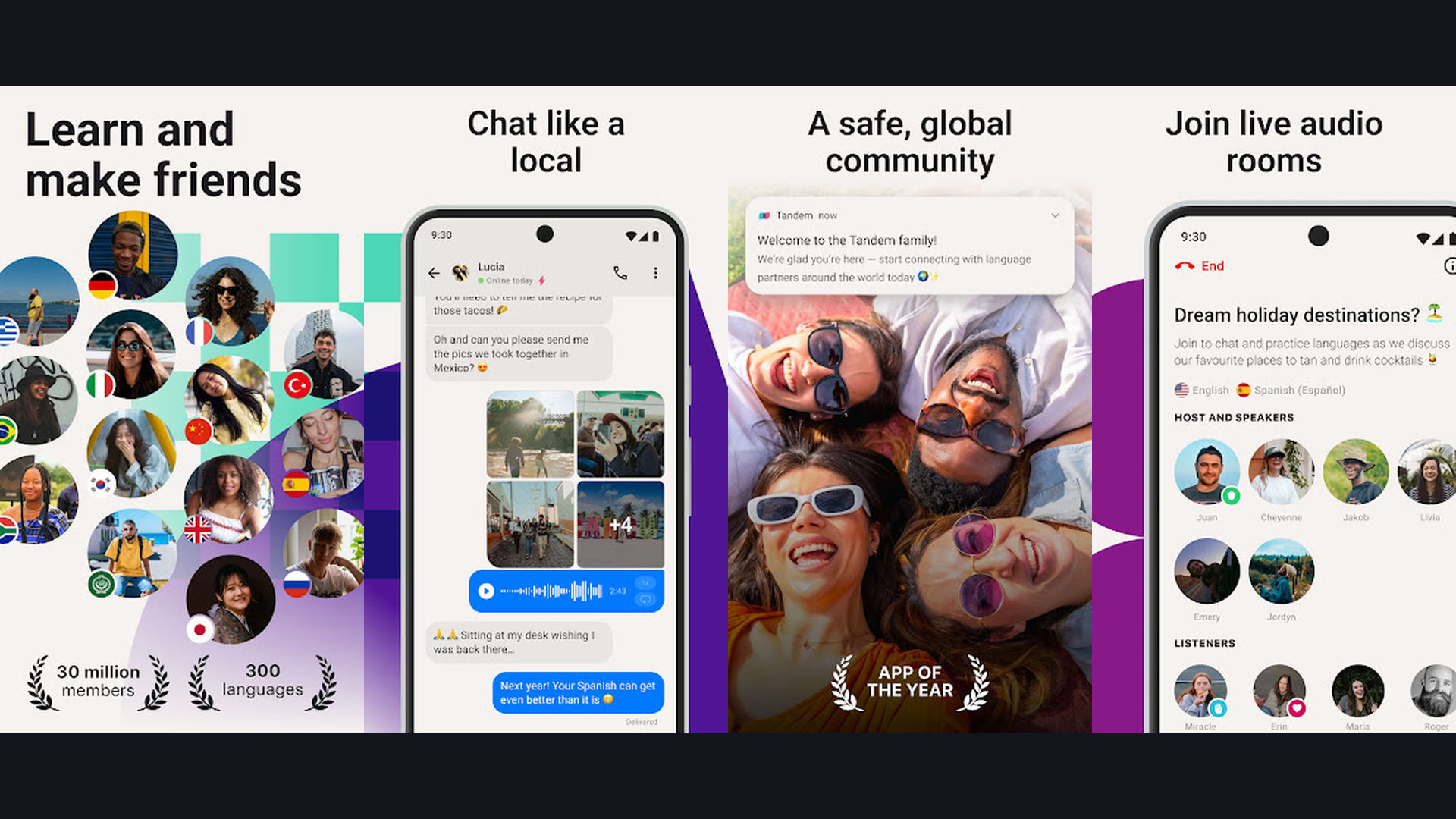
Tandem is a language exchange app that connects you with native speakers worldwide for real conversation practice. Create a profile listing the languages you speak and want to learn, and Tandem matches you with native speakers of your target language who want to learn your language. Practice through text messages, voice calls, or video calls. The built-in translation and correction tools make it easy to help each other. The community moderation ensures a safe, learning-focused environment. Tandem supports over 300 languages and dialects, making it the most linguistically diverse language platform. The tutoring feature connects you with professional language tutors for paid lessons. Topic suggestions help when conversation stalls. Tandem is ideal for intermediate learners who have basic vocabulary and grammar from apps like Duolingo or Babbel and now need real conversation practice to build fluency. The core features are free; Tandem Pro ($6.99/month) adds unlimited translations, location-based matching, and read receipts. For anyone who wants real conversations with native speakers from their phone, Tandem is the most accessible language exchange platform.
12. HelloTalk (Rating 3.4)
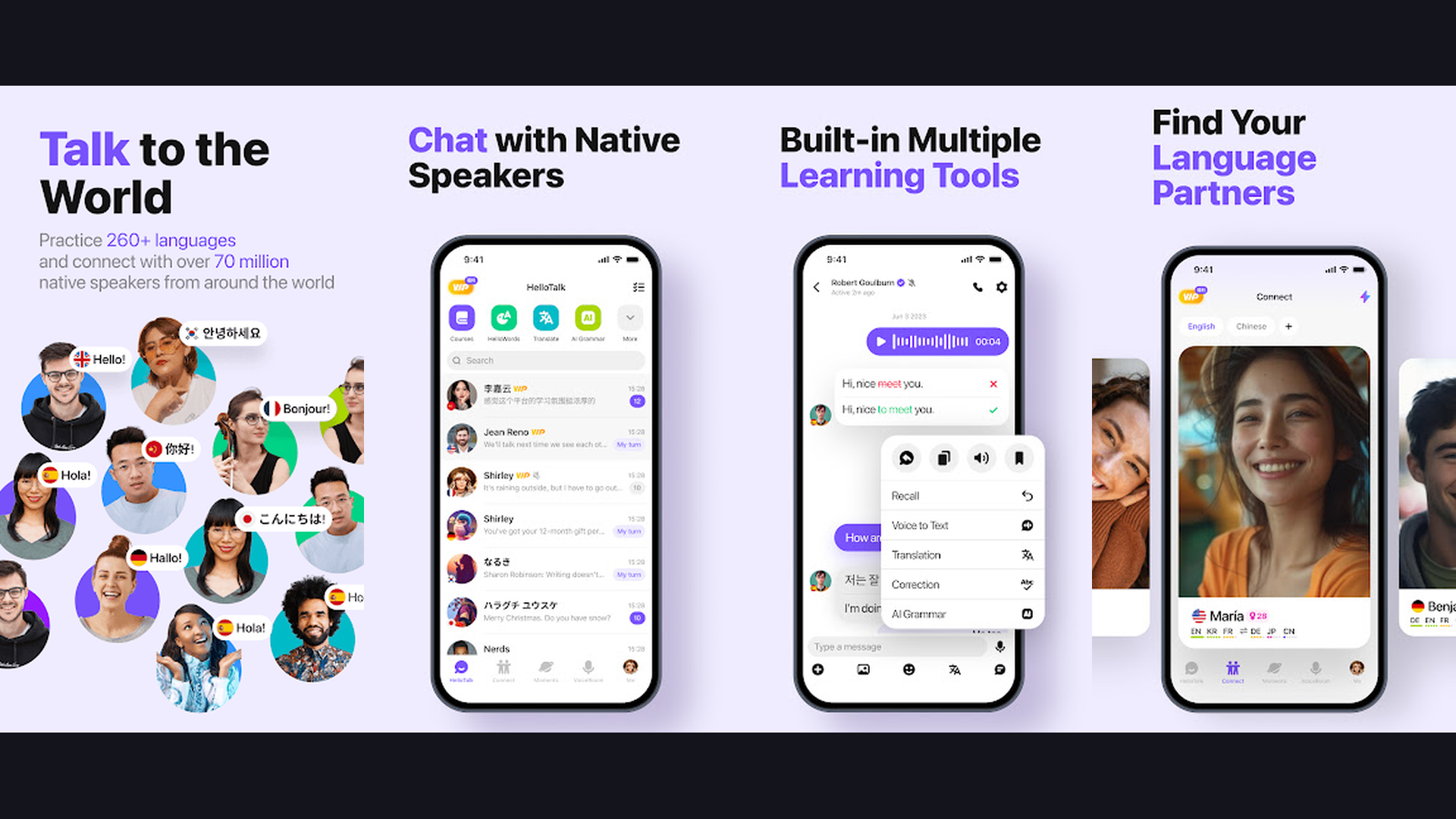
HelloTalk is a social language exchange app with built-in learning tools for every conversation. Similar to Tandem, HelloTalk connects you with native speakers, but adds integrated learning features directly into the chat interface. The translation, transliteration, grammar correction, and text-to-speech tools are embedded in every conversation, so you never need to switch apps. Moments (similar to social media stories) let you post text or audio in your target language and receive corrections from native speakers scrolling their feed. HelloTalk supports 150+ languages and has over 40 million users worldwide. The Live Voice Rooms feature creates group conversations organized by language and topic where you can join and practice speaking with multiple native speakers simultaneously. AI grammar aids analyze your messages and suggest corrections in real time. HelloTalk VIP ($6.99/month) unlocks unlimited translations, advanced search filters, and exclusive learning content. For learners who want a social media-style language exchange experience with embedded learning tools, HelloTalk provides the most feature-rich conversation practice environment.
13. Rosetta Stone (Rating 2.8)
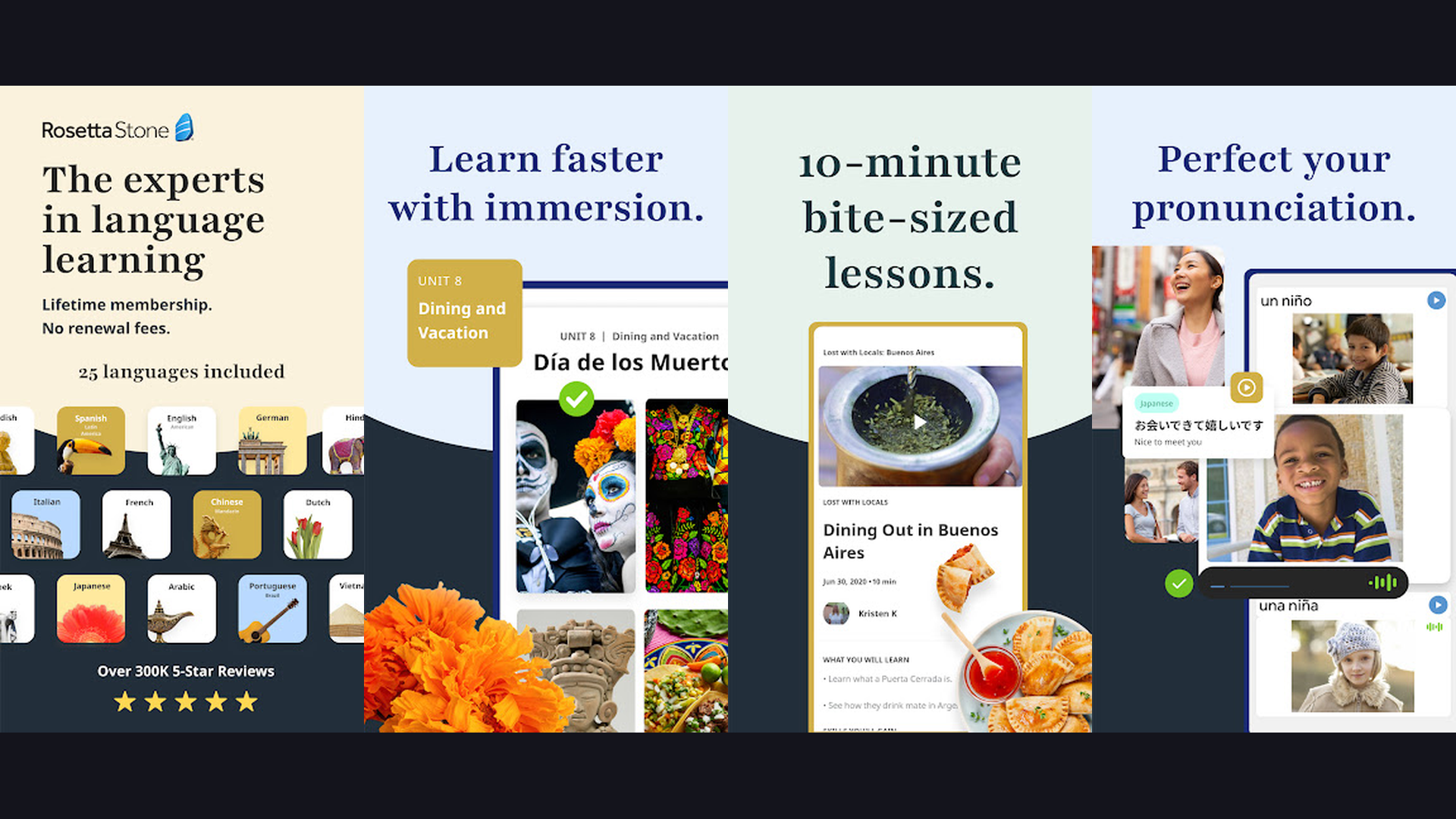
Rosetta Stone is the pioneer of immersive language learning that teaches through visual association without translation. The methodology avoids your native language entirely, instead using images, audio, and context to build understanding intuitively, similar to how children learn their first language. This "Dynamic Immersion" method is effective for developing an intuitive feel for the language rather than a translation-dependent habit. Rosetta Stone offers 25 languages with comprehensive courses from beginner to advanced. The TruAccent speech recognition engine provides precise pronunciation feedback by comparing your speech to native speaker patterns. Live tutoring sessions with native speakers are available for conversation practice. Phrasebook provides essential travel phrases with audio playback. Rosetta Stone audio companion lessons work offline for learning during commutes. The subscription ($11.99/month or a popular lifetime purchase at $179) provides access to all languages. While the Play Store rating reflects mixed recent reviews, the method remains well-established and effective for committed learners who prefer immersive, visual learning without grammar drills or flashcards.
How to Choose the Right Language App
By Learning Style
- Visual learners: Drops (illustrated vocabulary cards), Rosetta Stone (image-based immersion), or Duolingo (gamified visual exercises)
- Auditory learners: Pimsleur (audio-only lessons perfect for commutes), Memrise (native speaker video clips), or Beelinguapp (audio stories with text)
- Social learners: Tandem or HelloTalk (real conversations with native speakers), Busuu (community corrections)
- Reading-focused learners: LingQ (real-world articles and books), Beelinguapp (parallel text stories)
- Structure-focused learners: Babbel (grammar explanations and structured courses), Busuu (CEFR-aligned progression)
By Level
- Complete beginners: Start with Duolingo or Babbel for building foundations. Both offer structured beginner courses with clear progression.
- Intermediate learners: Graduate to LingQ for real-world content, Tandem/HelloTalk for conversation practice, or Memrise for expanding listening comprehension with native speakers.
- Advanced learners: Use LingQ for extensive reading, Tandem/HelloTalk for daily conversation, and Lingvist for filling vocabulary gaps. At this stage, consuming native content matters more than structured lessons.
Best Free Options
If budget is a concern, Duolingo offers the most comprehensive free experience with all core lessons available. HelloTalk and Tandem provide free conversation exchange with native speakers. Drops offers 5 free minutes daily. The best strategy is to combine a free structured app (Duolingo) with a free conversation app (Tandem) for a well-rounded learning approach that costs nothing.
Tips for Learning a Language Effectively
- Study Every Day, Even For 5 Minutes - Consistency beats intensity. A 10-minute daily Duolingo session builds more lasting habits than an hour-long weekly study session. Use reminder apps to set daily study alerts. Drops limits sessions to 5 minutes specifically because short daily practice is proven to be more effective than long irregular sessions.
- Combine Multiple Apps - No single app teaches all skills equally. Use a structured app (Duolingo or Babbel) for grammar and vocabulary foundations, add a listening app (Memrise or Pimsleur) for comprehension, and include a conversation app (Tandem or HelloTalk) for speaking practice. This multi-app approach develops all four skills: reading, writing, listening, and speaking.
- Start Speaking Early - Many learners spend months studying before attempting conversation. This is a mistake. Start speaking from week one, even with simple phrases. Use Tandem or HelloTalk to find patient language partners. Making mistakes and receiving corrections is the fastest path to conversational ability.
- Use Spaced Repetition - Apps like Memrise, Lingvist, and Anki (see our grad student apps guide) use spaced repetition algorithms that review words at scientifically optimal intervals. This technique dramatically improves long-term vocabulary retention compared to cramming.
- Immerse Yourself - Change your phone language to your target language. Watch movies and TV shows with subtitles in your target language (use our subtitle apps guide). Listen to podcasts and music. Follow social media accounts in your target language. Surround yourself with the language outside of study sessions.
- Set Specific Goals - "Learn Spanish" is too vague. Set measurable goals like "Complete Duolingo Unit 3 by Friday" or "Have a 10-minute Tandem conversation this week." Use planner apps to track your language goals alongside other commitments. Specific, time-bound goals keep you accountable and motivated.
- Focus on the Most Useful Words First - The most frequent 1,000 words in any language cover approximately 85% of everyday conversation. Apps like Lingvist and Drops prioritize high-frequency vocabulary. Do not waste time memorizing obscure words early on. Master the essentials first, then expand.
- Accept Imperfection - Perfectionism kills language progress. Native speakers appreciate effort and will understand you even with grammar mistakes. The goal is communication, not perfection. Speak with mistakes, get corrected, and improve gradually. Every polyglot was once a struggling beginner.
Frequently Asked Questions
What is the best free language learning app?
Duolingo offers the most comprehensive free language learning experience, with all core lessons available in over 40 languages without paying. For free conversation practice with native speakers, Tandem and HelloTalk are excellent. Combining Duolingo (for structure) with Tandem (for speaking) creates a powerful free learning stack that covers vocabulary, grammar, listening, and conversation.
Can you really become fluent with just an app?
Apps alone will bring you to a strong intermediate level but rarely produce full fluency. Apps excel at vocabulary, grammar, listening comprehension, and pronunciation fundamentals. For true fluency, you need real conversation practice (Tandem, HelloTalk), extensive reading and listening (LingQ), and ideally some immersion or interaction with native speakers. Think of apps as your foundation and conversation practice as the path to fluency.
Duolingo vs Babbel: which is better?
Duolingo is better for beginners who need gamification and motivation to build daily habits. It is free and covers 40+ languages. Babbel is better for serious learners who want structured grammar explanations, practical conversation focus, and a classroom-style approach. Babbel lessons are designed by linguists and feel more like a textbook than a game. If you want fun daily practice, choose Duolingo. If you want efficient, structured learning for travel or work, choose Babbel.
What is the best app for learning Asian languages?
For Japanese, Duolingo covers basics well; LingQ is excellent for intermediate reading practice. For Chinese (Mandarin), Busuu and Mondly offer well-structured courses. For Korean, Drops teaches Hangul script effectively through tracing exercises. For all Asian languages, Memrise native speaker videos are invaluable for understanding tonal pronunciation and natural speech patterns that text-based apps cannot fully convey.
How long does it take to learn a language with an app?
With 15-30 minutes of daily app practice combined with conversation practice, expect 3-6 months to reach basic conversational ability and 12-18 months for strong intermediate competency. This varies by language difficulty (Spanish is easier for English speakers than Mandarin or Arabic), prior language learning experience, and how much time you spend outside the app consuming native content. Consistency matters more than daily study time.
Should I use multiple language learning apps at once?
Yes, but strategically. Use one structured app (Duolingo or Babbel) as your daily foundation. Add one supplementary app that addresses a different skill: Memrise for listening, LingQ for reading, Pimsleur for speaking, or Drops for vocabulary. Add a conversation app (Tandem or HelloTalk) once you have basic phrases. Do not use more than 2-3 apps simultaneously, as spreading too thin reduces consistency on any single platform.
Final Thoughts
The best language learning app is the one you will actually use every day. For gamified daily practice, Duolingo makes learning addictive and fun. For structured courses, Babbel and Busuu teach practical grammar and conversation. For real conversation practice, Tandem and HelloTalk connect you with native speakers worldwide. For audio-based learning, Pimsleur lets you study while commuting or exercising. For vocabulary building, Drops and Lingvist use science-backed methods. And for content-based immersion, LingQ and Beelinguapp teach through authentic reading material. Start with one app that matches your style, build a daily habit, and add conversation practice once you have the basics. For more productivity and learning tools, check our guides on student learning apps, subtitle apps, and reminder apps to stay consistent.