
Have you ever noticed how exhausting traditional web searching has become? You type a query, scroll past sponsored links, click an SEO-stuffed article, and dig through pop-ups just to find a single answer. Recently, I decided I had enough. I completely ditched Google Search for a full week, relying exclusively on the best AI search apps for Android and iOS. The experience was nothing short of transformative.
AI search engines don't just give you a list of links; they read the links, synthesize the information, and provide direct, conversational answers. Whether you need to summarize a 50-page PDF, find real-time flight information, or just win a quick debate with a friend, these apps are changing the way we interact with the internet. In this guide, I will walk you through the top 10 AI search tools that have redefined mobile web browsing.
📋 Table of Contents
1. ChatGPT (★ 4.8)
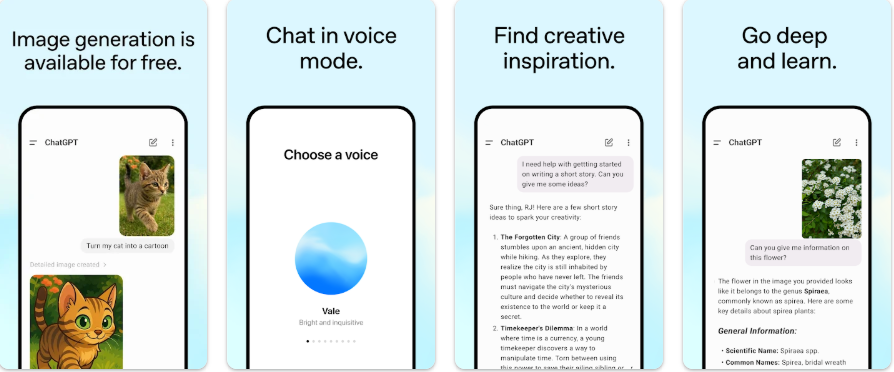
ChatGPT is undeniably the giant in the room when it comes to conversational AI. Over the last week, I've relied heavily on its web browsing feature, which essentially turns it into a search engine capable of synthesizing real-time data into digestible answers. Whether you're comparing products or looking up complex coding syntax, the app's clean UI, smooth voice mode, and quick responsiveness make it an indispensable tool. If you have explored best ChatGPT apps for iPhone, you'll know that the official client remains superior.
- Pros: Unmatched conversational context, Advanced voice mode is highly natural, Real-time web browsing.
- Cons: Heavy reliance on paid Plus subscription for newest models, Sometimes hallucinates facts if not cross-checked.


2. Perplexity AI (★ 4.8)
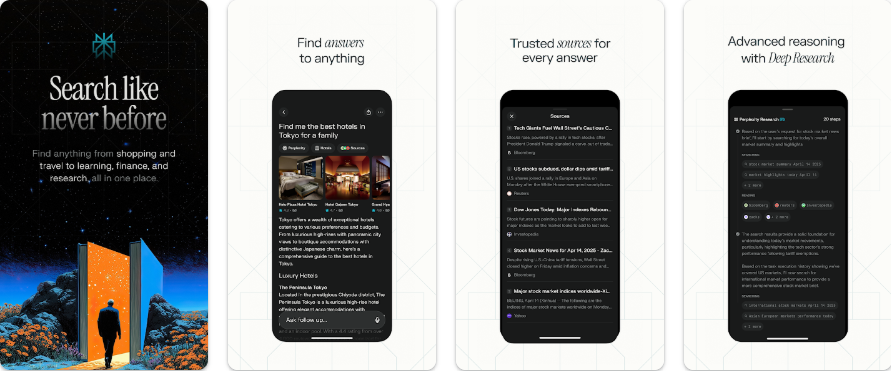
Perplexity AI is a revelation. Built specifically as an answer engine rather than just a chatbot, it provides cited, footnoted answers that drastically reduce the chances of AI hallucination. This was my absolute favorite tool during the week I ditched traditional Google searches. It's incredibly fast, offers direct follow-up prompts, and allows you to switch between different AI models like Claude and GPT-4o if you subscribe to Pro. The user interface on both iOS and Android is remarkably fluid.
- Pros: Excellent source citation, Clean, intuitive UI, Copilot feature refines your search intent.
- Cons: Free tier has limits on Copilot searches, Can be overly verbose for simple queries.
3. Google Gemini (★ 4.5)
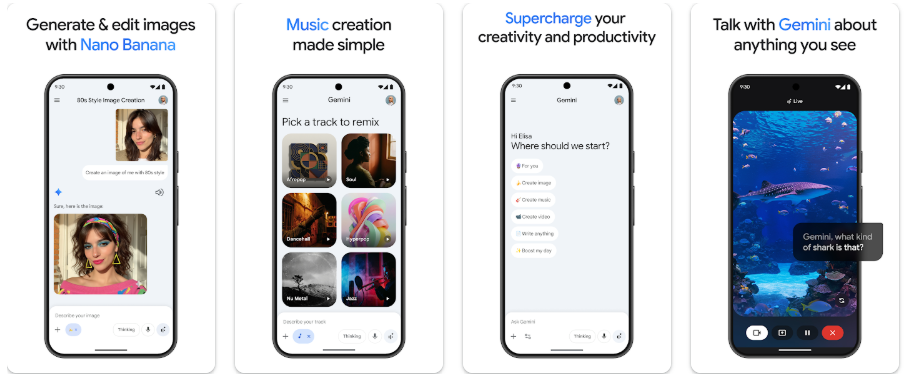
Google's answer to the AI search revolution is Gemini. What makes Gemini stand out is its deep integration with the Google ecosystem—Gmail, Docs, Drive, and Google Maps. For Android users, it can seamlessly replace Google Assistant, though there are still a few growing pains. The iOS app brings the power of Gemini Advanced directly to your iPhone. It excels at summarizing long emails and planning travel routes. If you rely on navigation apps, Gemini's ability to sync directly to Maps is a huge plus.
- Pros: Deep Google Workspace integration, Can replace Android Assistant, Excellent creative writing capabilities.
- Cons: Sometimes refuses to answer benign questions due to guardrails, Inconsistent speed compared to competitors.
4. Microsoft Copilot (★ 4.7)
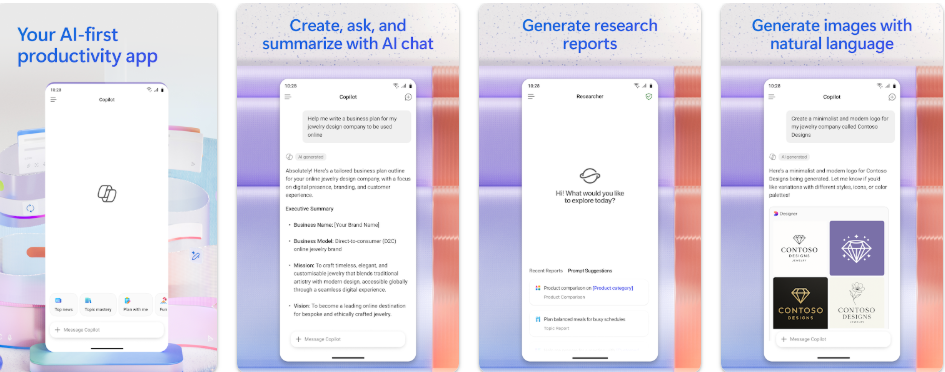
Powered by GPT-4 and DALL-E 3, Microsoft Copilot (formerly Bing Chat) offers immense value completely for free. It seamlessly merges traditional search with conversational AI. The app allows you to choose your conversation style—creative, balanced, or precise—which heavily influences the tone and depth of the answers. It also features incredible AI image generation built right into the chat. If you're looking for best AI photo editing apps, Copilot is a fantastic starting point just for its generation capabilities.
- Pros: Free access to GPT-4, Built-in DALL-E 3 image generation, Three distinct conversation styles.
- Cons: UI can feel cluttered, Occasional slow response times.
5. Arc Search (★ 4.6)
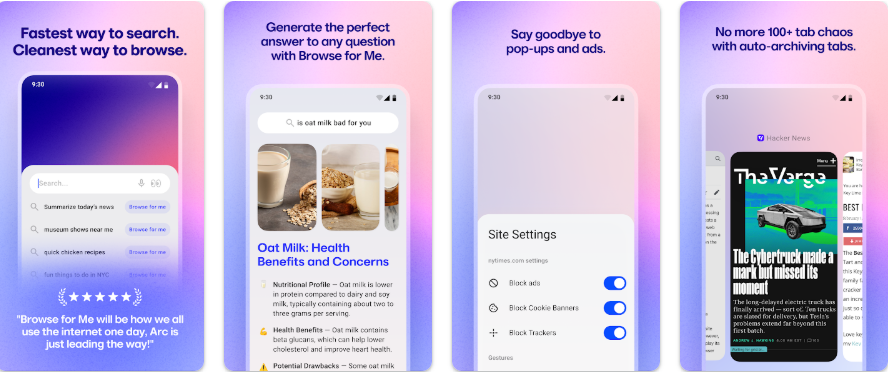
Arc Search is a relatively new player that has completely disrupted how I search on mobile. Its standout feature, 'Browse for Me', automatically reads multiple web pages related to your query and compiles a clean, visually appealing summary page. It essentially does the research for you. Beyond its AI capabilities, it functions as a remarkably fast, ad-blocking browser. For anyone who has used cross-platform tools to build sleek apps, Arc Search feels like a masterclass in UI/UX design.
- Pros: 'Browse for Me' feature is revolutionary, Auto-archives old tabs to save memory, Aggressive ad blocking.
- Cons: Limited customization options, Currently missing some traditional browser features.
6. Claude (★ 4.5)

Anthropic's Claude app is the writer's dream. While it doesn't boast the direct internet search features of Perplexity or Copilot, its ability to analyze massive documents and maintain context over a long conversation is unparalleled. The app is minimalist and focuses entirely on the chat experience. If you are a student or professional who needs help summarizing PDFs, Claude is essential. It's often favored by those looking for best note-taking apps companions to refine their thoughts.
- Pros: Massive context window for long documents, Highly nuanced and human-like writing style, Extremely clean, distraction-free interface.
- Cons: No native web browsing, Image analysis is not as strong as competitors.
7. Poe (★ 4.6)
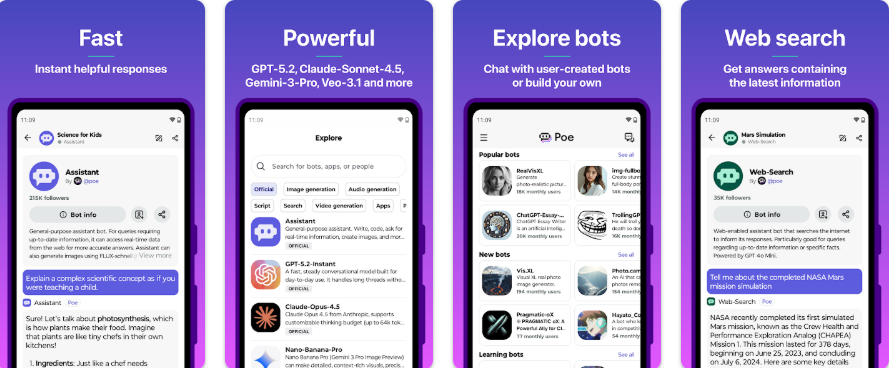
Developed by Quora, Poe is unique because it isn't just one AI—it's a hub for all of them. Within the Poe app, you can switch between ChatGPT, Claude, Gemini, and thousands of user-created specialized bots. This makes it a fantastic sandbox for testing which AI model gives the best search results for your specific query. The app is fast, reliable, and continuously adds new models.
- Pros: Access to multiple top-tier AI models in one app, Vast library of custom user bots, Very fast response times.
- Cons: Free tier has strict message limits on premium models, UI can feel overwhelming with too many bot choices.
8. You.com (★ 4.4)
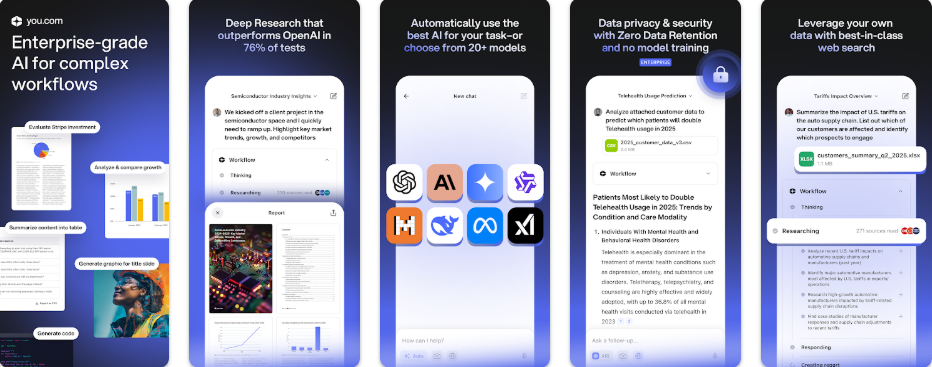
You.com was one of the earliest adopters of AI-integrated search. It offers a highly customizable search experience where you can prioritize certain sources (like Reddit or StackOverflow) over others. Its 'YouChat' feature functions similarly to Perplexity, providing cited answers. While its UI isn't as polished as Arc Search or ChatGPT, its focus on privacy and customizable search sources makes it a strong contender.
- Pros: Highly customizable search sources, Strong focus on user privacy, Integrated code execution for developers.
- Cons: Interface feels a bit dated, Search results can occasionally be inconsistent.
9. Brave Private Web Browser (★ 4.7)
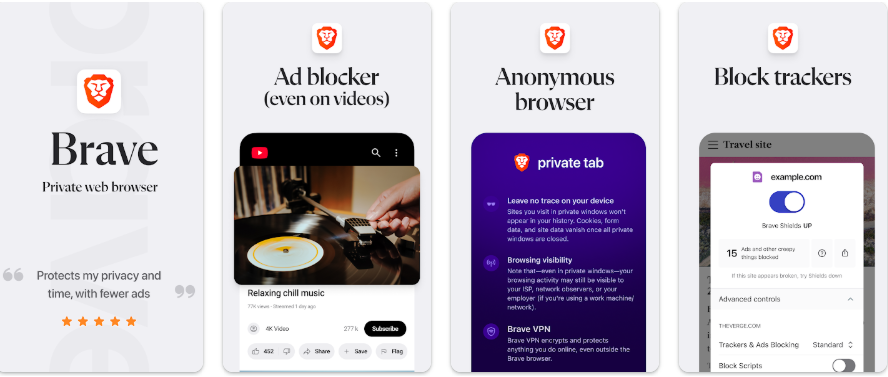
Brave is already renowned for its privacy features, but the addition of 'Leo AI' has transformed it into a powerful search tool. Leo can summarize web pages you are currently reading, answer questions based on page content, and even generate text. Because it's built directly into the browser, it feels incredibly seamless. Plus, it runs locally where possible, maximizing your privacy. It is a fantastic option if you also care about battery life and avoiding heavy tracking scripts.
- Pros: Built-in, privacy-focused Leo AI, Summarizes current web pages instantly, Best-in-class ad and tracker blocking.
- Cons: AI capabilities are somewhat basic compared to standalone apps, Premium Leo tier is expensive.
10. Opera Browser with AI (★ 4.6)
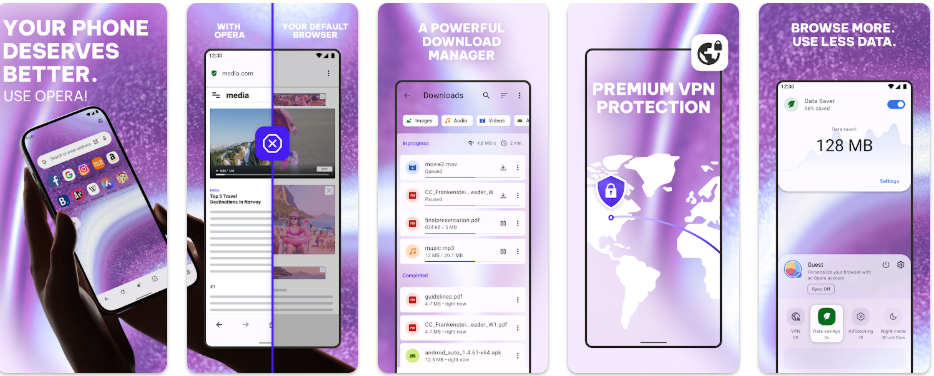
Opera has integrated an AI assistant named 'Aria' directly into its mobile browser. Similar to Brave's Leo, Aria is designed to enhance your browsing experience. It connects to the web in real-time, allowing it to provide up-to-date information. It excels at explaining complex topics on the fly while you read articles. The addition of a free built-in VPN makes Opera a highly compelling all-in-one package.
- Pros: Free integrated VPN alongside AI, Aria AI connects to the web for real-time data, Highly customizable browser interface.
- Cons: Can be resource-heavy on older phones, AI features are sometimes hidden in the UI.
Why You Should Make the Switch to AI Search
Ditching traditional search engines might feel intimidating at first, but the time saved is immeasurable. AI search apps cut through the noise of the modern web, delivering cited, ad-free answers instantly. While traditional browsers and search engines still have their place, the tools listed above prove that the future of information retrieval is conversational. If you are a creator looking for tools like the best apps for making reels, or a student optimizing their workflow, AI search is a mandatory upgrade.