
Investing in stocks used to require a broker, high fees, and thousands of dollars to start. In 2026, anyone can start investing with as little as $1 using commission-free stock trading apps on Android and iOS. Whether you want to buy your first share of Apple, build a diversified portfolio, or start saving for retirement, there is a beginner-friendly app designed for your experience level and goals.
We tested and ranked the 13 best stock trading apps for beginners, comparing commission structures, educational resources, account types, and unique features. Each app in this list offers commission-free stock trading and is designed to make investing accessible for first-time investors. From Robinhood's simplicity and Cash App's micro-investing to Fidelity's comprehensive education and eToro's social copy trading, this guide covers every approach to getting started. For managing your finances alongside investing, check out our guides on digital planner apps and invoice and budgeting apps.
Table of Contents
- Cash App Investing (Rating 4.7)
- Interactive Brokers (IBKR) (Rating 4.6)
- Robinhood (Rating 4.3)
- Webull (Rating 4.2)
- eToro (Rating 4.1)
- Moomoo (Rating 4.1)
- Fidelity Investments (Rating 4.0)
- Charles Schwab (Rating 3.9)
- SoFi Invest (Rating 3.8)
- Public (Rating 3.7)
- Acorns (Rating 3.6)
- M1 Finance (Rating 3.5)
- Stash (Rating 3.4)
- How to Choose Your First Trading App
- Stock Investing Tips for Beginners
- Frequently Asked Questions
1. Cash App Investing (Rating 4.7)
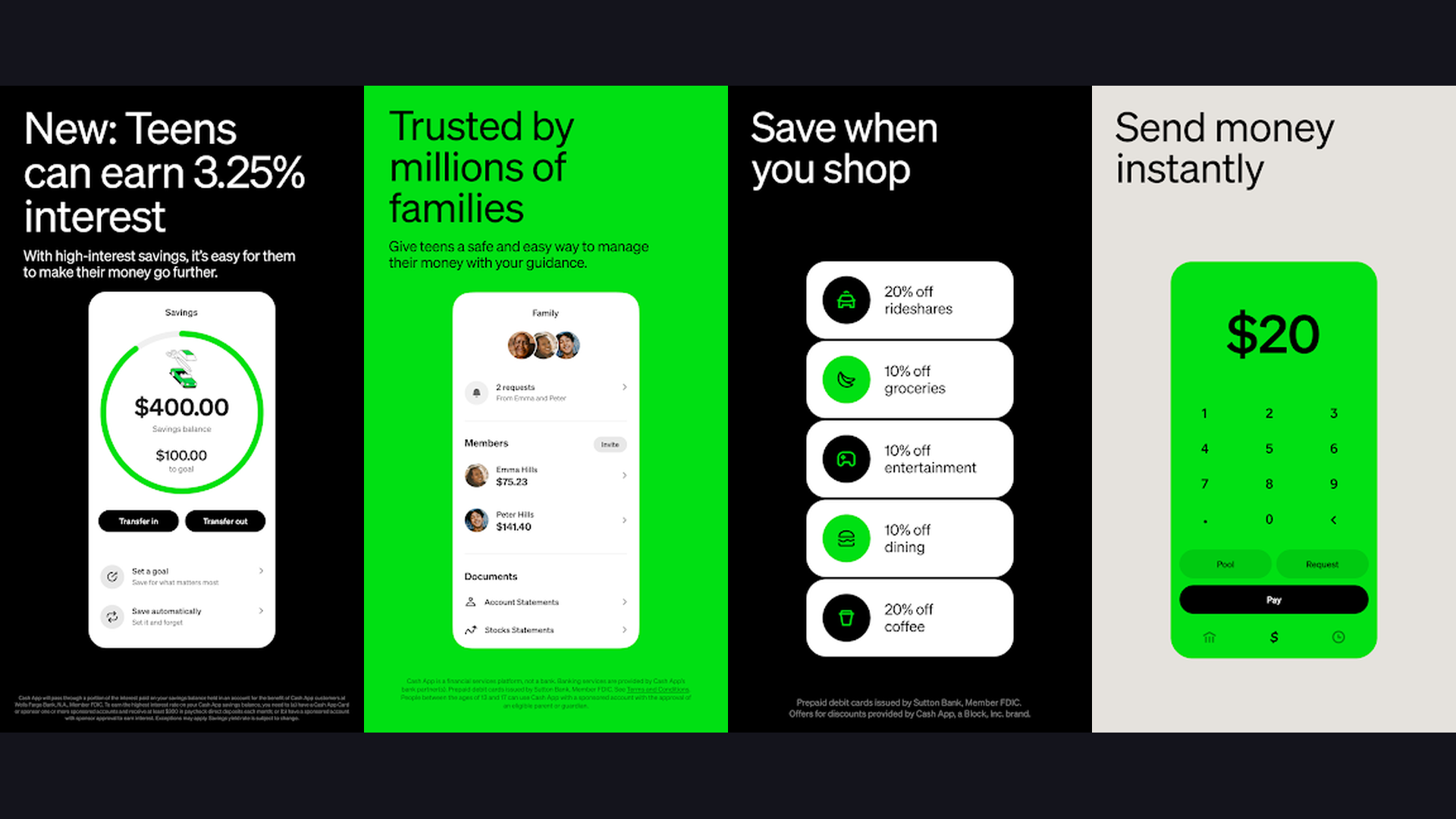
Cash App is a beginner-friendly payment app with built-in stock and Bitcoin investing. While primarily known for sending money, Cash App lets you buy fractional shares of stocks and ETFs with as little as $1. This makes it perfect for absolute beginners who want to dip their toes into investing without committing large amounts. The stock trading interface is deliberately simple: search for a company, tap "Invest," enter an amount, and confirm. There are no complex charts or confusing order types to worry about. Cash App charges no commission on stock trades. The app also supports Bitcoin buying and selling (with a spread fee). Cash App Brokerage is SIPC-insured up to $500,000. The direct deposit feature lets you automatically invest a percentage of your paycheck. While Cash App lacks the research tools of dedicated brokerages, its simplicity is the point. For people who are intimidated by traditional investing apps and want to start building a portfolio with spare change, Cash App removes every barrier to entry.


2. Interactive Brokers (IBKR) (Rating 4.6)
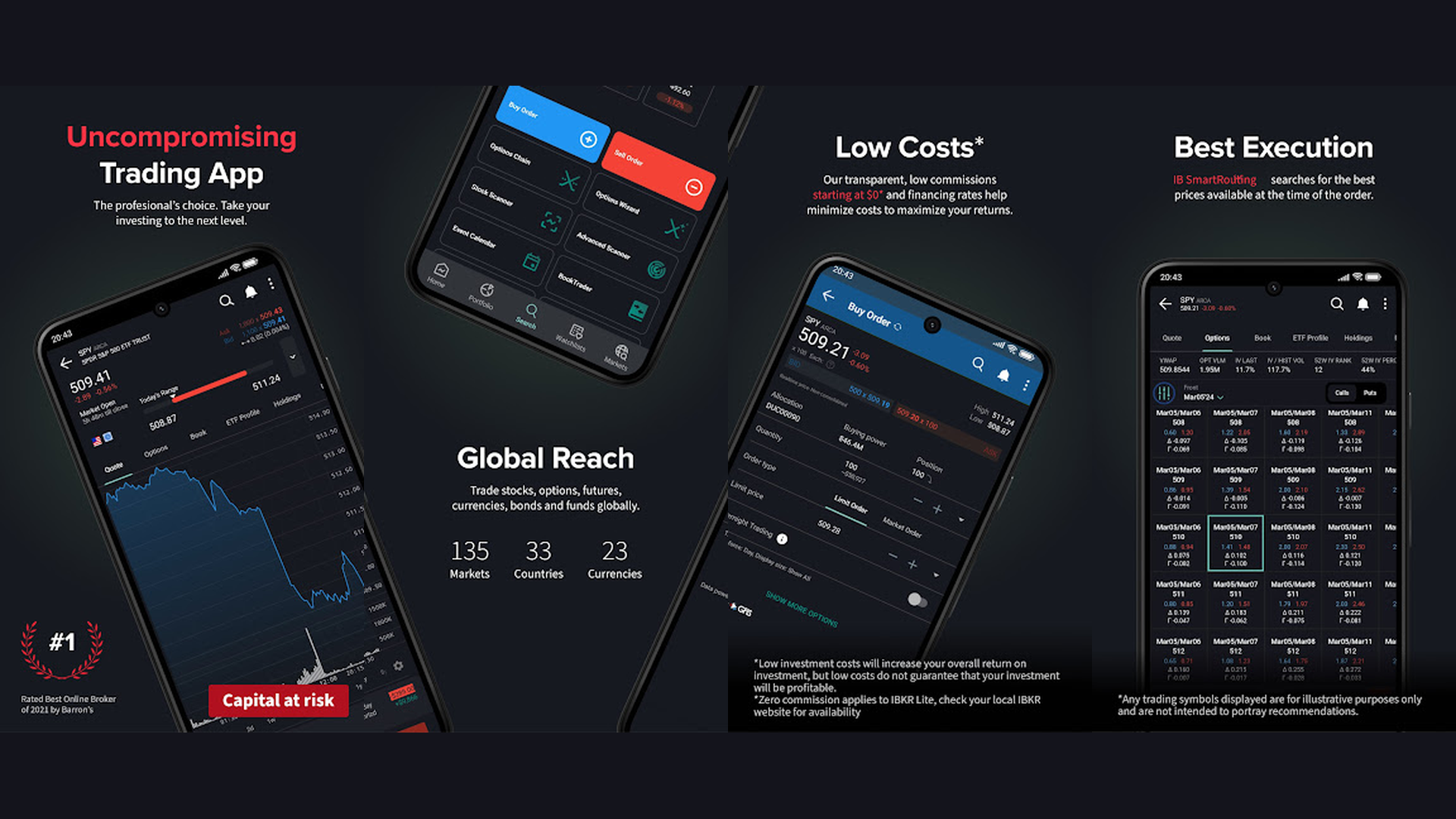
Interactive Brokers is a professional-grade brokerage with the lowest margin rates and access to global markets. While IBKR is known for serving advanced traders, the IBKR GlobalTrader app was specifically designed for beginners with a simplified interface. Trade stocks, options, futures, forex, bonds, and crypto across 150+ markets in 34 countries. IBKR Lite accounts offer commission-free stock and ETF trading in the US. Fractional share investing starts at $1. The Impact Dashboard creates portfolios aligned with your values (ESG investing). What sets IBKR apart for beginners who plan to grow is the depth available: as your skills develop, you can access the most advanced trading tools, the widest range of securities, and the lowest margin rates (currently starting at 5.83%) of any retail broker. IBKR accounts are SIPC-insured and regulated. The educational IBKR Campus provides free courses, webinars, and trading guides. For beginners who want a platform they will never outgrow, Interactive Brokers offers unmatched long-term value.
3. Robinhood (Rating 4.3)
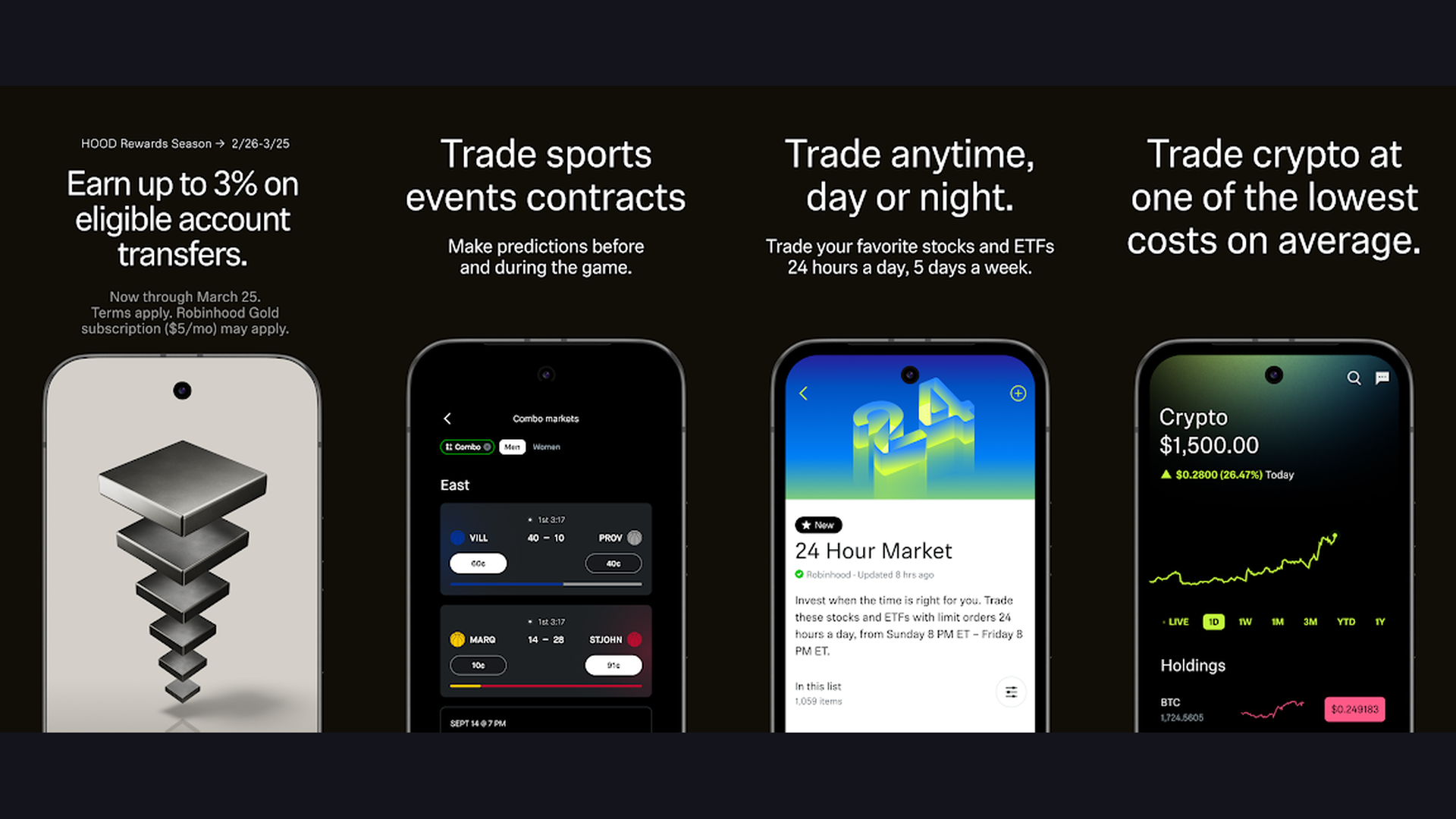
Robinhood is the app that democratized commission-free stock trading and remains the most popular choice for beginners. The clean, minimalist interface strips away the complexity of traditional brokerages: swipe to buy or sell, view your portfolio in a simple graph, and get real-time price alerts. Robinhood offers commission-free trading for stocks, ETFs, options, and cryptocurrency. Fractional shares let you invest in expensive stocks like Amazon or Tesla with as little as $1. Robinhood Gold ($5/month) adds professional research from Morningstar, Level II market data, larger instant deposits, and margin investing. The Robinhood Learn section provides beginner-friendly articles explaining investing concepts. Recurring investments automate your portfolio building on a daily, weekly, or monthly schedule. Robinhood also offers a cash card with up to 3% savings APY and IRA accounts with a 1% match on contributions. For the cleanest, most intuitive investing experience with zero commissions, Robinhood is where millions of beginners started their investing journey. SIPC-insured up to $500,000.
4. Webull (Rating 4.2)
Webull is a commission-free trading platform that bridges the gap between beginner simplicity and advanced analysis tools. The app offers commission-free stock, ETF, options, and crypto trading with an interface that provides more data than Robinhood without being overwhelming. Advanced charting with over 50 technical indicators helps beginners learn chart analysis. The paper trading feature is invaluable: practice trading with virtual money ($1,000,000 virtual portfolio) to learn without risking real capital. Extended hours trading (4:00 AM - 8:00 PM ET) provides flexibility beyond regular market hours. Webull community features let you follow other traders, share ideas, and discuss stocks. Real-time quotes, analyst ratings, and financial statements provide research without leaving the app. Fractional shares allow small investments. Webull offers IRA accounts and supports DRIP (dividend reinvestment). For beginners who want to learn investing seriously with free practice tools and strong analysis features, Webull provides the best free education environment.
5. eToro (Rating 4.1)
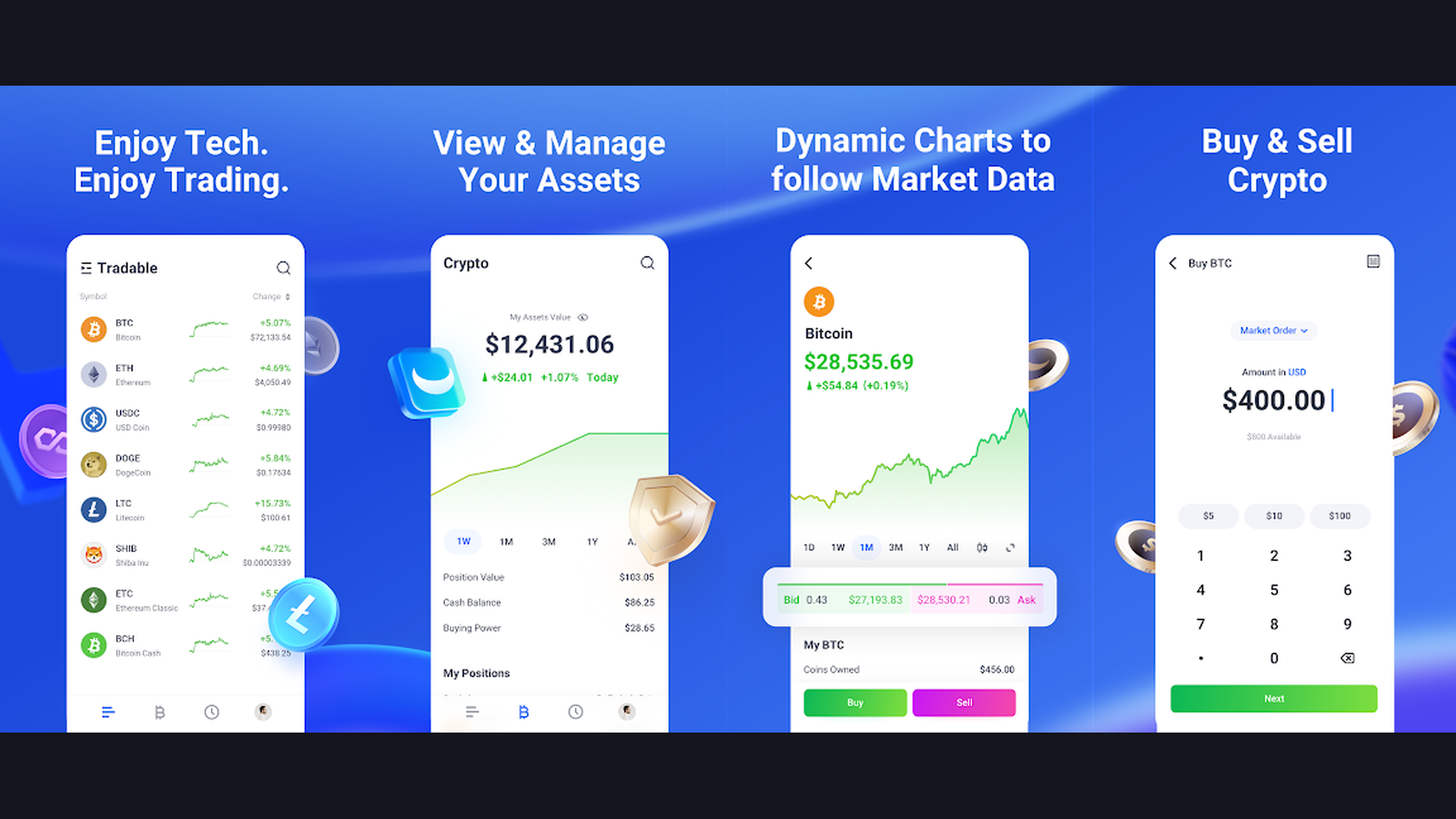
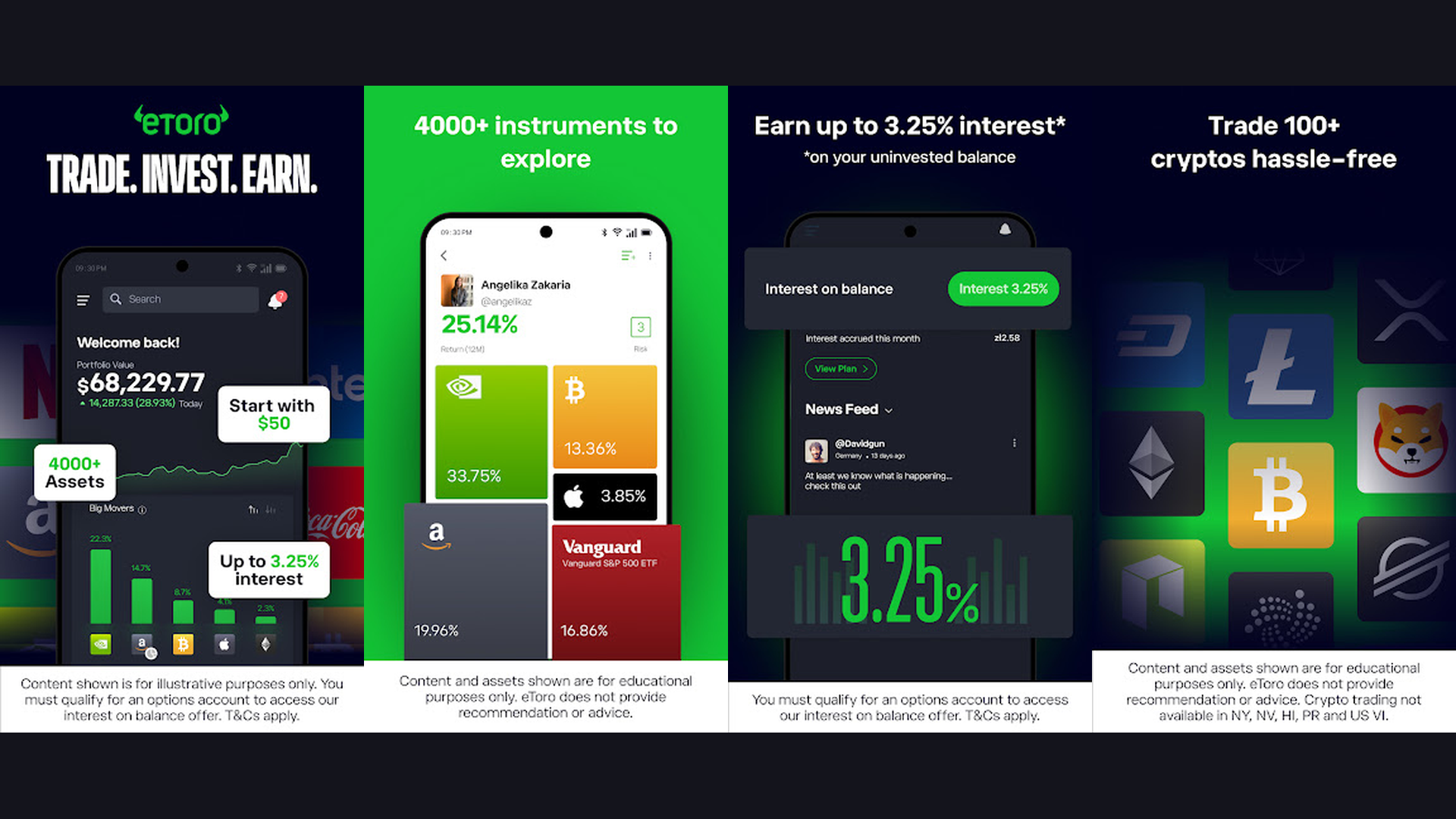
eToro is the pioneer of social trading, letting beginners copy the portfolios and trades of successful investors. The CopyTrader feature is what makes eToro unique: browse top-performing investors, see their track records, strategies, and risk scores, then allocate funds to automatically mirror their trades. This means beginners can invest like experienced traders from day one while learning from their strategies. eToro offers commission-free stock and ETF trading (zero commission in the US). The Smart Portfolios are professionally managed themed investment baskets (like "Tech Giants" or "Renewable Energy") that provide instant diversification. The virtual portfolio gives you $100,000 in play money to practice risk-free. eToro supports stocks, ETFs, crypto, and CFDs (where available). The social feed shows what other investors are buying, selling, and discussing. eToro is regulated by major financial authorities including the SEC and FINRA for US users. For beginners who want to learn by observing and copying experienced investors, eToro social trading is genuinely innovative.
6. Moomoo (Rating 4.1)
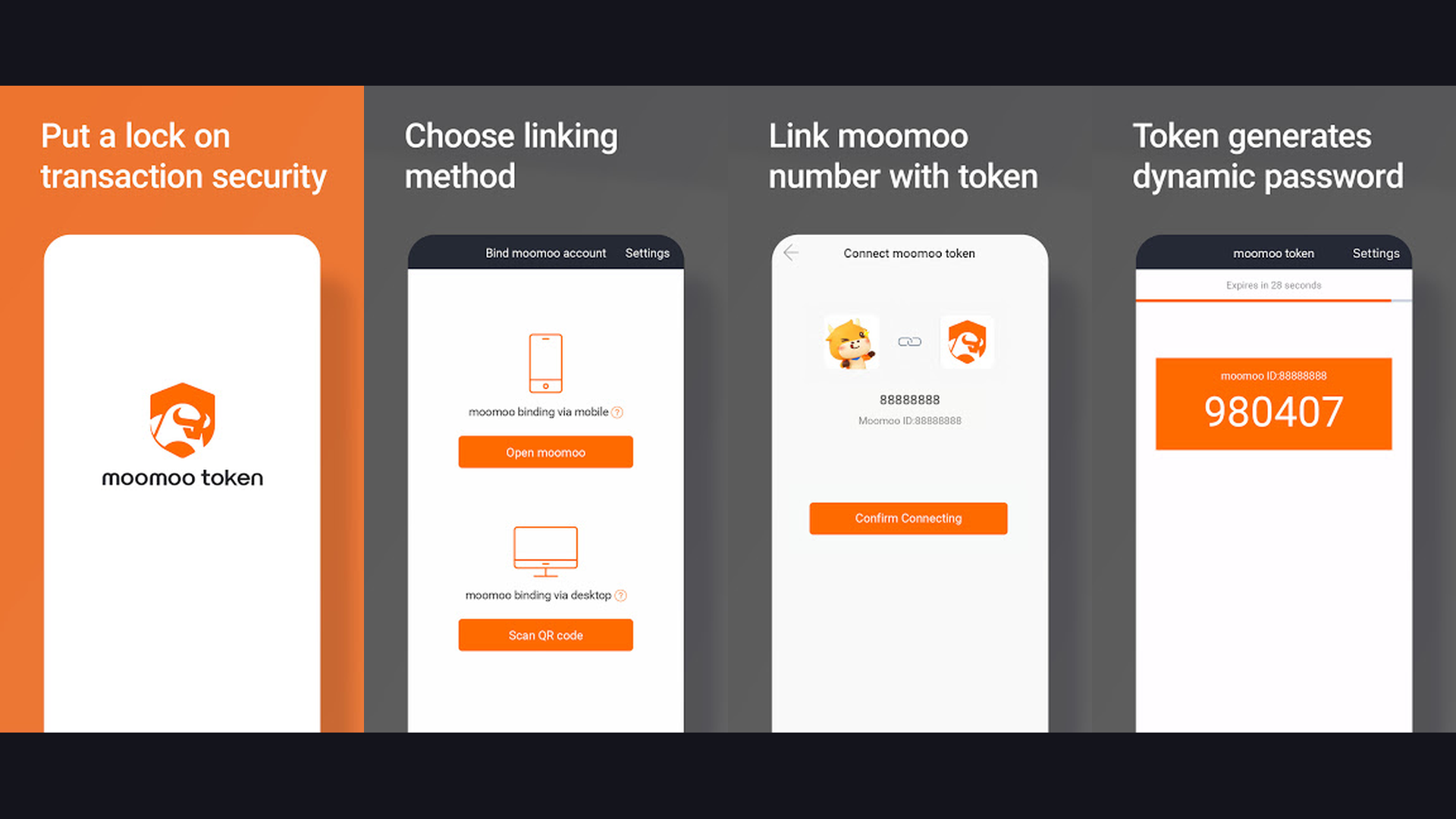
Moomoo is a commission-free trading platform backed by Futu Holdings with professional-level tools for ambitious beginners. The app offers commission-free US stock, ETF, and options trading with Level 2 market data included for free, a feature that competitors charge for. Heat maps visualize market performance at a glance. The AI-powered stock screener helps discover stocks based on fundamental and technical criteria. Paper trading lets beginners practice with a virtual portfolio. Moomoo provides real-time news feeds, analyst ratings, institutional holdings data, insider trading information, and earnings calendars. The community features include discussion forums and live commentary during market hours. Options trading tools include visual options chains and strategy builders. Moomoo also provides access to Hong Kong and Singapore markets for international diversification. Extended trading hours (4:00 AM - 8:00 PM ET) offer flexibility. For beginners who want free access to professional-level market data and research tools without commissions, Moomoo provides exceptional value.
7. Fidelity Investments (Rating 4.0)
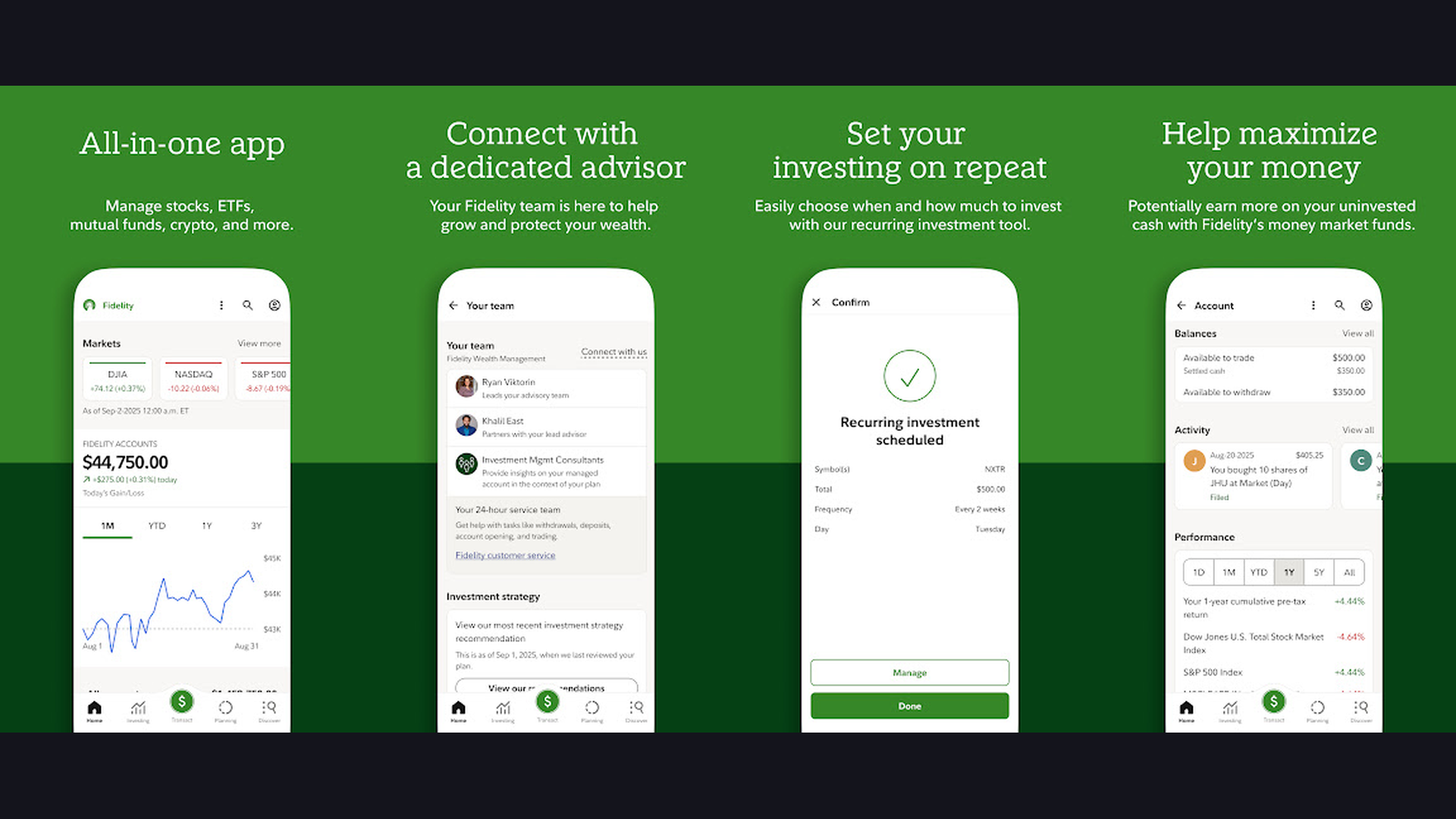
Fidelity is a trusted full-service brokerage with zero commissions, no account minimums, and the best educational resources for beginners. As one of the largest investment firms in the world with over $14 trillion in assets, Fidelity combines institutional-grade reliability with a genuinely beginner-friendly mobile experience. Commission-free trading covers US stocks, ETFs, and options. The Fidelity Zero Index Funds charge zero expense ratios, a feature unique to Fidelity. Fractional shares (Stocks by the Slice) start at $1. The Learning Center provides free courses, videos, webinars, and articles covering everything from basic investing concepts to advanced strategies. Fidelity offers the widest range of account types including brokerage, IRA, Roth IRA, 529 college savings, and HSA accounts. The Stock Research section provides analyst ratings, earnings estimates, and financial statements. Customer support includes 24/7 phone assistance. For beginners who want a platform backed by decades of trust with comprehensive education and every account type available, Fidelity is the most complete brokerage for long-term investors.
8. Charles Schwab (Rating 3.9)
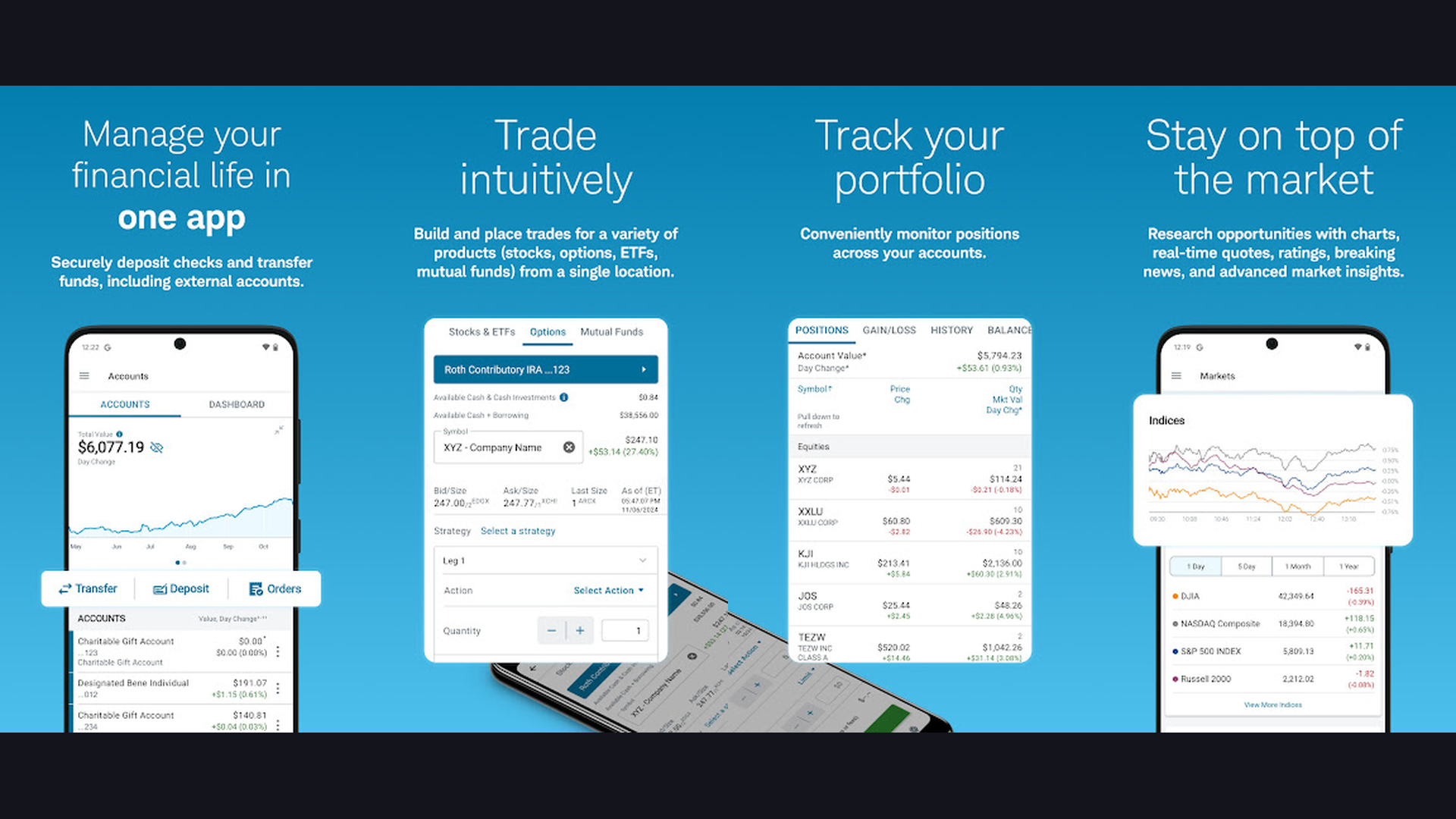
Charles Schwab is a full-service brokerage with commission-free trading, Schwab Intelligent Portfolios, and comprehensive retirement planning. After merging with TD Ameritrade, Schwab now serves over 35 million accounts with zero commission stock, ETF, and options trading. Schwab Intelligent Portfolios is a free robo-advisor that automatically builds and rebalances a diversified portfolio based on your risk tolerance and goals, with no advisory fees or commissions. The Schwab Stock Slices program lets you buy fractional shares of S&P 500 companies for as little as $5. The Learning Center features well-organized courses covering investing basics, options, retirement planning, and market analysis. Schwab offers every account type: taxable brokerage, IRA, Roth IRA, 401(k) rollovers, custodial, and trust accounts. Local branch offices across the US provide in-person support. The thinkorswim trading platform (acquired from TD Ameritrade) offers advanced charting and analysis for when you are ready to level up. For beginners who value a well-planned approach to wealth building with a free robo-advisor, Schwab is highly reliable.
9. SoFi Invest (Rating 3.8)
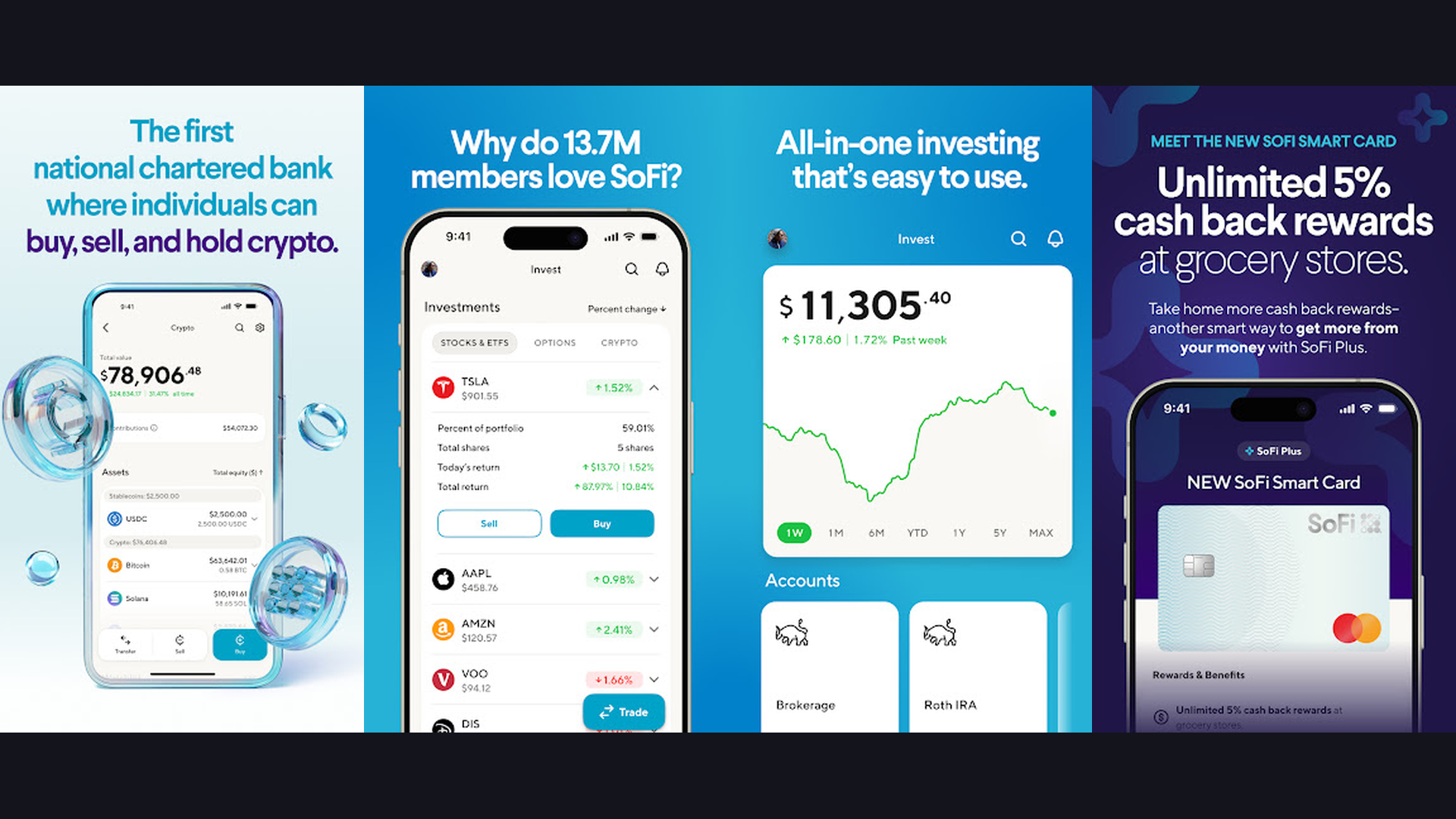
SoFi is an all-in-one financial platform combining banking, investing, and personal finance in one app. SoFi Active Investing offers commission-free stock, ETF, and crypto trading with fractional shares starting at $5. The Automated Investing feature is a free robo-advisor that builds and manages a diversified portfolio based on your goals. What makes SoFi unique for beginners is the integrated financial ecosystem: high-yield savings account (currently 4.50% APY), checking with no fees, personal loans, student loan refinancing, and investing all in one app. SoFi provides free access to Certified Financial Planners for personalized advice, a benefit that typically costs hundreds of dollars per session. The SoFi Relay dashboard shows your complete financial picture including accounts at other banks. IPO Access lets members invest in companies before they go public, a rare feature for retail investors. SoFi member events and career services add community value. For beginners who want to manage their entire financial life, from budgeting and banking to investing, in one streamlined app, SoFi is the most complete solution.
10. Public (Rating 3.7)
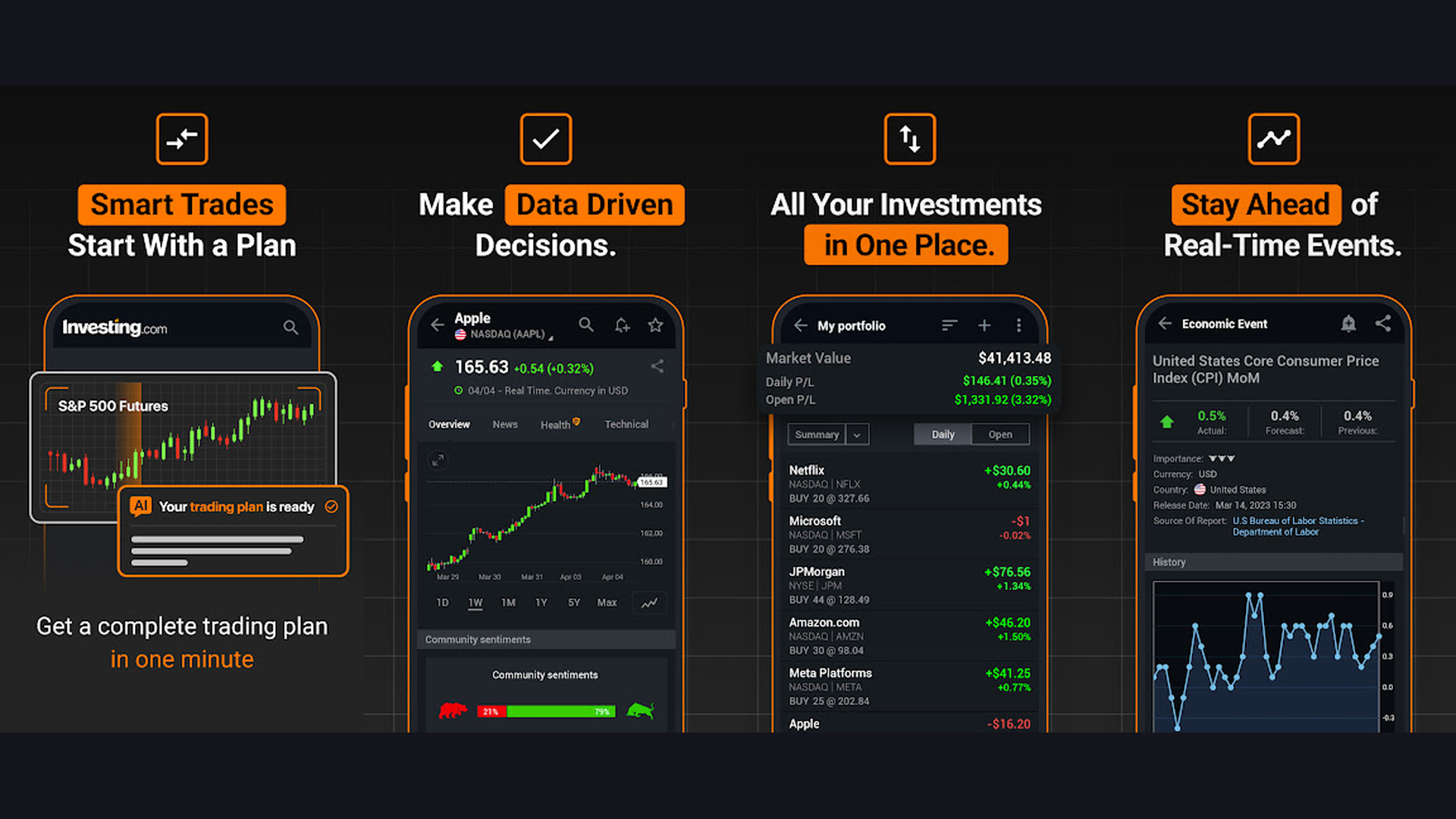
Public is a commission-free investing app with a social community and transparent order routing. Public takes a unique approach to investing transparency: unlike most commission-free brokers, Public does not sell your order flow to market makers (payment for order flow). Instead, Public routes orders directly to exchanges and offers an optional tipping model. The social feed lets you see what other investors are buying with their reasoning, creating an educational community atmosphere. Public supports stocks, ETFs, crypto, treasuries (bonds), and alternative investments including fine art, royalties, and collectibles. The Treasury account offers competitive yields on US government bonds. The Public Premium subscription provides advanced data and analysis tools. The themes and collections curate stocks by category (AI stocks, dividend aristocrats, green energy). For beginners who care about transparency, community learning, and diverse investment options beyond just stocks, Public offers an honest alternative to mainstream brokerages.
11. Acorns (Rating 3.6)
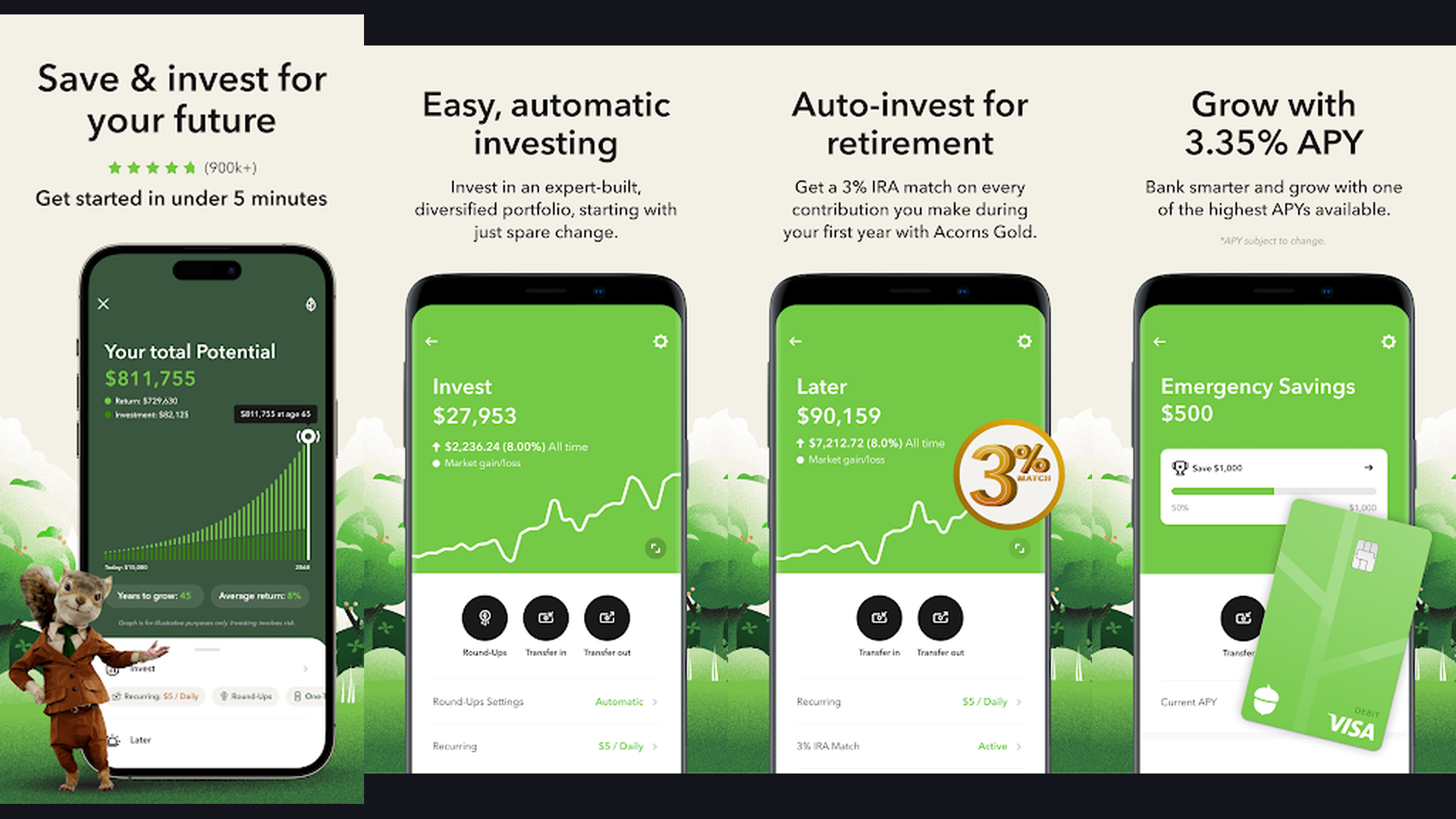
Acorns is a micro-investing app that automatically invests your spare change from everyday purchases. The Round-Ups feature is what makes Acorns unique: link your debit or credit card, and Acorns automatically rounds up each purchase to the nearest dollar and invests the difference into a diversified portfolio of ETFs. A $3.52 coffee becomes $4.00, and $0.48 is automatically invested. This "set it and forget it" approach is perfect for beginners who want to start investing without thinking about it. Acorns builds your portfolio using Modern Portfolio Theory, selecting from diversified ETFs based on your risk tolerance (conservative to aggressive). The Acorns Earn program invests bonus cash when you shop with partner brands. Acorns Later provides IRA accounts for retirement. Acorns Early offers custodial accounts for children. The educational content is bite-sized and beginner-friendly. Subscription plans start at $3/month for Bronze. For complete investing beginners who want to build wealth passively through automatic round-ups and smart diversification, Acorns makes investing effortless.
12. M1 Finance (Rating 3.5)
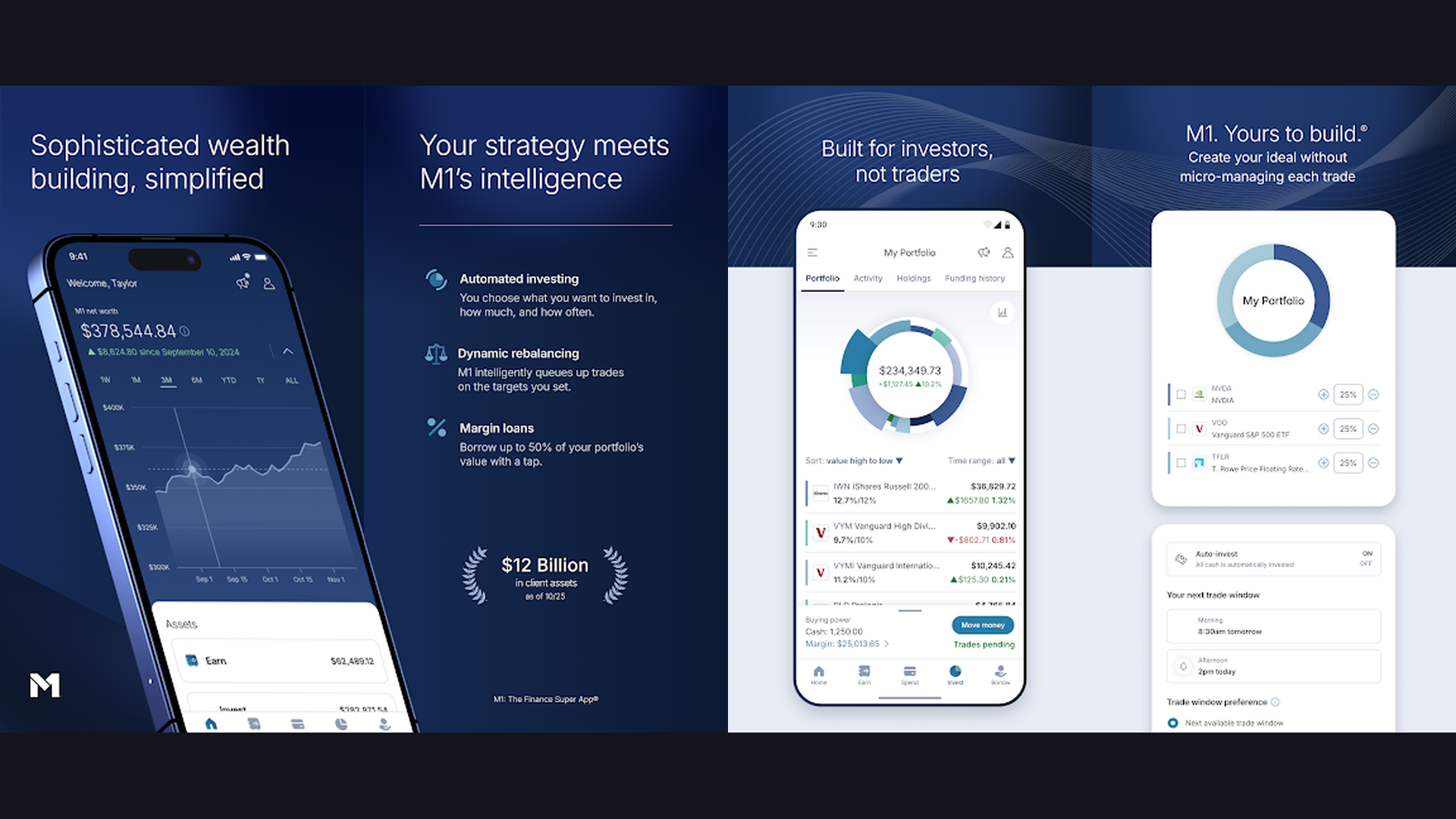
M1 Finance is a hybrid investment platform combining automated portfolio management with customizable control. The "Pie" system lets you create a visual portfolio allocation, dividing your investments among stocks and ETFs like slices of a pie, each with a target percentage. Once set, M1 automatically maintains your target allocations through dynamic rebalancing. This gives beginners the structure of a robo-advisor with the freedom to pick individual stocks. M1 offers commission-free stock and ETF trading with fractional shares. The Expert Pies provide pre-built portfolios designed by M1 (general investing, retirement, income strategies, hedging). The Smart Transfers feature automatically moves excess cash from your M1 checking account to your investment account. M1 Plus ($10/month) adds a high-yield savings account, extra trading windows, and lower borrowing rates. For beginners who want a semi-automated approach where they set their strategy once and let the platform maintain it, M1 Finance provides the best automated rebalancing system.
13. Stash (Rating 3.4)
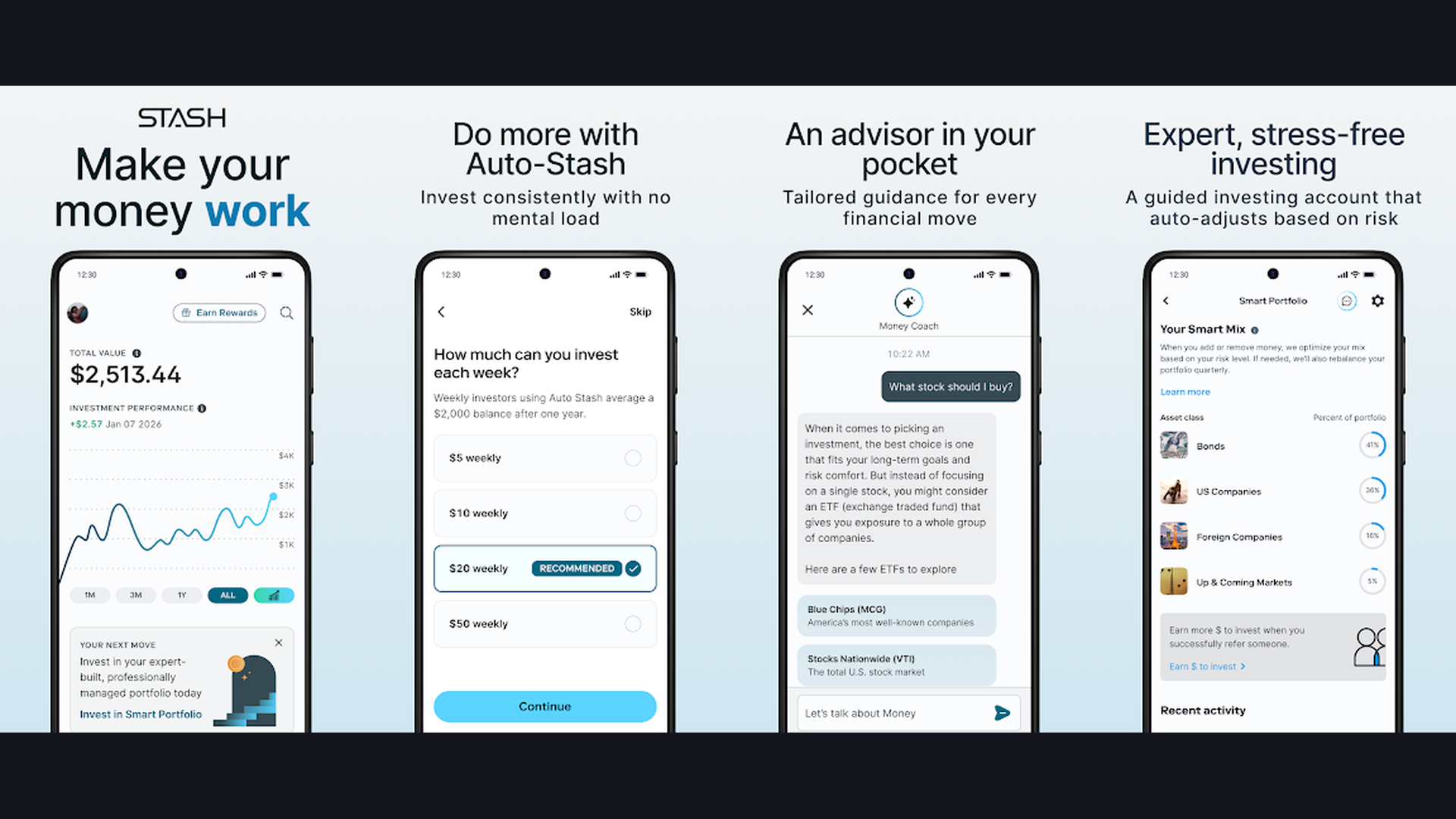
Stash is a beginner-focused investing app that teaches you while you invest through guided stock selections. Instead of overwhelming beginners with thousands of stock tickers, Stash curates investments into easy-to-understand themes like "Clean and Green" (ESG companies), "American Innovators" (tech stocks), and "Defending America" (defense companies). Each investment comes with a brief explanation of what the company does and why it might be interesting. Stash Smart Portfolio automatically builds and manages a diversified ETF portfolio based on your risk profile. The Stock-Back Card earns fractional shares of stock (instead of cash back) when you make purchases. Stash offers banking with no hidden fees, early direct deposit, and automatic saving features. The educational content is organized into short, digestible lessons covering investing, personal finance planning, taxes, and retirement. Plans start at $3/month for the Growth plan. For beginners who want a heavily guided experience where the app teaches investing concepts alongside real investments, Stash is the most educational option.
How to Choose Your First Trading App
By Experience Level
- Complete Beginner (never invested before): Cash App (buy stocks with $1, zero learning curve), Acorns (automated spare change investing), or Stash (guided theme-based investing with education)
- Beginner Ready to Learn: Robinhood (clean interface with fractional shares), Fidelity (best education and research), or eToro (copy experienced traders while learning)
- Beginner Planning to Grow: Webull (free paper trading and advanced charts), Moomoo (professional data for free), or IBKR (platform you will never outgrow)
By Investing Style
- Set-and-Forget Passive Investing: Acorns (automatic round-ups), M1 Finance (automated rebalancing pies), Schwab Intelligent Portfolios (free robo-advisor)
- Active Stock Picking: Robinhood, Webull, Moomoo (commission-free trades with real-time data)
- Social and Copy Trading: eToro (copy top investors), Public (community-driven investing)
- All-in-One Financial Platform: SoFi (banking + investing + loans), Cash App (payments + investing + savings)
Best Free Options
All 13 apps offer commission-free stock trading. For completely free platforms with no monthly subscription, choose Robinhood, Webull, Fidelity, Schwab, Cash App, Moomoo, IBKR, Public, or eToro. Apps like Acorns ($3/month), Stash ($3/month), and M1 Plus ($10/month) charge subscription fees for their guided features, though M1 base is free.
Stock Investing Tips for Beginners
- Start With Index Funds, Not Individual Stocks - An S&P 500 index fund (like VOO, SPY, or Fidelity Zero Large Cap) instantly gives you a piece of the 500 largest US companies. This diversification dramatically reduces risk compared to putting everything in one stock. Most professional investors recommend index funds as the core of any beginner portfolio.
- Only Invest Money You Can Afford to Lose - Never invest your emergency fund, rent money, or money needed within the next 2-3 years. Markets fluctuate, and selling during a downturn locks in losses. Keep 3-6 months of expenses in a high-yield savings account before investing. Think of investing as a long-term commitment (5+ years minimum).
- Use Dollar-Cost Averaging - Instead of investing a lump sum all at once, invest a fixed amount regularly (weekly or monthly) regardless of market conditions. This strategy averages out your purchase price over time and removes the stress of trying to time the market. Set up automatic recurring investments in Robinhood, Fidelity, or Acorns.
- Practice With Paper Trading First - Webull and eToro offer free paper trading (virtual money) so you can practice buying and selling stocks without risking real cash. Spend at least 2-4 weeks paper trading to understand how orders work, how volatility feels, and how to read basic charts before investing real money.
- Open a Roth IRA for Retirement Investing - If you are under 59.5 and investing for retirement, a Roth IRA lets your investments grow completely tax-free. Fidelity, Schwab, Robinhood, and SoFi all offer free Roth IRA accounts with no minimums. The 2026 contribution limit is $7,000 ($8,000 if 50+). Prioritize this over a regular taxable brokerage account.
- Read Before You Buy - Before buying any stock, understand what the company does, how it makes money, and its basic financial health. Use the research tools in Fidelity, Webull, or Moomoo to read analyst ratings, earnings reports, and revenue trends. Never buy a stock just because it is trending on social media without doing your own research.
- Diversify Beyond Stocks - Do not put all your money into one stock or even one sector. Diversify across US stocks, international stocks, bonds, and possibly REITs. Apps like M1 Finance, Acorns, and Schwab Intelligent Portfolios automatically diversify your portfolio. A simple beginner allocation might be 80% broad stock index fund and 20% bond index fund.
- Reinvest Dividends - Enable DRIP (Dividend Reinvestment Plan) in your brokerage account so dividends automatically buy more shares instead of sitting as cash. Over decades, reinvested dividends can account for a significant portion of your total returns through the power of compounding. Most apps in this list support automatic DRIP.
Frequently Asked Questions
What is the best stock trading app for complete beginners?
For absolute beginners, Cash App is the simplest way to start with $1 stock purchases and a familiar interface. Robinhood offers the cleanest dedicated investing experience. Fidelity provides the best educational resources with zero commissions and no account minimums. For fully passive investing, Acorns automatically invests your spare change from everyday purchases.
Can I start investing with just $1?
Yes. Cash App, Robinhood, Fidelity, and Schwab all support fractional shares starting at $1. Webull, Public, and SoFi also offer fractional shares with low minimums. You do not need thousands of dollars to start building a stock portfolio. Even $5-$10 per week invested consistently adds up significantly over years.
Are commission-free trading apps really free?
Commission-free means you pay $0 per stock trade. Most free brokers make money through payment for order flow (selling your orders to market makers), interest on uninvested cash, and premium subscriptions. This does not cost you anything directly but may result in slightly less optimal execution prices. Public is the only app that does not use payment for order flow. All apps on this list are legitimate, regulated, and SIPC-insured.
What should I invest in as a beginner?
Start with a broad market index fund like the Vanguard S&P 500 ETF (VOO), the SPDR S&P 500 ETF (SPY), or a Fidelity Zero index fund. These give you instant diversification across hundreds of the largest US companies. As you learn more, you can add individual stocks, international funds, and bonds. Avoid penny stocks, meme stocks, and complex derivatives until you have significant experience.
Is my money safe in these trading apps?
Yes. All 13 apps are registered with the SEC (Securities and Exchange Commission) and are members of SIPC (Securities Investor Protection Corporation), which protects up to $500,000 in securities and $250,000 in cash per account if the brokerage fails. Your money is as safe as in any traditional bank or brokerage. Always use strong passwords and enable two-factor authentication.
Should I use a robo-advisor or pick stocks myself?
For beginners, a robo-advisor is often the better choice. Acorns, SoFi Automated Investing, Schwab Intelligent Portfolios, and M1 Finance automatically build and manage diversified portfolios. Research consistently shows that most active stock pickers underperform simple index fund portfolios over time. Start with automated investing, then allocate a small portion (10-20%) for individual stock picks as you learn.
Final Thoughts
There has never been a better time to start investing. Every app on this list offers commission-free stock trading with low or no minimums, making the stock market accessible to everyone. For the simplest start, Cash App and Acorns let you invest spare change effortlessly. For the best beginner experience, Robinhood and Fidelity balance simplicity with solid research tools. For learning by example, eToro copy trading lets you mirror experienced investors. For growing into advanced trading, Webull, Moomoo, and IBKR provide professional tools at no cost. And for all-in-one financial management, SoFi combines banking and investing seamlessly. Pick the app that matches your comfort level, start small, invest consistently, and let compound growth do the heavy lifting. For more financial and productivity tools, explore our guides on digital planner apps, invoice and budgeting apps, reminder apps, and learning apps.