
Investing in the stock market has never been more accessible. In 2026, commission-free trading apps have eliminated the financial barriers that once kept everyday people out of the markets. You can now buy fractional shares of companies like Apple, Google, or Tesla for as little as $1, build diversified portfolios with automated investing, and even copy the strategies of professional traders, all from your phone. Whether you have $5 or $5,000 to start, there is a stock trading app built for your experience level.
We tested and ranked the 13 best stock trading apps for beginners on Android and iOS. This guide covers everything from ultra-simple micro-investing apps like Acorns to full-service brokerages like Fidelity and Charles Schwab. Each app review explains the fee structure, key features, minimum deposit requirements, and what type of beginner investor it suits best. If you are also looking to manage your finances better, check out our guide on financial management tools and invoice apps for freelancers tracking income alongside investments.
Table of Contents
- Wealthfront (Rating 4.9)
- Acorns (Rating 4.7)
- Webull (Rating 4.5)
- M1 Finance (Rating 4.3)
- Robinhood (Rating 4.1)
- Fidelity Investments (Rating 4.2)
- Public (Rating 4.6)
- eToro (Rating 4.0)
- SoFi Invest (Rating 3.8)
- Stash (Rating 3.7)
- Moomoo (Rating 4.4)
- Charles Schwab (Rating 3.0)
- Merrill Edge (Rating 3.2)
- Active Trading vs Passive Investing
- Beginner Investing Tips
- Frequently Asked Questions
1. Wealthfront (Rating 4.9)
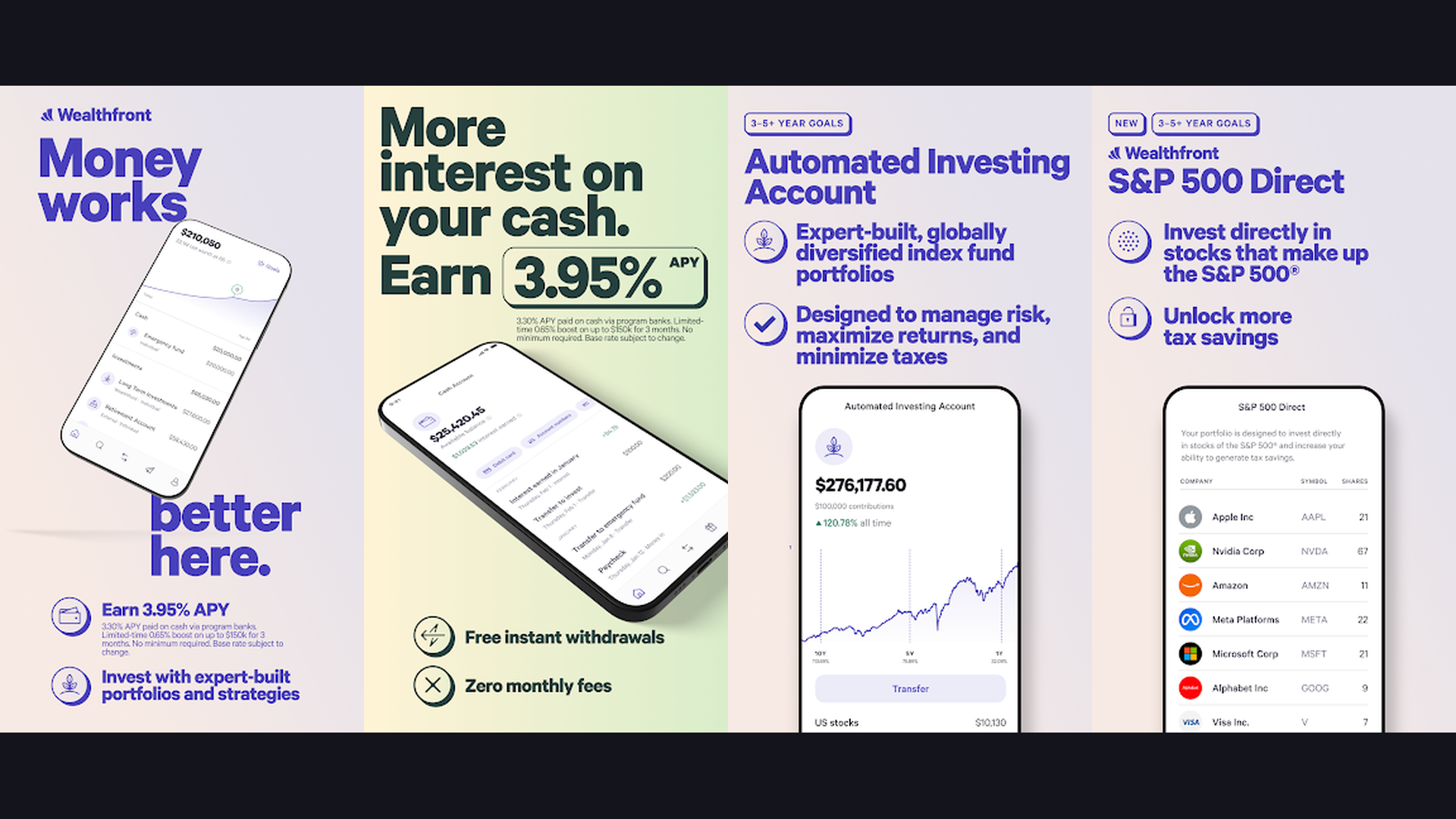
Wealthfront is the best automated investing platform for beginners who prefer a hands-off approach. The robo-advisor builds and manages a diversified portfolio of low-cost index funds based on your risk tolerance, goals, and time horizon. You deposit money and Wealthfront handles all the investment decisions, rebalancing, and tax-loss harvesting automatically. With a $500 minimum to start, Wealthfront charges a competitive 0.25% annual advisory fee with no trading commissions. The Cash Account offers a high-yield APY on uninvested cash. Wealthfront also provides automated financial planning tools that project your future net worth across scenarios. For beginners intimidated by stock picking, Wealthfront removes all the complexity and lets your money grow passively in a diversified, professionally managed portfolio. The app is clean, intuitive, and perfect for long-term wealth building.


2. Acorns (Rating 4.7)
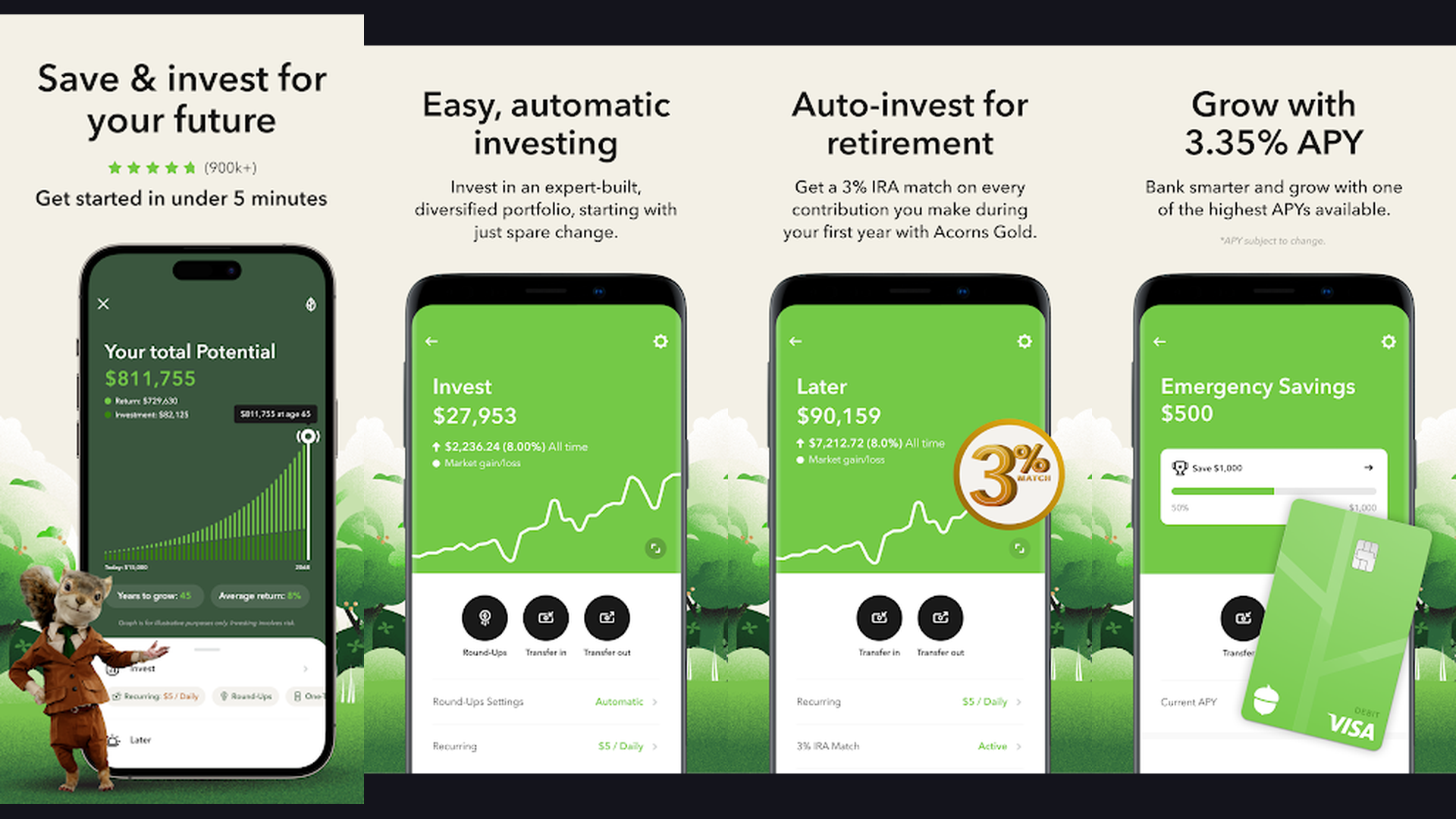
Acorns is the most beginner-friendly micro-investing app that makes investing effortless by rounding up your everyday purchases and investing the spare change. Link your debit or credit card, and every purchase gets rounded up to the nearest dollar with the difference automatically invested into a diversified portfolio. Spend $4.25 on coffee and Acorns invests the $0.75 difference. The app offers five portfolio options ranging from conservative to aggressive, all built with ETFs managed by experts. Acorns also includes Acorns Later (IRA retirement accounts), Acorns Early (custodial accounts for kids), and a checking account with no minimum balance. The subscription costs $3-$12/month depending on the plan. For people who struggle to save and invest, Acorns built-in automation removes the barrier entirely. The educational content section helps beginners understand financial management concepts.
3. Webull (Rating 4.5)
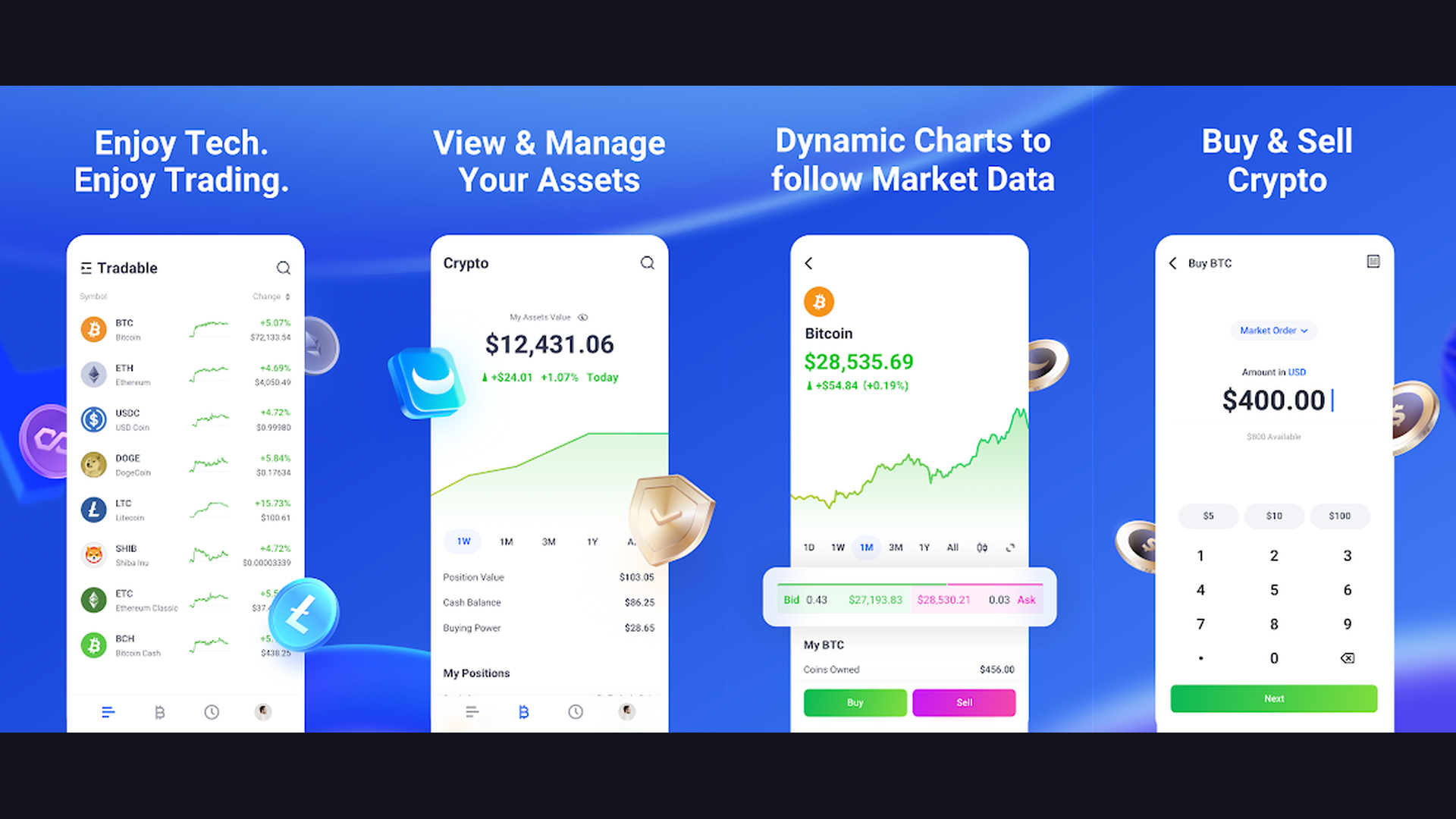
Webull is a commission-free trading platform with more advanced tools than most beginner apps. Trade stocks, ETFs, options, and crypto with zero commissions and no minimum deposit. What sets Webull apart is its wealth of analytical tools: advanced charting with over 50 technical indicators, real-time market data, financial calendars, and analyst ratings. Webull also features a paper trading simulator that lets beginners practice with virtual money before risking real cash. The extended-hours trading feature (pre-market and after-hours) gives you more flexibility than many other platforms. Webull supports fractional shares, allowing you to invest in expensive stocks like Amazon or Tesla with as little as $5. For beginners who want to learn technical analysis while trading commission-free, Webull offers the best combination of education and tools.
4. M1 Finance (Rating 4.3)
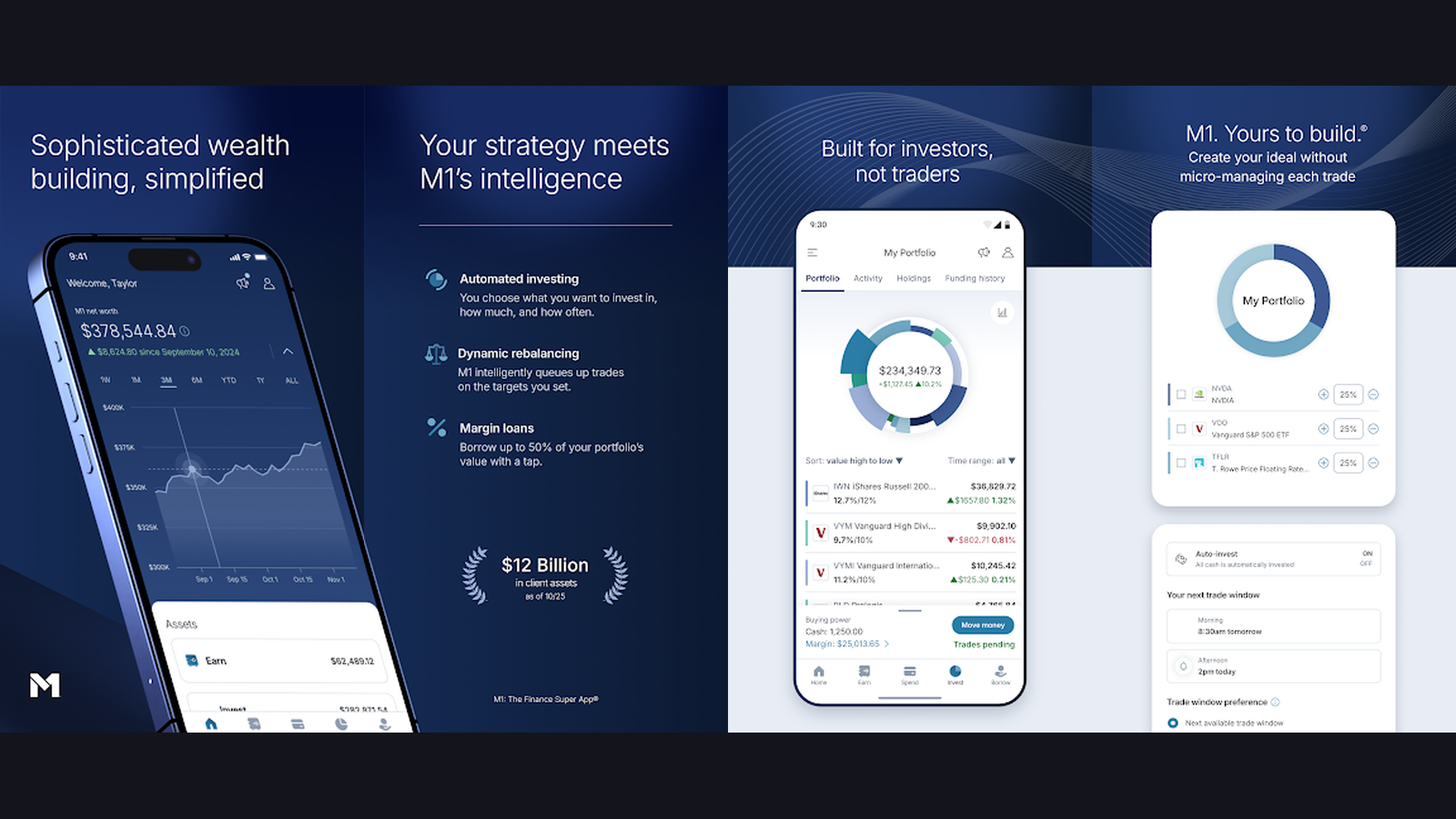
M1 Finance is a unique investing platform that combines the control of self-directed investing with the convenience of automation. You build custom portfolios called "Pies" where each slice represents a stock or ETF, then M1 automatically invests your deposits and reinvests dividends according to your target allocations. This set-it-and-forget-it approach is perfect for beginners who want to pick their own stocks without micromanaging every trade. M1 charges no commissions, no management fees, and supports fractional shares with a $100 minimum. The Smart Transfers and automation features ensure your money is always working according to your strategy. M1 also offers M1 Borrow (portfolio line of credit) and M1 Spend (checking account) for a complete financial ecosystem. M1 Plus ($95/year) unlocks a second daily trading window, higher savings rates, and reduced borrowing costs.
5. Robinhood (Rating 4.1)
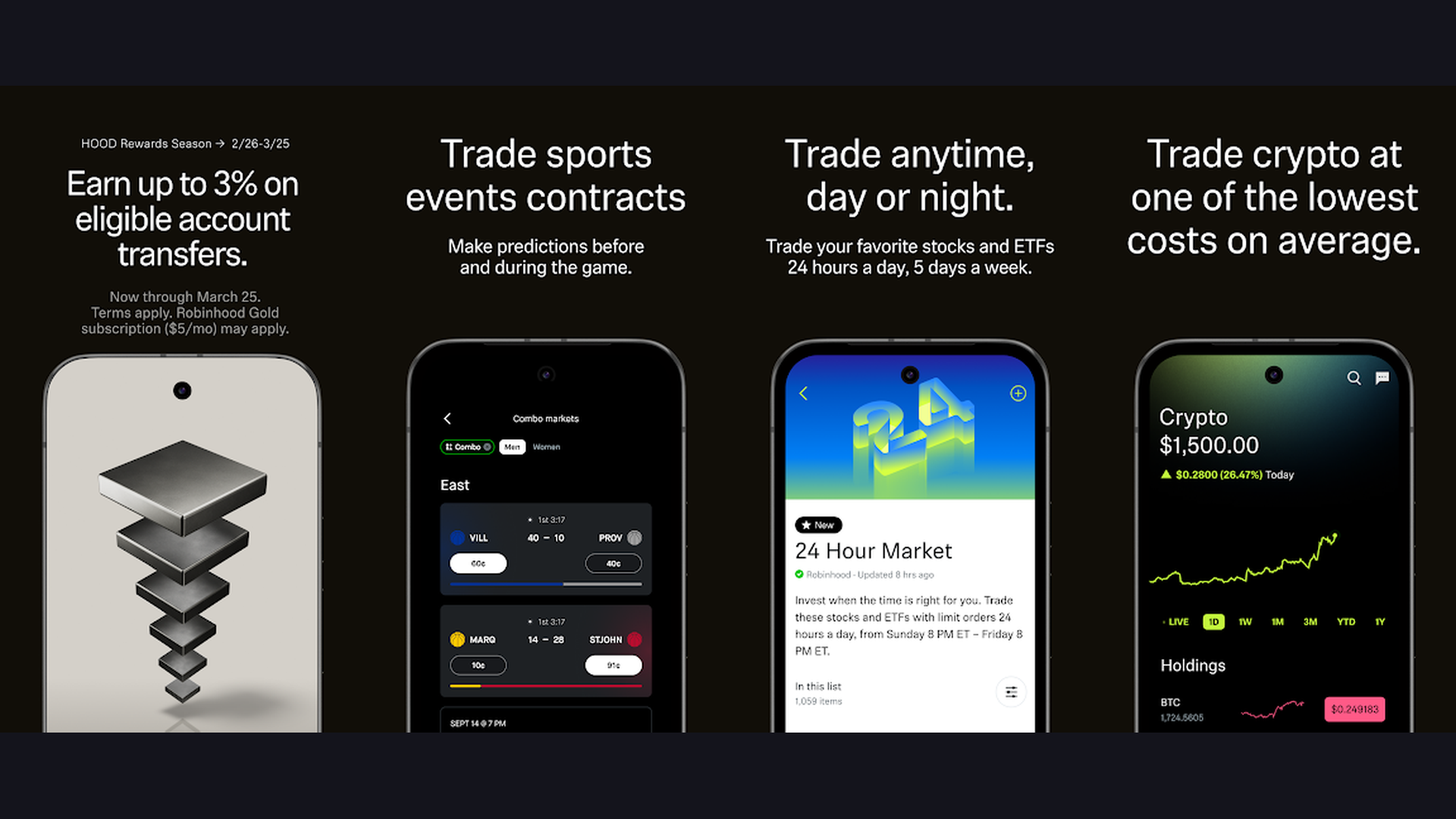
Robinhood is the app that pioneered commission-free trading and remains the most popular investing app for beginners. The minimalist interface makes buying your first stock as simple as ordering food delivery. You can trade stocks, ETFs, options, and cryptocurrency with $0 commissions and no account minimum. Fractional shares let you invest in high-priced stocks like Apple or Google with as little as $1. Robinhood also offers an IRA with a 1% match (up to 3% for Gold subscribers), a cash card with roundups, and 24/7 customer support. The Learn section provides bite-sized financial education through articles, videos, and podcasts. Robinhood Gold ($5/month) unlocks Level II market data, higher instant deposit limits, professional research from Morningstar, and 4.00% APY on uninvested cash. For pure simplicity, Robinhood remains hard to beat as a gateway into investing.
6. Fidelity Investments (Rating 4.2)
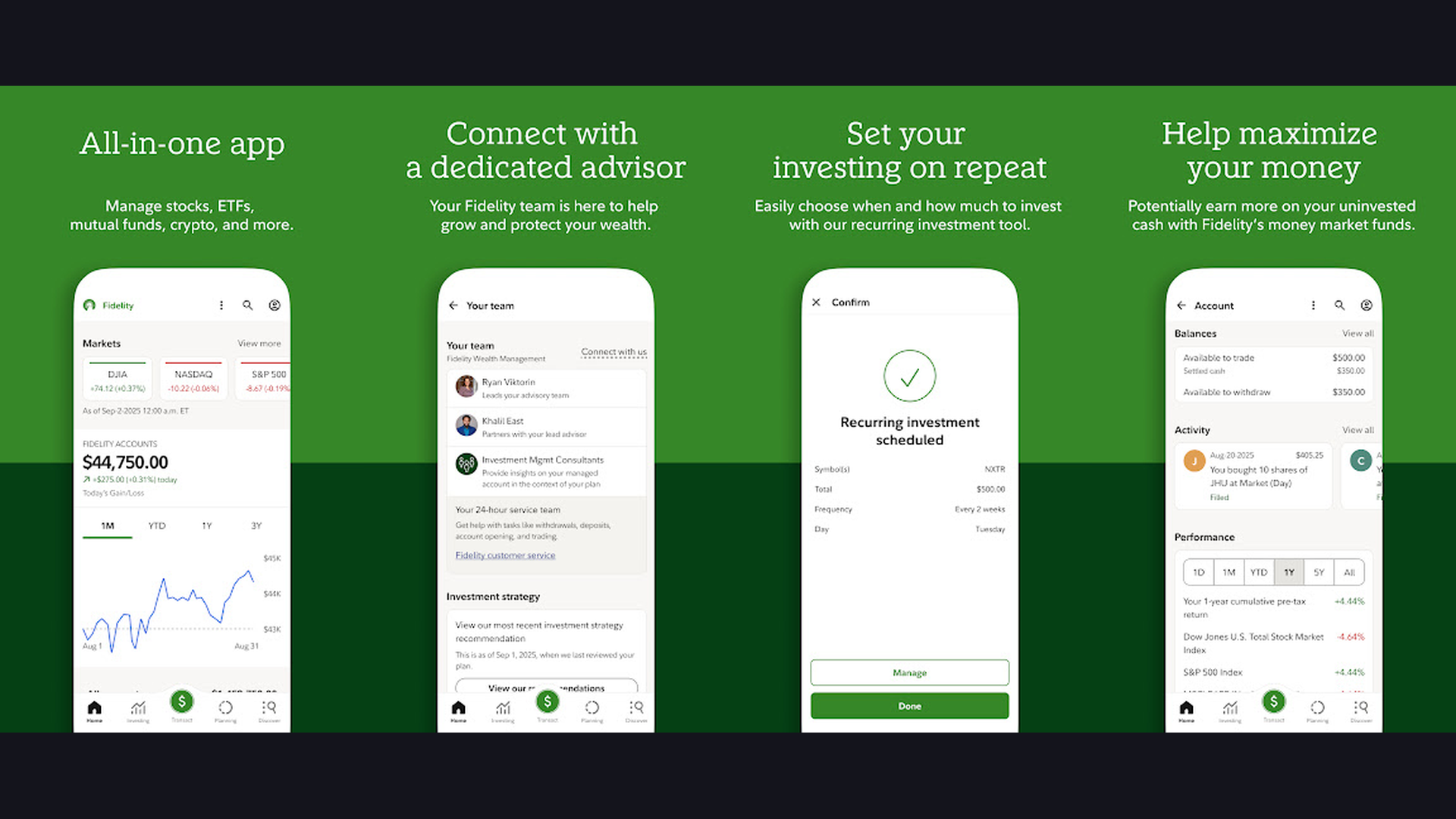
Fidelity is a full-service brokerage that offers the best combination of free trading and professional-grade tools for beginners. Commission-free trading on stocks, ETFs, and options (with no per-contract fee) makes it one of the most cost-effective platforms available. Fidelity stands out with its exceptional research: in-house analyst reports, third-party research from multiple providers, stock screeners with over 140 criteria, and a comprehensive learning center. The Fidelity Youth Account lets teenagers 13-17 trade stocks and learn investing with parental oversight. Fractional shares (Stocks by the Slice) start at just $1. Fidelity also offers mutual funds, bonds, CDs, retirement accounts (IRAs, 401k rollovers), and banking services. Customer support includes live representatives available by phone, chat, and at 200+ branch locations. For beginners who want a platform they can grow into, Fidelity offers unmatched depth.
7. Public (Rating 4.6)
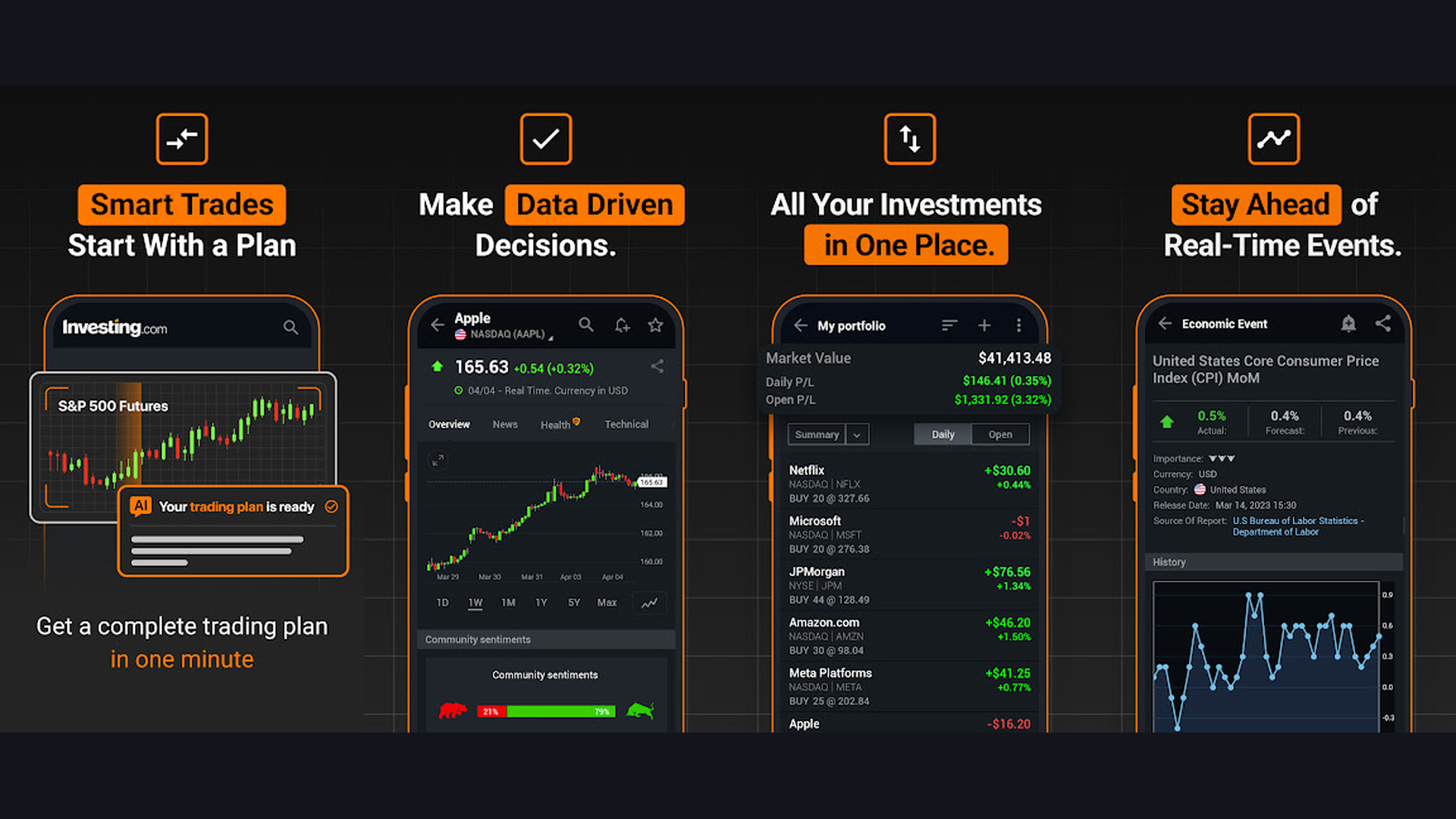
Public is a commission-free investing app with a unique social community feature that makes investing more transparent and educational. You can see what other investors are buying and selling, follow experienced traders, and share your own investment ideas in a social feed. Public trades stocks, ETFs, crypto, and alternative assets like fine art and collectibles. Unlike some free brokers, Public does not sell your order flow (PFOF), instead using an optional tipping model, ensuring your trades get the best execution prices. The app includes real-time market data, news feeds, and educational content. Public also offers a high-yield Treasury account for uninvested cash. The social aspect is particularly valuable for beginners who learn by observing what experienced investors do and understanding their reasoning.
8. eToro (Rating 4.0)
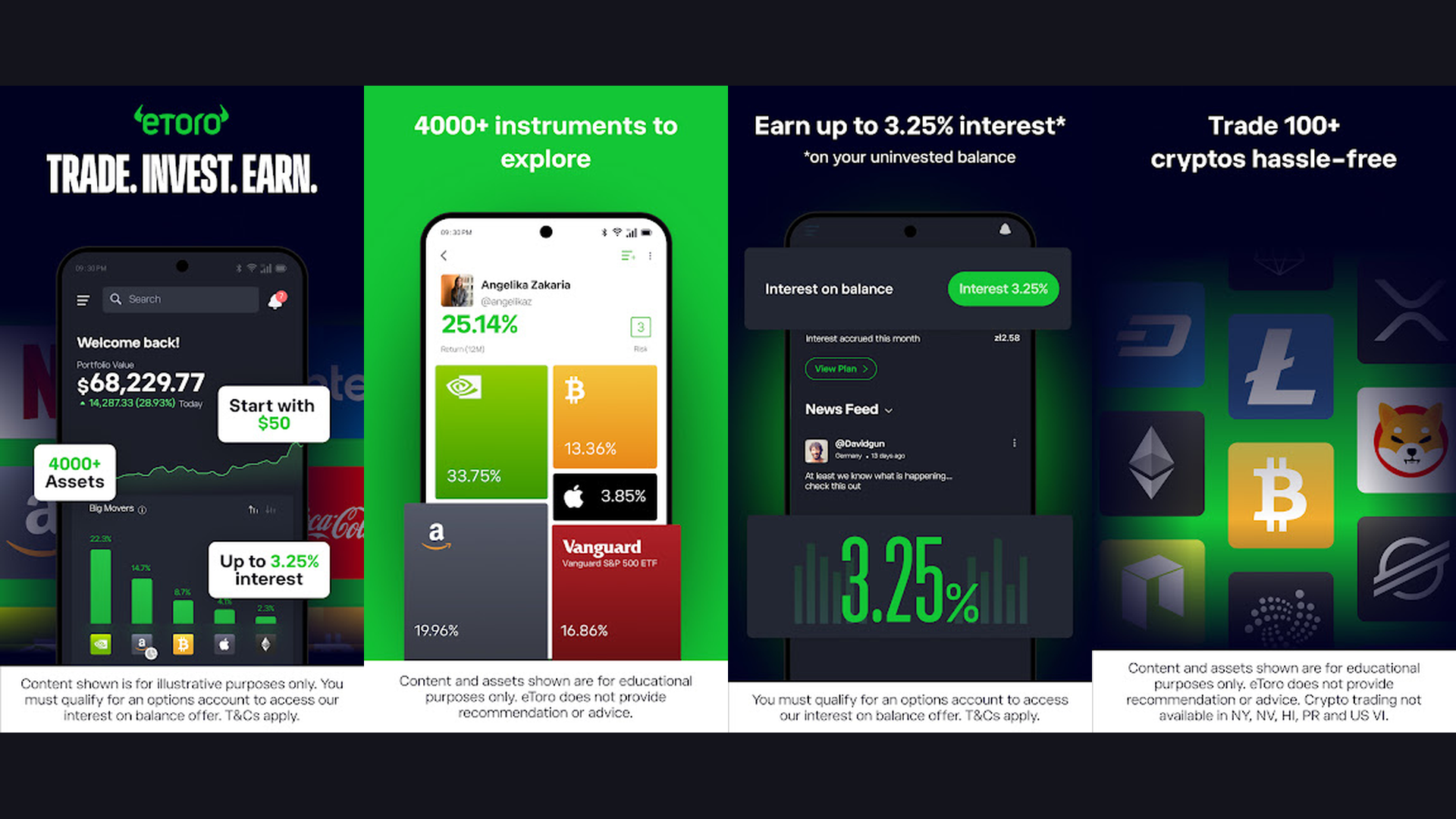
eToro is a social trading platform where beginners can copy the trades of experienced investors. The CopyTrader feature lets you browse top-performing traders, analyze their strategies and risk scores, and automatically replicate their trades in your own account. This is one of the most effective ways for beginners to invest while learning, as you can study why top traders make specific decisions. eToro supports stocks, ETFs, crypto, and CFDs (contracts for difference). The platform also features Smart Portfolios, which are professionally curated, thematic investment portfolios (like Big Tech, Renewable Energy, or Gaming) that provide instant diversification. The virtual portfolio lets you practice trading with $100,000 in virtual money. eToro charges zero commission on stock trades. For beginners unsure of their own stock-picking abilities, the copy trading feature provides a guided learning experience.
9. SoFi Invest (Rating 3.8)
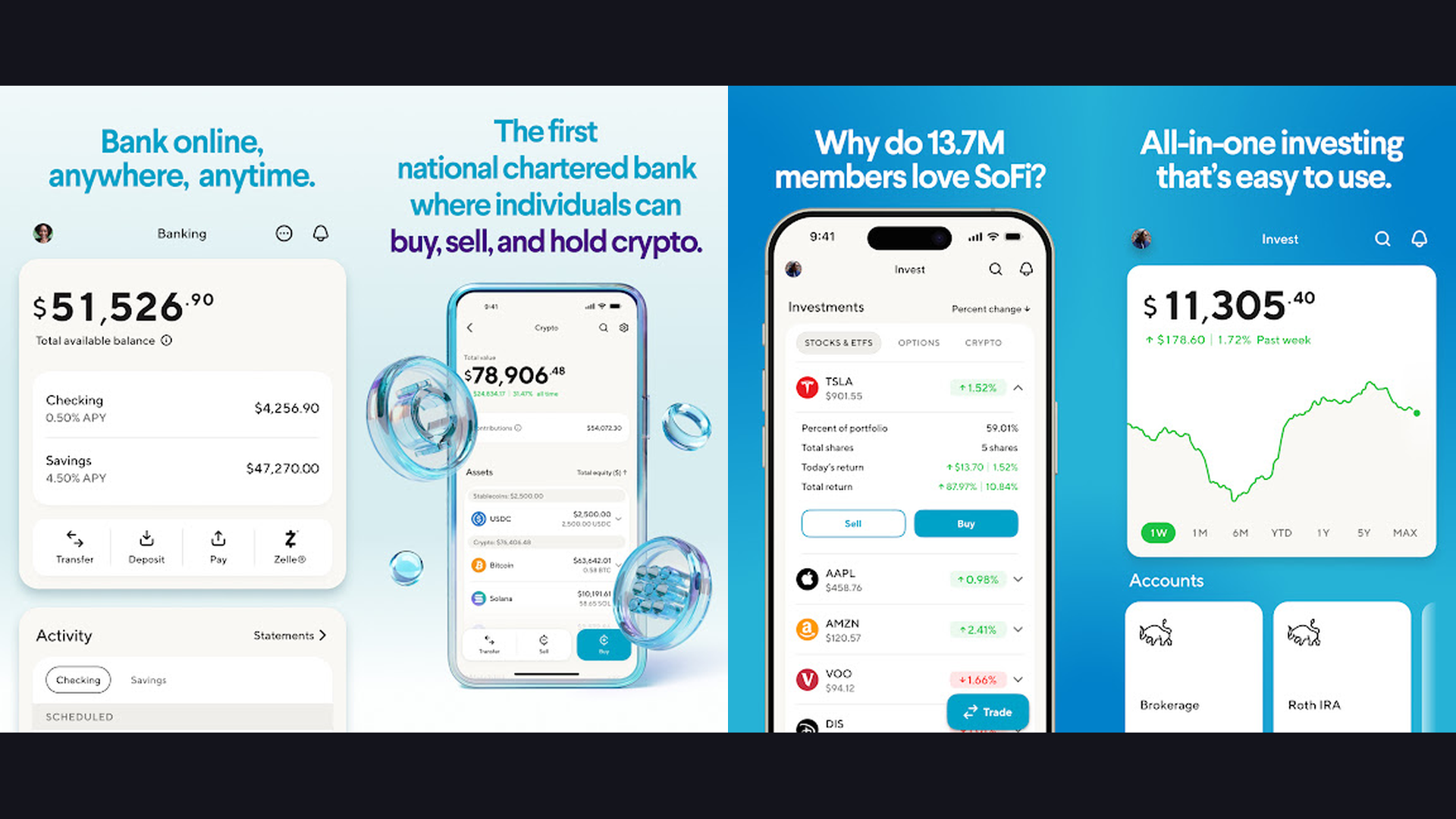
SoFi Invest is a beginner-friendly platform that combines active trading and automated investing within a broader financial ecosystem. Active Investing lets you buy and sell stocks, ETFs, and crypto with $0 commissions and no account minimum. Automated Investing provides Wealthfront-style robo-advisory with no management fee, creating and rebalancing a diversified portfolio for you. SoFi members also get access to financial planning tools, certified financial planner consultations at no cost, and educational articles. The IPO Access feature lets you buy shares of companies going public before they start trading on exchanges, a rare perk for retail investors. SoFi integrates investing with its banking, lending, and credit card products, creating a one-stop financial platform. The app regularly offers bonuses for new accounts.
10. Stash (Rating 3.7)
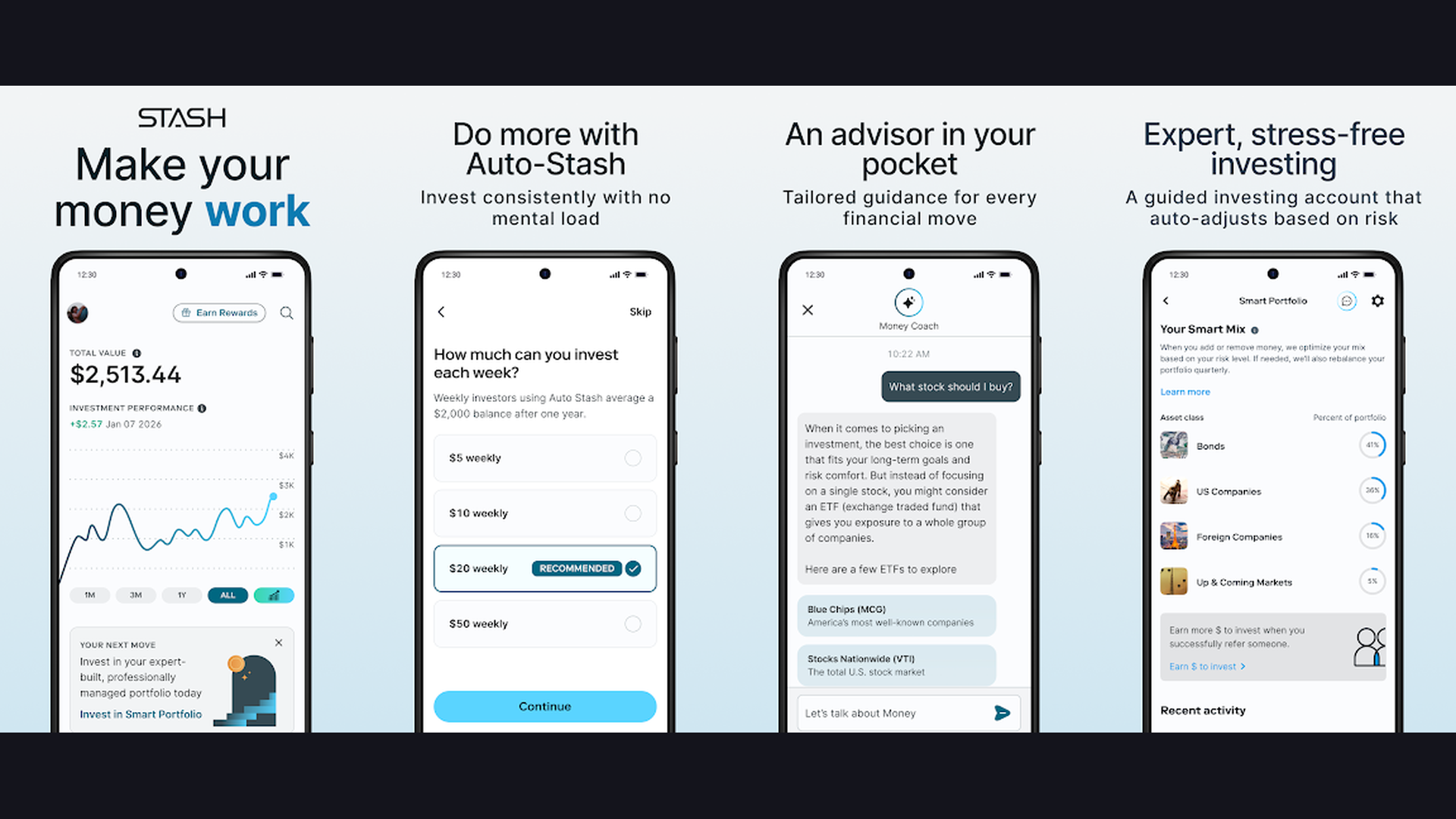
Stash is designed specifically for beginners with a guided, educational investing approach. Instead of showing complex ticker symbols and charts, Stash presents investments with clear descriptions and risk ratings, making it easy to understand what you are buying. The Stock-Back rewards program gives you fractional shares of companies when you shop with the Stash debit card, earning stock instead of cashback. Stash offers three subscription tiers ($3, $6, or $9/month) that include banking, investing, and retirement accounts. The Smart Portfolio feature builds a diversified portfolio based on your risk profile and automatically rebalances it. Stash guides beginners with regular prompts and educational content that explains investing concepts in plain language. The Round-Ups feature (similar to Acorns) auto-invests spare change. For complete beginners who need hands-on guidance, Stash makes investing less intimidating.
11. Moomoo (Rating 4.4)
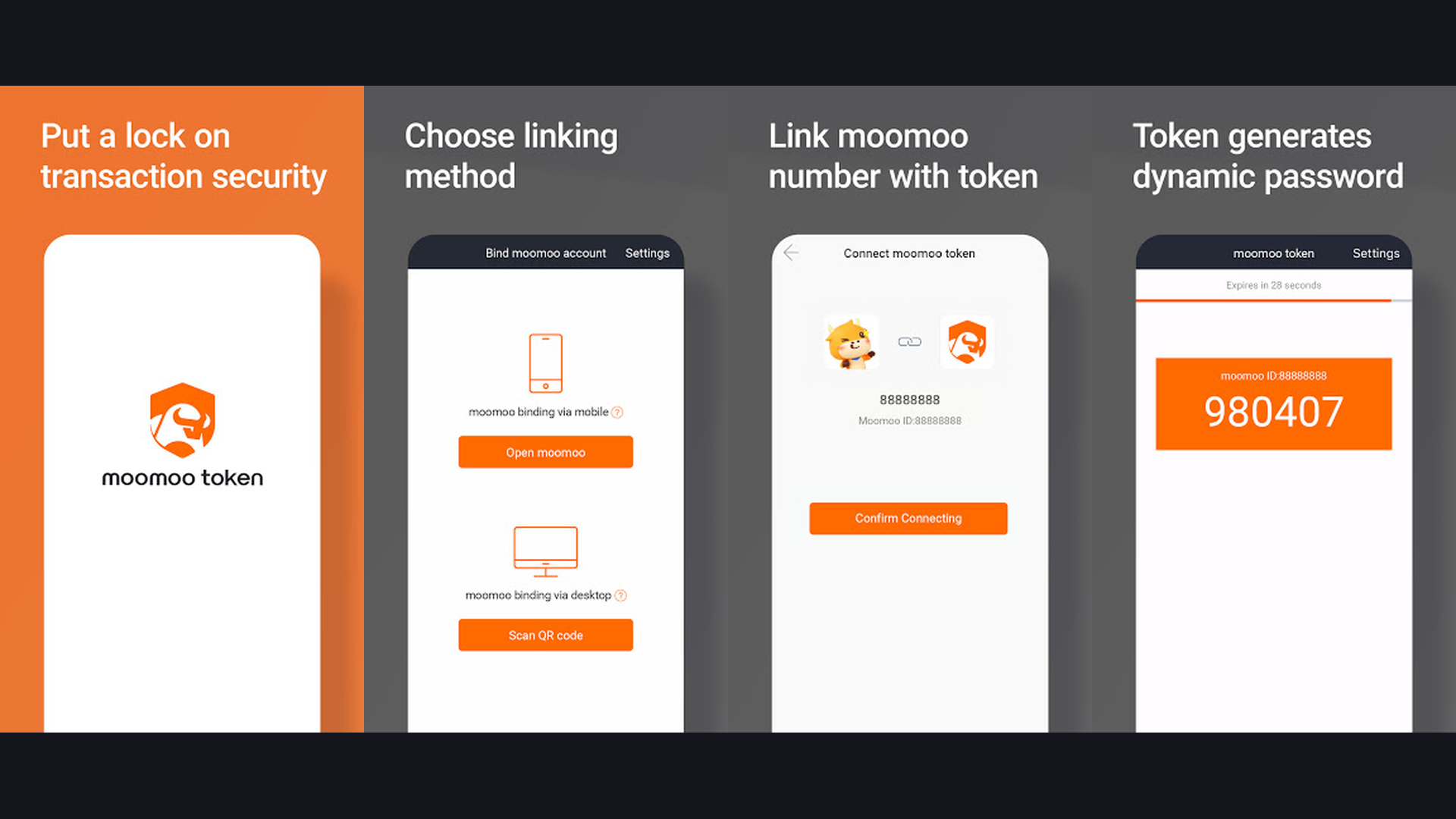
Moomoo is a feature-rich commission-free trading platform that offers tools usually reserved for professional traders. The standout feature for beginners is the free Level 2 market data (NASDAQ TotalView), which shows real-time bid/ask depth that most platforms charge for. Moomoo provides advanced charting with over 80 technical indicators, heat maps, options chains with visual analysis tools, and institutional money flow tracking. Despite these advanced features, the interface remains approachable for newcomers. The paper trading mode lets beginners practice with simulated money before investing real funds. Moomoo supports stocks, ETFs, options, and crypto with no commissions. The 24-hour trading feature lets you trade select stocks outside regular market hours. Moomoo regularly offers promotional free stock rewards for new accounts, letting beginners start their portfolio at zero cost.
12. Charles Schwab (Rating 3.0)
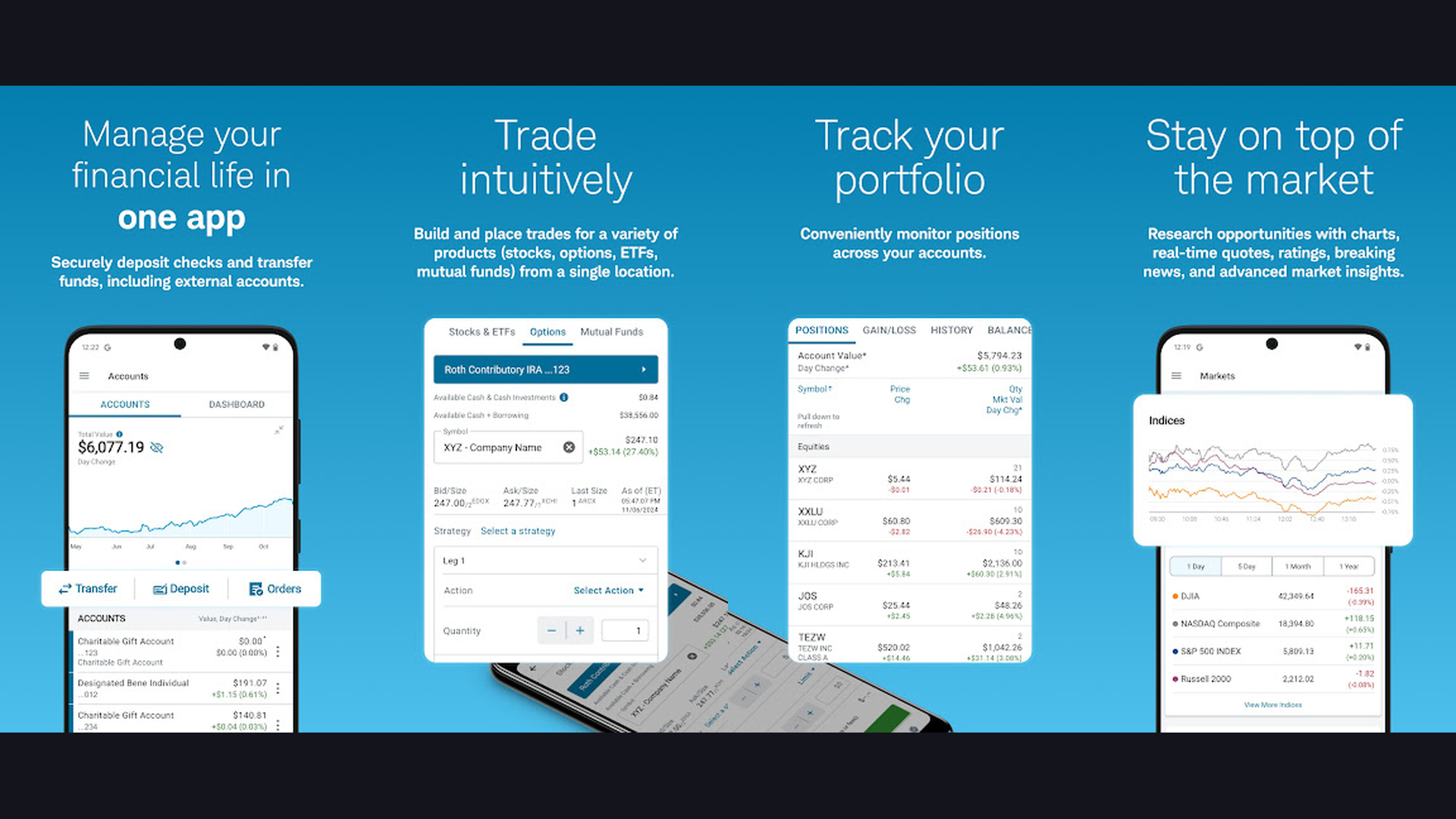
Charles Schwab is one of the most established and trusted brokerages in the United States, offering commission-free stock and ETF trading with no account minimums. After its merger with TD Ameritrade, Schwab inherited the powerful thinkorswim trading platform alongside its own beginner-friendly mobile app. Research capabilities are top-tier with equity ratings from multiple providers, detailed stock screeners, and a comprehensive Market Edge analytics suite. Schwab offers Schwab Intelligent Portfolios, a free robo-advisory service with no advisory fees (minimum $5,000). The Schwab Stock Slices program lets you buy fractional shares of S&P 500 companies for as little as $5. Customer support includes 24/7 phone access and over 300 branch locations for in-person help. For beginners who want the security of a major institution with room to grow into advanced tools, Schwab is a rock-solid choice.
13. Merrill Edge (Rating 3.2)
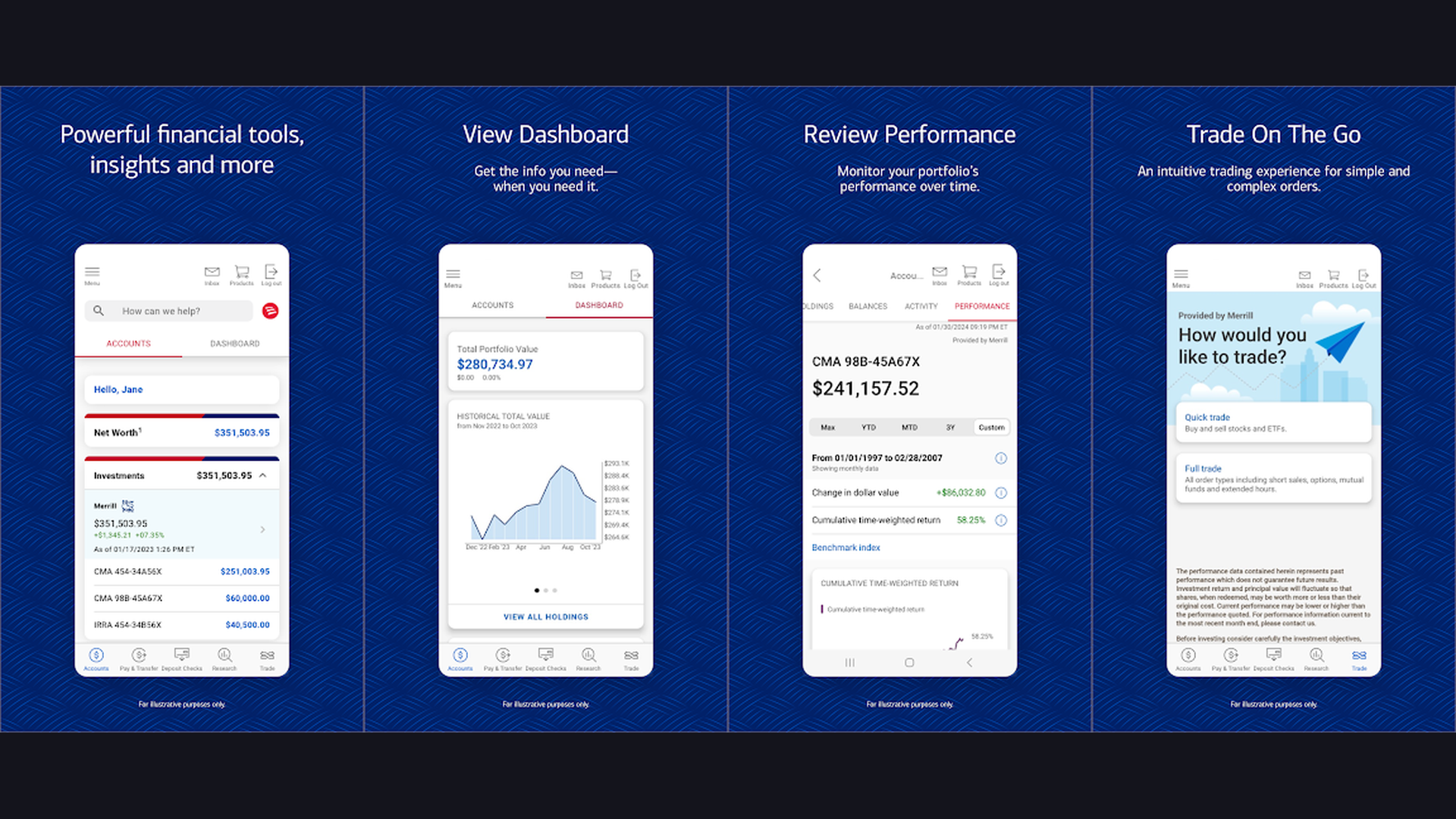
Merrill Edge is the online investing platform from Bank of America, offering commission-free stock and ETF trades with deep integration into BofA banking. The Merrill Edge Self-Directed account provides $0 online stock and ETF trades with access to Merrill research, which is consistently ranked among the best in the industry. The Idea Builder tool helps beginners explore stocks based on their interests and values. Merrill Guided Investing (robo-advisor) creates and manages a diversified portfolio for a 0.45% annual fee. The biggest advantage is Preferred Rewards, where maintaining combined BofA and Merrill balances earns you credit card rewards boosts, priority customer service, and fee discounts across the bank. For beginners who already bank with Bank of America, Merrill Edge provides seamless account management and the convenience of seeing all finances in one dashboard.
Active Trading vs Passive Investing: Which is Right for You?
Active Trading
- You pick individual stocks and ETFs based on your research and analysis
- Best apps: Robinhood, Webull, Fidelity, Moomoo, Public
- Pros: Full control, potential for higher returns, learn how markets work firsthand
- Cons: Requires time and research, higher risk, emotional decision-making can hurt returns
- Best for: Beginners who want to learn stock picking and enjoy market research
Passive/Automated Investing
- Algorithms build and manage a diversified portfolio based on your risk tolerance
- Best apps: Wealthfront, Acorns, M1 Finance, SoFi Automated
- Pros: Truly hands-off, diversified by default, lower stress, automatic rebalancing
- Cons: Less control, may charge advisory fees, returns follow the market average
- Best for: Beginners who want to invest consistently without daily decision-making
Most financial experts recommend beginners start with passive investing through index funds or robo-advisors, then gradually explore individual stock picking as they gain confidence and knowledge.
Essential Investing Tips for Beginners
- Start with Index Funds or ETFs - Buying a broad market index fund like the S&P 500 (VOO, SPY, or IVV) gives you instant diversification across 500 top companies. This is the simplest way to invest and historically outperforms most actively managed funds over the long term.
- Invest Regularly with Dollar-Cost Averaging - Set up automatic weekly or monthly investments instead of trying to time the market. Investing a fixed amount consistently means you buy more shares when prices are low and fewer when prices are high, averaging out your cost over time.
- Never Invest Money You Cannot Afford to Lose - Build an emergency fund covering 3-6 months of expenses before investing in the stock market. Stocks can lose value in the short term, and you do not want to be forced to sell at a loss because you need the money for an unexpected expense.
- Diversify Your Portfolio - Do not put all your money into a single stock. Spread your investments across different sectors (tech, healthcare, finance, energy) and asset types (stocks, bonds, REITs). Apps like M1 Finance and Wealthfront make diversification automatic.
- Think Long-Term - The stock market has historically returned about 10% annually over decades. Short-term fluctuations are normal. Resist the urge to panic-sell during market dips. The most successful investors are those who stay invested through ups and downs.
- Use Paper Trading First - Before risking real money, practice with paper trading simulators available in Webull, eToro, and Moomoo. This lets you learn how orders work, test strategies, and build confidence without financial risk.
- Understand Fees - While many apps offer commission-free trading, look out for other fees: management fees, expense ratios on ETFs, payment for order flow, and subscription costs. Even small fees compound over time and can significantly reduce long-term returns.
- Open a Tax-Advantaged Account - If you are investing for retirement, open an IRA (Traditional or Roth) through your brokerage app. Contributions to a Roth IRA grow tax-free, and many apps like Robinhood and Fidelity offer free IRA accounts. Use planner apps to track your investing goals alongside other financial milestones.
Frequently Asked Questions
What is the best stock trading app for complete beginners?
For complete beginners who want the simplest experience, Robinhood and Acorns are the easiest to start with. Robinhood offers the most intuitive interface for buying individual stocks, while Acorns handles everything automatically through micro-investing. If you want a balance of simplicity and tools, SoFi Invest provides free financial advisor access and an educational approach that helps beginners learn while investing.
Can I start investing with just $5?
Yes. Robinhood, Public, Webull, Stash, and SoFi Invest all support fractional shares with no minimum deposit, letting you buy slices of expensive stocks for as little as $1-$5. Acorns automatically invests your spare change starting from pennies. M1 Finance requires a $100 minimum, and Wealthfront requires $500 for its robo-advisor. Many apps also offer bonus stocks for signing up, so you can potentially start your portfolio at zero cost.
Are stock trading apps safe?
Yes, all the apps on this list are regulated by the SEC (Securities and Exchange Commission) and are members of SIPC (Securities Investor Protection Corporation), which protects your investments up to $500,000 if the brokerage fails. Your cash deposits are also typically FDIC-insured up to $250,000 through partner banks. Always enable two-factor authentication and use a strong password to secure your account.
What is the difference between stocks, ETFs, and index funds?
A stock represents ownership in one company (like Apple or Amazon). An ETF (Exchange-Traded Fund) bundles multiple stocks into one investment that trades like a stock. An index fund is a type of ETF or mutual fund that tracks a specific market index like the S&P 500. For beginners, starting with broad-market index fund ETFs (like VOO or VTI) provides instant diversification and is widely recommended by financial experts as the foundation of any portfolio.
Do I have to pay taxes on stock trading?
Yes, stock market gains are taxable in most countries. In the US, short-term capital gains (stocks held less than one year) are taxed at your ordinary income rate, while long-term gains (held over one year) are taxed at a lower rate (0%, 15%, or 20% depending on income). Dividends are also taxable. Investing through a Roth IRA eliminates these taxes on qualified withdrawals. All stock trading apps provide annual tax documents (1099 forms) to help you file your returns.
Should I use a robo-advisor or pick stocks myself?
If you are a complete beginner with no investment knowledge, start with a robo-advisor (Wealthfront, Acorns, or M1 Finance) that builds a diversified portfolio for you automatically. As you learn and gain confidence, you can allocate a portion of your funds to individual stock picking through apps like Robinhood, Webull, or Fidelity. Many experienced investors use a "core and explore" strategy: 80-90% in passive index funds and 10-20% in individual stocks they believe in.
Final Thoughts
The best time to start investing was yesterday. The second-best time is today. With $0 commission trading, fractional shares, and automated portfolios, the barriers to investing have never been lower. If you want hands-off automation, start with Wealthfront or Acorns. If you want to learn stock picking, Robinhood and Webull are the most beginner-friendly active trading platforms. If you want a full-service brokerage you can grow into for decades, Fidelity and Charles Schwab offer unmatched depth. Start small, stay consistent, think long-term, and let compound growth work in your favor. For managing your broader financial life, explore our guides on financial management tools, digital planner apps, and reminder apps to stay on top of your investing schedule.