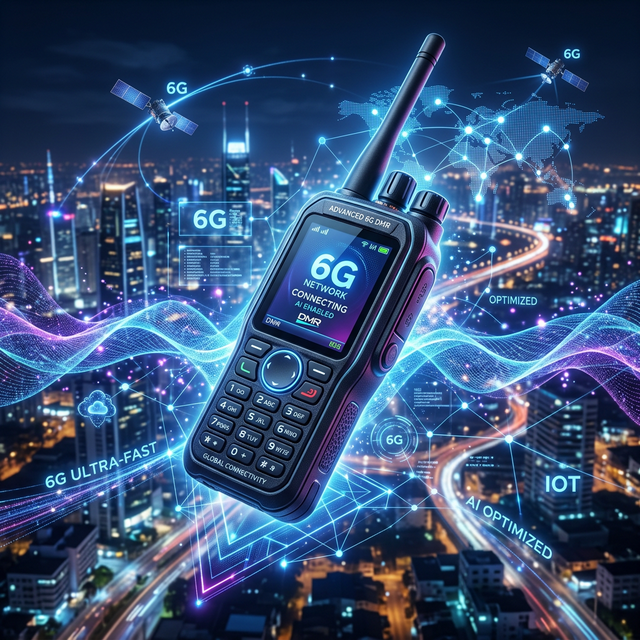
Understanding Mobile Radios Beyond 2026
When most people hear the word "radio," they imagine a classic AM/FM stereo on a car dashboard or a dusty boombox. However, in the realm of professional communication and technology, a "mobile radio" is something entirely different. In 2026, mobile mobile radio technology has evolved into a highly sophisticated, AI-driven network tool that powers mission-critical communications worldwide. Before you look for vehicle maintenance and DIY repair apps for van life, outfitting your rig with a proper mobile radio might just be the most important life-saving upgrade you make.
Unlike portable handset walkie-talkies (which operate on battery power), true "mobile radios" are substantial communication units precisely designed to be permanently installed into a vehicle, desk, or command center. They draw power directly from a vehicle's 12-volt electrical system or a dedicated power supply, yielding considerably higher transmission wattage and vastly superior range.
The Difference Between PMR and DMR in 2026
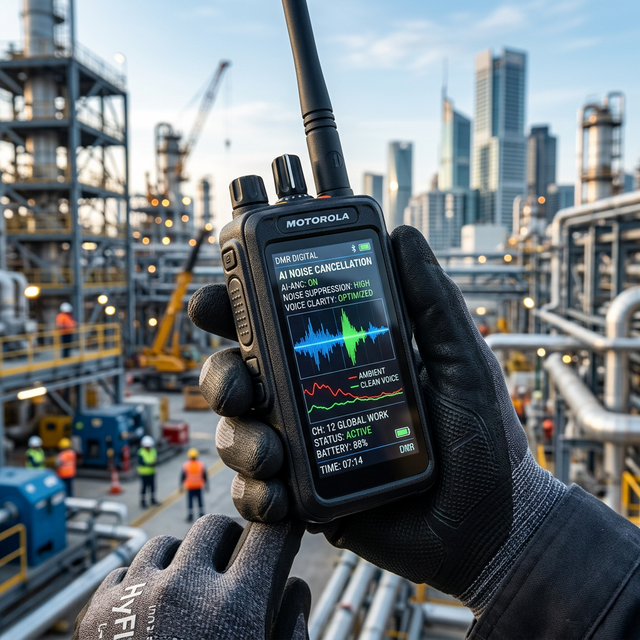
The core framework of modern mobile radio lies in two acronyms: PMR (Professional Mobile Radio) and DMR (Digital Mobile Radio). In 2026, the transition from old analog systems to completely digital infrastructure is virtually complete globally. If you need hyper-reliable communications while navigating off-grid, similar to relying on anchor alarm apps designed for boaters, digital protocols are non-negotiable.
Digital Mobile Radio (DMR) is an open digital standard created by the European Telecommunications Standards Institute (ETSI). It provides improved voice clarity, better battery efficiency for portable units within the network, and the ability to send robust data like GPS locations and text messages alongside voice.
AI Integration: The Smart Radios of Tomorrow
Perhaps the most monumental shift in 2026 is the ubiquitous integration of Artificial Intelligence into mobile radio networks. We aren't just talking about voice clarity—AI is now woven into the Radio Access Network (AI-RAN). This allows the network itself to dynamically allocate bandwidth, predict signal degradation before it happens, and utilize advanced active noise cancellation that filters out heavy machinery or sirens in real-time.
This level of technological leap mirrors the sophisticated algorithms seen in modern cellular devices, making even the base features on older flagships like the OnePlus 9 seem primitive when it comes to raw mission-critical audio processing.
The Horizon: 6G and Satellite Integration
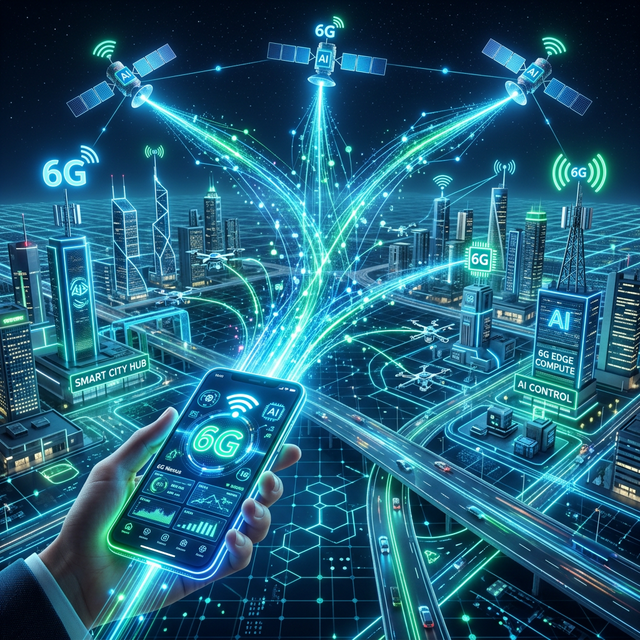
While 5G brought massive bandwidth, 2026 marks the year where the foundational elements of 6G are actively shaping the future of mobile radio. Devices from industry pioneers are starting to bridge the gap between traditional VHF/UHF radio waves, LTE networks, and low-earth orbit (LEO) satellite data links. This hyper-connected web ensures that a mobile radio user is never truly disconnected, regardless of terrestrial tower outages.
As 6G specs begin standardization, tech giants like Ericsson and Qualcomm are prioritizing centimeter-wave technology and AI-driven spectrum sharing, which will further minimize latency to near-zero levels.
Comparing Analog vs. Digital Mobile Radios (2026 Standard)
| Feature | Legacy Analog Radio | Modern Digital Mobile Radio (DMR) |
|---|---|---|
| Audio Quality | Degrades with distance (static) | Crystal clear to the edge of range |
| Data Capabilities | None | GPS, Texting, Telemetry |
| Spectrum Efficiency | 1 channel per 12.5kHz | 2 channels per 12.5kHz (TDMA) |
| Security | Basic scrambling or open | Advanced AES-256 Encryption |
Frequently Asked Questions (FAQ)
Do mobile radios require an internet connection?
No, traditional mobile radios communicate point-to-point via radio frequency (RF) or through dedicated local repeater towers. However, in 2026, many modern PMR units offer LTE integration allowing them to seamlessly switch to cellular networks via Motorola Solutions WAVE technology when out of RF range.
Can a mobile radio call a regular smartphone like the Google Pixel?
Directly over radio waves, no. However, via Radio over IP (RoIP) gateways and modern smart-dispatch software, radio networks can easily patch radio transmissions through to smartphone applications over cellular data.
What is the typical range of a vehicle-mounted mobile radio?
While a 4-watt handheld may only reach 1 to 3 miles off-grid, a 50-watt mobile radio permanently installed in a vehicle with a proper exterior antenna can consistently reach 10 to 30+ miles in open terrain without a repeater.
Are analog radios illegal now?
They are not strictly illegal for general public use on specific bands (like CB or basic GMRS), but major telecom commissions globally have mandated that virtually all commercial and professional land mobile radio networks migrate to narrowband digital standards for spectrum efficiency.