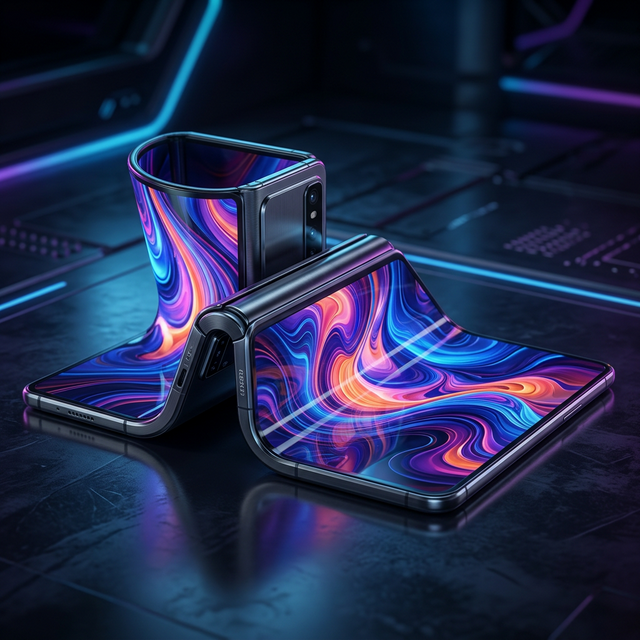
The Era of Bent Reality: Screen Technology in 2026
For years, consumers held identical, rigid glass slabs. In 2026, however, the smartphone industry has collectively decided that flat is boring. The relentless innovation surrounding flexible OLED (Organic Light-Emitting Diode) displays has completely shattered traditional form factors, transitioning bizarre tech concepts into mainstream consumer realities.
Understanding these new screens requires looking at where they came from. If you want a refresher on the foundational screen technologies that paved the way for bendable glass, check out our Phone Display Types Guide 2026.
The Refinement of Foldable Displays
Foldables are no longer delicate prototypes exclusively for early adopters. In 2026, they represent a significant portion of premium smartphone sales globally.
Achieving the "Zero-Crease" Standard
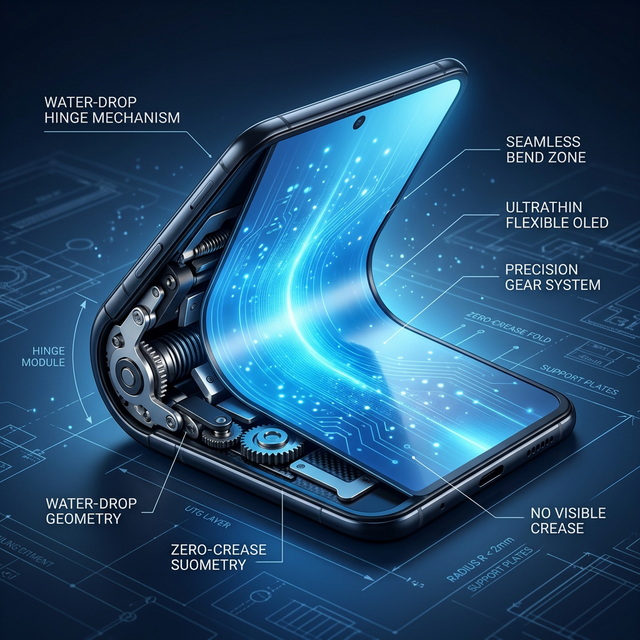
The biggest complaint regarding early foldables was the distracting valley running down the center of the display. Thanks to second-generation Ultra-Thin Glass (UTG) and highly sophisticated "water-drop" hinge designs, the 2026 premium standard is the "zero-crease" display. Manufacturers like Samsung have perfected their Flex OLED panels to the point where the central fold is virtually invisible both to the eye and the touch.
Tri-Fold and Multi-Hinge Architectures
We are moving beyond the simple "book" fold. 2026 has witnessed the commercial launch of "tri-fold" devices. These smartphones use two distinct hinges, allowing a standard-sized candybar phone to unfold out into a genuine 10-inch, tablet-class workstation. This level of screen real-estate is transformative for mobile productivity and media consumption, though it pushes the limits of modern battery technology. (If you are relying heavily on 5G data while stretching these massive screens, you might appreciate our look at Mobile Network Evolution to understand the bandwidth driving your content).
Enter the Rollable Smartphone
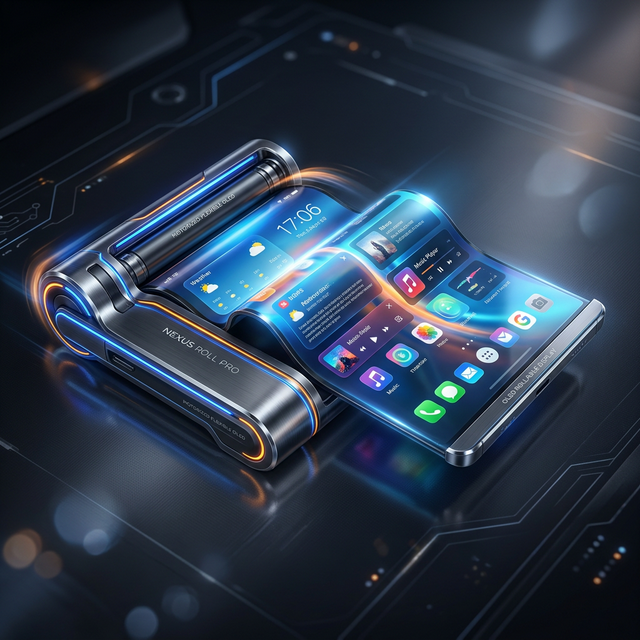
If foldables defined the early 2020s, rollable displays are defining the premium niche of 2026. Representing the ultimate expression of flexible OLED technology, rollable phones don't snap open; they smoothly unravel.
Motorized Screen Expansion
Using miniaturized internal motors, a standard 6.5-inch smartphone can horizontally unspool its flexible OLED panel to become an 8-inch mini-tablet at the push of a button. Companies like Motorola and LG Display have spearheaded the development of screens that slide out from a hidden cylinder within the chassis.
The Durability Challenge Solved?
Rollable screens face intense friction. To mitigate this, 2026 models incorporate advanced self-healing polymer layers. These micro-coatings automatically fill in microscopic scratches that occur when the screen slides in and out of the housing, ensuring long-term optical clarity.
Software Adapting to Hardware
A transforming screen is useless without an operating system that can adapt instantly. Underneath these displays, developers are ensuring app interfaces seamlessly scale as the physical screen stretches or folds. For instance, gaming on a transforming screen presents unique challenges and opportunities. Check out our Best Cooperative Multiplayer Games 2026 to see titles that actively adapt their UI when a phone converts into a tablet.
Additionally, users are finding creative ways to personalize these dynamic cover screens. Did you know you can customize your cover screen wallpapers using mobile editing tools? Learn How to Add a Border in PicsArt to perfectly frame your favorite photos for your foldable's outer display.
Frequently Asked Questions
Does folding the screen eventually break the OLED pixels?
In 2026, modern Ultra-Thin Glass (UTG) combined with flexible OLED substrates are rated by manufacturers to withstand over 400,000 folds. This effectively guarantees the screen mechanism will outlast the battery and CPU life of the device under normal use.
Which is better for durability: Foldable or Rollable?
Currently, Foldables are more fundamentally durable because the delicate inner screen is protected when snapped shut like a clamshell. Rollable screens, while protected by self-healing polymers, keep their flexible material exposed to the outside elements at all times.
Can you put a screen protector on a flexible OLED display?
Yes, but you must strictly use factory-installed or manufacturer-approved flexible protectors. Applying standard rigid tempered glass or third-party films can interfere with the hinge gap or motorized rollers, potentially destroying the $2,000 device.