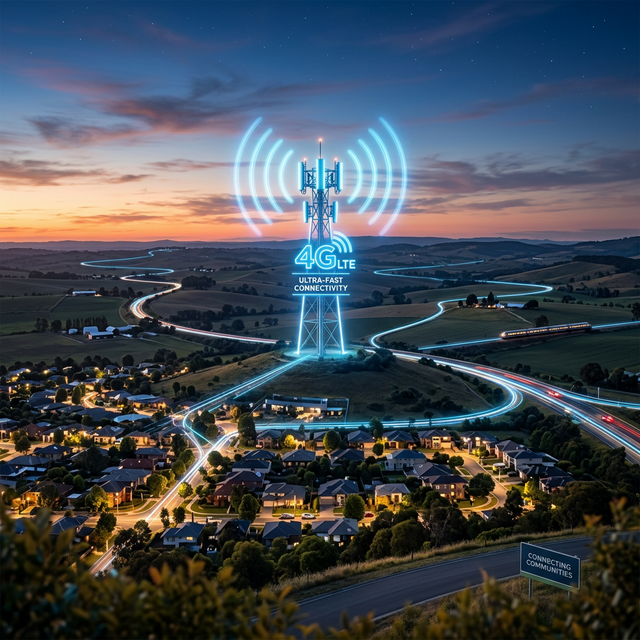
The Unseen Backbone of Modern Connectivity
As we navigate through 2026, it is tempting to assume that older cellular generations have simply been packed away into the annals of telecom history. However, while 5G undeniably offers breathtaking multi-gigabit speeds in dense urban centers, the benefits of 4G LTE mobile networks remain absolutely critical to maintaining a globally connected society.
Far from being obsolete, Long Term Evolution (LTE) currently acts as the sturdy anchor for billions of devices worldwide. If you want a deeper look at how cellular infrastructure evolved to this critical juncture, we strongly recommend reading our comprehensive guide on Mobile Networks: From 1G to 5G.
So, why is 4G LTE still so relevant in 2026? Simply put, it offers a distinct amalgamation of ubiquitous coverage, hardware affordability, and battle-tested reliability that modern high-frequency networks still struggle to replicate at scale.
1. Ubiquitous Geographic Coverage
The single greatest strength of 4G LTE today is its sheer reach. Operating primarily on lower frequency "Sub-6" spectrum bands, LTE signals excel at traveling vast distances and penetrating dense obstacles like foliage and thick concrete walls.
While an ultra-fast 5G mmWave signal might get blocked by a pane of low-emissivity glass (a similar interference phenomenon sometimes seen with close-range wireless protocols; see our article on iPhone 15 Pro NFC Issues with BMW Charging), a 4G LTE signal will reliably push through.
For individuals residing in suburban or rural communities, 4G LTE remains the primary, and often only, source of high-speed mobile internet. Even as carriers expand their next-generation footprints, the economic reality of deploying thousands of dense cellular nodes in sparsely populated areas ensures LTE will remain the rural standard well through the 2030s.
2. The Foundation for the Internet of Things (IoT)
In 2026, the Internet of Things (IoT) encompasses everything from smart municipal water meters to vast logistics fleet trackers. These devices don't require the ability to stream 4K video; they require secure, persistent, low-power connections over massive geographical areas.
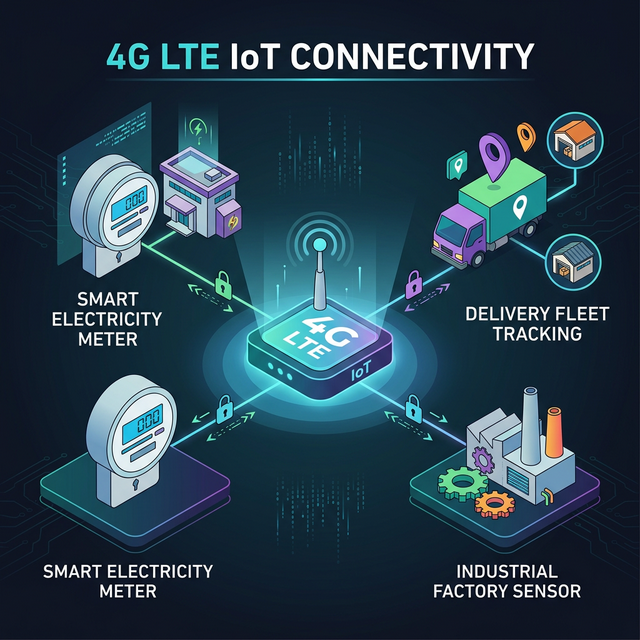
Modified LTE protocols like LTE-M (Long Term Evolution for Machines) and NB-IoT (Narrowband IoT) were engineered specifically for this purpose. These protocols allow industrial sensors to run for up to a decade on a single battery charge while pinging data towers miles away. Enterprise giants rely heavily on the established 4G LTE backbone because modern LTE hardware modules are incredibly affordable, universally compatible across global bands, and offer a guaranteed lifecycle of 10 to 15 years.
3. Rock-Solid VoLTE Call Quality
Before the widespread adoption of LTE, making a phone call often meant dropping your high-speed internet connection, as legacy 3G networks struggled to handle concurrent voice and packet data. The introduction of Voice over LTE (VoLTE) revolutionized mobile audio.
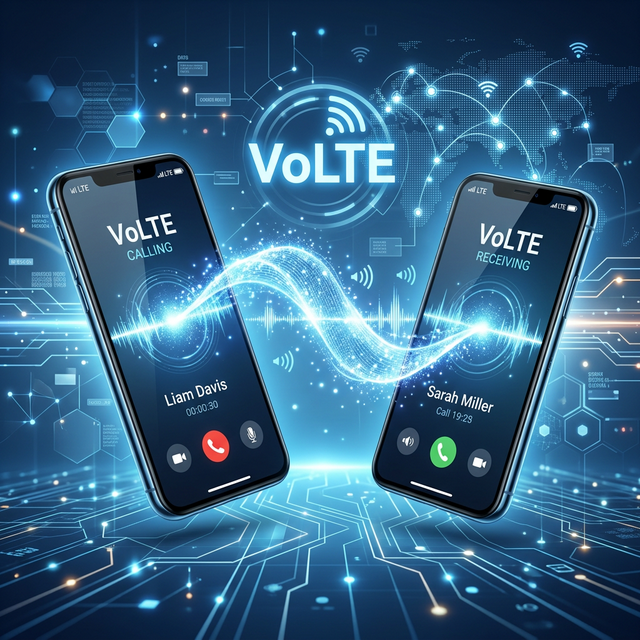
VoLTE treats your phone call as highly-prioritized data packets rather than an analog circuit switch. This fundamentally enables "HD Voice," drastically improving acoustic clarity while actively diminishing background noise. Furthermore, VoLTE allows you to maintain simultaneous data connections—meaning you can comfortably browse the web or navigate via GPS while on a crystal-clear conference call.
In 2026, major global carriers like AT&T and T-Mobile rely on VoLTE as the absolute baseline standard for cellular calling, having completely entirely retired older 3G voice networks.
4. The "Anchor" for 5G Non-Standalone (NSA)
Perhaps the most ironic benefit of 4G LTE in 2026 is that it is actively propping up the very technology replacing it. The vast majority of early and current 5G deployments utilize a "Non-Standalone" (NSA) architecture.
In an NSA deployment, the network utilizes the 5G radio frequencies to push the massive data payloads (the video stream or game download), but it still strictly relies on the existing 4G LTE "Evolved Packet Core" to handle all the control signaling—authenticating your device, routing the call, and managing the handover as you drive between cell towers. Without 4G LTE acting as this stable control anchor, huge swaths of the 5G network simply would not function today.
5. Battery Efficiency and Thermal Dynamics
Ask any early adopter of multi-gigabit hardware about battery life, and they will share horror stories. Because 4G LTE infrastructure is so thoroughly optimized and universally deployed, smartphone modems rarely have to work at peak power to hunt for a signal.
Modern System-on-Chips (SoCs) inside 2026 smartphones have perfected LTE power management. If you are reading a text-heavy website or listening to compressed audio, your phone will actively idle on a low-power LTE band to save phenomenal amounts of battery, only spinning up power-hungry next-generation radios when you request massive data transfers. (Just as the radio modem affects your battery, so does the type of screen rendering your content; read our Phone Display Types Guide to understand OLED vs LCD power consumption).
Frequently Asked Questions
Is 4G LTE being phased out in 2026?
Absolutely not. While carriers globally have shut down 2G and 3G networks to reclaim spectrum, 4G LTE is projected to operate as the foundational fallback network globally well into the 2030s. It is far too critical for IoT and rural coverage to sunset anytime soon.
Can I share my 4G LTE data with other devices?
Yes, all modern smartphones allow you to generate a Wi-Fi hotspot utilizing your carrier's LTE data. Just be mindful of your specific plan's data caps. If you need alternative methods to share cellular resources in regions with prepaid constraints, check out our guide on How to Share Mobile Balances.
What does "LTE Advanced" mean?
LTE Advanced (LTE-A) is a major enhancement of the original LTE standard. It utilizes a technique called "Carrier Aggregation" to combine multiple different frequency bands together simultaneously, drastically increasing your total theoretical download speeds compared to baseline LTE.
Is 4G LTE secure enough for banking in 2026?
Yes. By design, 4G LTE mandates mutual authentication (the network verifies the phone, and the phone verifies the network) and utilizes robust end-to-end encryption algorithms for data transmission, making it fundamentally much more secure than connecting to an open public Wi-Fi network.