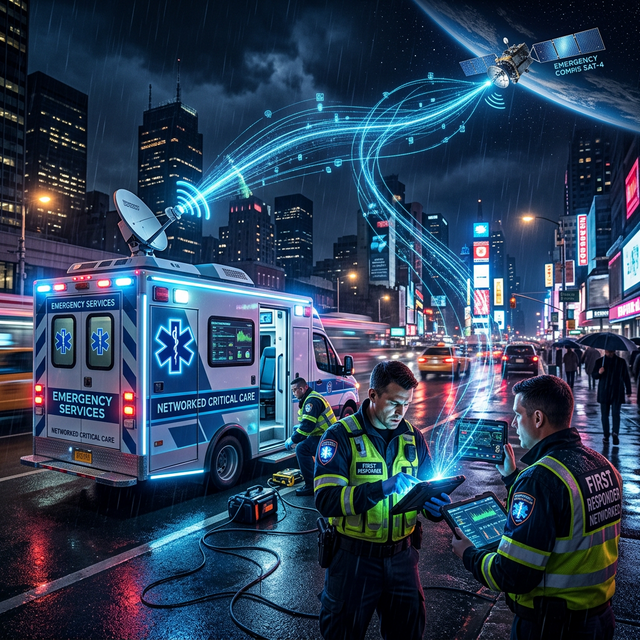
The Evolution of First Responder Communications in 2026
In modern crisis management, seconds dictate survival. For decades, emergency services relied on legacy dedicated land-mobile radio (LMR) systems like TETRA and P25. However, in 2026, these voice-centric networks are no longer sufficient. Today's first responders require high-bandwidth data applications—live drone video feeds, real-time biometric tracking, and instant access to structural blueprints. This paradigm shift makes strict network compatibility across commercial wireless grids, private safety networks, and satellite systems an absolute necessity rather than a luxury.
Understanding the underlying infrastructure that powers these connections is vital. To see how these technologies scaled globally before reaching critical status, review our Mobile Networks Evolution 1G to 5G Guide. Today, true cross-network compatibility ensures that police, fire, and medical teams can interoperate seamlessly, regardless of which geographic jurisdiction they cross into.
The Impact of 5G Network Slicing
The defining technological leap for emergency communications in 2026 is the widespread adoption of 5G Network Slicing.
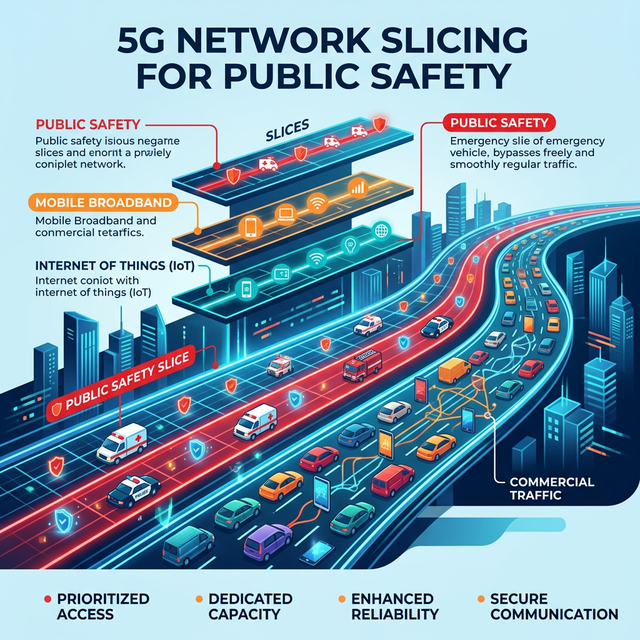
During a massive public emergency—such as an earthquake or a large music festival panic—commercial cell towers are instantly overwhelmed by thousands of civilians attempting to make calls or stream video. In the past, this congestion locked first responders out of the network. With advanced 5G standalone architecture governed by 3GPP standards, emergency services are allocated a dedicated "virtual slice" of the spectrum.
Guaranteed Quality of Service (QoS)
This dedicated slice guarantees ultra-low latency (under 10 milliseconds) and high throughput exclusively for authenticated emergency devices. Even if the broader public network collapses under the weight of commercial traffic, the emergency slice remains pristine, ensuring critical command-and-control data is delivered without interruption.
Bridging the Gap: LEO Satellite Integration
Terrestrial 5G networks, despite their speed, share a critical vulnerability: physical infrastructure. Hurricanes, wildfires, and floods routinely destroy cell towers and sever fiber optic backhaul lines.
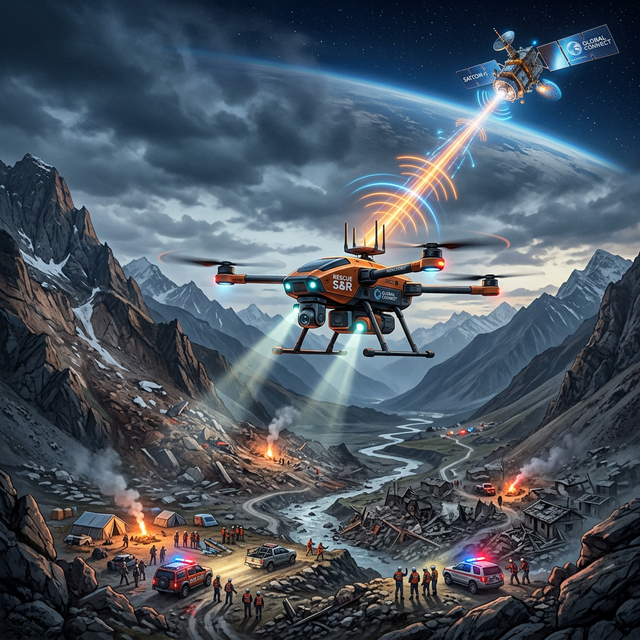
In 2026, complete network compatibility means a device can seamlessly transition from a terrestrial 5G tower to a Low Earth Orbit (LEO) satellite constellation without dropping the secure connection. Satellite systems, such as those provided by Globalstar and others, act as the ultimate fail-safe. If a firefighter's smart radio loses its 5G handshake deep in a wilderness fire zone, the integrated Non-Terrestrial Network (NTN) protocol instantly routes the data packets to space and back down to the command center.
Hardware and Human Machine Interface (HMI)
Network compatibility extends beyond invisible frequencies; it must translate effectively to the hardware held by responders. Paramedics in 2026 rely heavily on mobile tablets to triage patients and transmit vital signs directly to awaiting emergency room physicians before the ambulance even arrives. (For a deep dive into the software assisting these professionals, see our ranking of the Best Medical Apps for Healthcare).
Furthermore, these ruggedized devices demand supreme legibility under harsh sunlight and glaring emergency strobes. Making the correct choice regarding device screen technology—whether OLED or IPS LCD—can be an operational imperative. Learn more about how screen legibility affects performance in our Phone Displays Complete Guide.
Addressing Security and Interoperability Risks
As emergency infrastructure becomes increasingly IP-based and intertwined with commercial networks, the attack surface expands.
Cybersecurity Protocols
Ensuring that cross-network compatibility does not introduce vulnerabilities requires end-to-end military-grade encryption. Interoperability protocols must rigorously authenticate every connected device—be it a police body camera or a smart traffic light giving an ambulance the right-of-way—to prevent malicious actors from injecting false data into the emergency dispatch system.
Unexpected Hardware Conflicts
Integrating diverse consumer-grade technologies into emergency fleets sometimes yields unexpected technical conflicts. For instance, specific radio frequency (RF) chips can interfere with vehicle sensors. A prime civilian example of such bizarre compatibility issues is the well-documented scenario regarding iPhone 15 Pro NFC Issues with BMW Charging pads. While a minor inconvenience for consumers, similar unvetted hardware interactions in a police cruiser's communication hub could be life-threatening.
Frequently Asked Questions
What is the difference between legacy LMR and 5G for responders?
Legacy Land Mobile Radio (LMR) systems are highly reliable but essentially limited to voice communication (walkie-talkies). 5G broadband allows for immense data transfer, enabling live video streaming, AI analysis, and large file sharing directly from the field in 2026.
How does a satellite help if the cell towers are down?
Modern emergency devices feature dual-band antennas. If terrestrial towers lose power or are destroyed in a disaster, the device automatically switches its connection protocol to communicate directly with Low Earth Orbit (LEO) satellites passing overhead, bypassing the destroyed local infrastructure entirely.
What is "Network Slicing"?
Network Slicing is a 5G architecture feature that partitions a single physical network into multiple, isolated virtual networks. This allows emergency services to have a dedicated, un-congested "fast lane" of internet bandwidth that regular civilians cannot access during a crisis.
Can any smartphone be used by first responders on these networks?
No. While they may look like consumer smartphones, first responder devices must be certified for physical ruggedness and contain specialized SIM profiles and cryptographic keys to access the secure government "slices" of the commercial 5G spectrum.