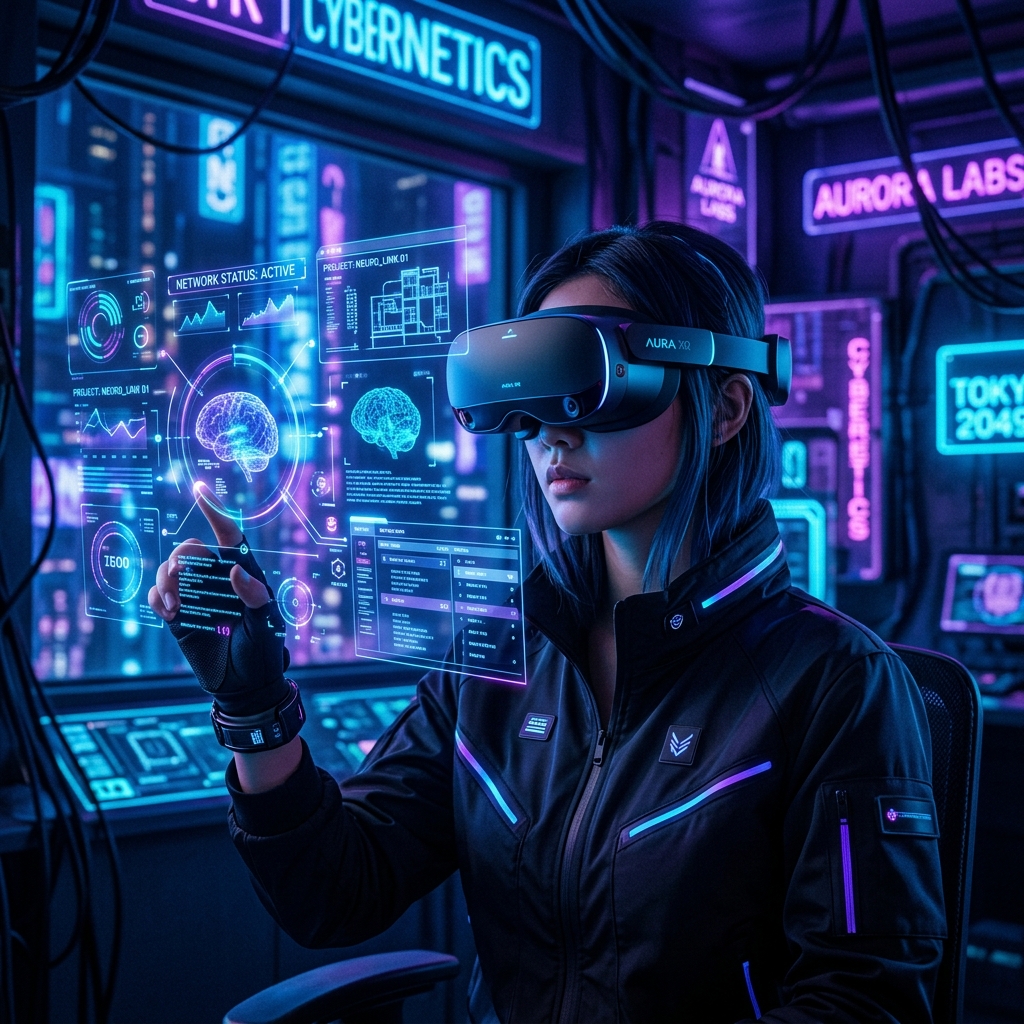
The immersive experience delivered by augmented reality (AR) and virtual reality (VR) headsets depends heavily on the display technology powering them. Screen technology is the bridge between digital content and human perception, and even minor imperfections in resolution, refresh rate, or pixel response time can break the illusion of presence. This comprehensive guide explores how modern display innovations are shaping the future of AR and VR in 2026.
Why Screen Technology Matters for AR and VR
Unlike traditional monitors and smartphone screens viewed at arm length, AR and VR displays sit mere centimeters from the user eyes. This extreme proximity magnifies every flaw. Individual pixels become visible in a phenomenon known as the "screen door effect," motion blur causes discomfort and nausea, and insufficient brightness makes AR overlays invisible in sunlit environments. Overcoming these challenges requires display technologies that far exceed the specifications of conventional screens.
The Human Visual System as the Benchmark
The human eye can perceive roughly 60 pixels per degree of visual field before individual pixels become indistinguishable. Current flagship VR headsets deliver approximately 25 to 35 pixels per degree, meaning there is still significant room for improvement. To achieve true retinal resolution across a wide field of view, future headsets would need displays exceeding 8K per eye with pixel densities of over 3000 pixels per inch.
Display Technologies Used in Modern Headsets
Several competing display technologies are currently used in AR and VR devices, each with distinct advantages and trade-offs.
Micro-OLED (OLEDoS)
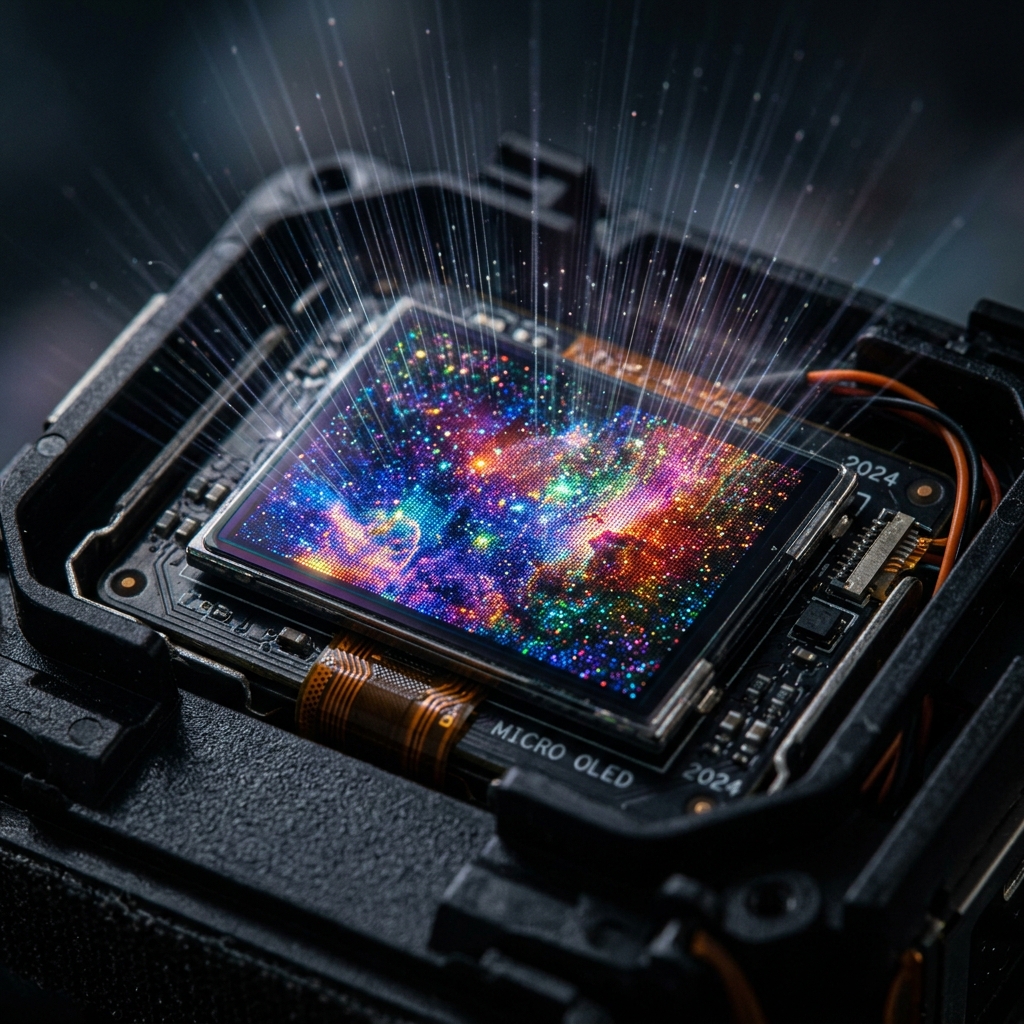
Micro-OLED displays, also known as OLED-on-Silicon, represent the current gold standard for premium VR headsets. These panels are fabricated directly on silicon wafers, enabling extremely high pixel densities exceeding 3500 PPI. Each pixel emits its own light, delivering perfect black levels, infinite contrast ratios, and sub-millisecond response times. The Apple Vision Pro and Sony PlayStation VR2 both utilize Micro-OLED technology to achieve stunning visual clarity.
LCD with Fast-Switch Technology
Liquid Crystal Display panels remain widely used in more affordable VR headsets like the Meta Quest 3. Modern VR-optimized LCDs use fast-switch liquid crystal modes that achieve response times below 5 milliseconds. They offer higher brightness levels than OLED panels and cost significantly less to manufacture. However, LCD displays cannot achieve true black since the backlight always produces some light leakage, resulting in lower contrast ratios compared to OLED alternatives.
Micro-LED for AR Glasses
Micro-LED technology is emerging as the frontrunner for lightweight AR glasses. These displays offer exceptional brightness levels exceeding 100,000 nits, making digital overlays clearly visible even in direct sunlight. The tiny emitter size enables extremely compact optical systems that fit into eyeglass-sized form factors. Companies are actively developing full-color Micro-LED arrays that could enable truly consumer-ready AR glasses within the next few years.
Critical Display Specifications for Immersion
Beyond the underlying panel technology, several key specifications determine how immersive and comfortable an AR or VR experience feels.
Refresh Rate and Motion Smoothness
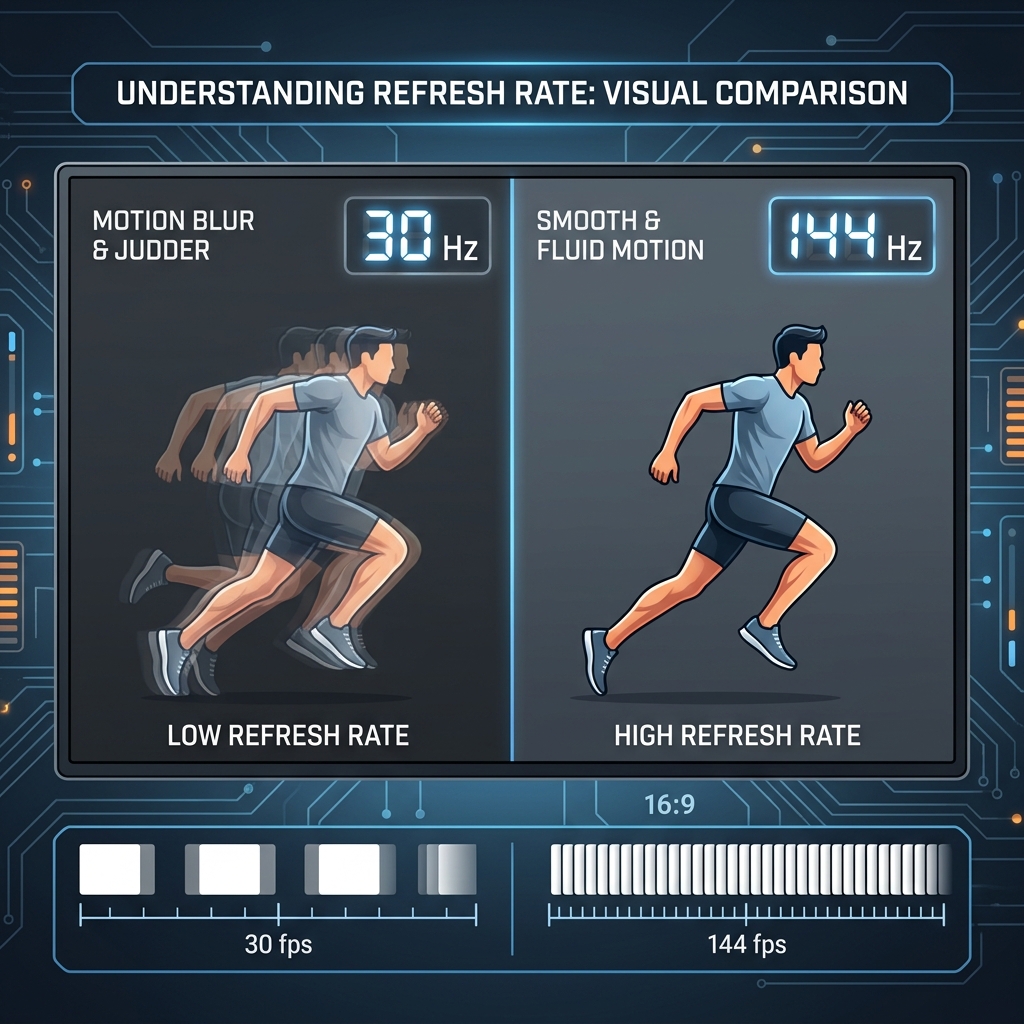
Refresh rate measures how many times the display updates its image per second. A minimum of 90 Hz is considered necessary to prevent motion sickness in VR. Modern headsets target 120 Hz as the standard, with some experimental systems pushing to 240 Hz. Higher refresh rates reduce perceived motion blur and improve the brain ability to accept the virtual environment as real. For AR applications, high refresh rates ensure that digital overlays remain stable and anchored to real-world surfaces during rapid head movements.
Persistence and Motion Blur
Display persistence refers to how long each frame remains illuminated. Full-persistence displays, where each frame is shown for the entire refresh cycle, create significant motion blur during head movements. Modern VR headsets use low-persistence techniques, illuminating each frame for only 2-3 milliseconds out of an 8-11 millisecond refresh cycle. This dramatically reduces motion blur but requires extremely bright panels to maintain adequate perceived brightness during the brief illumination window.
Field of View and Resolution Distribution
The field of view (FOV) determines how much of the virtual world the user can see at once. Human peripheral vision extends roughly 200 degrees horizontally, but most current headsets deliver between 90 and 120 degrees. Increasing FOV while maintaining high resolution per degree requires either larger displays or more advanced optical systems like pancake lenses and foveated rendering that concentrate pixel density where the eye is actively looking.
The Role of Screens in Mixed Reality
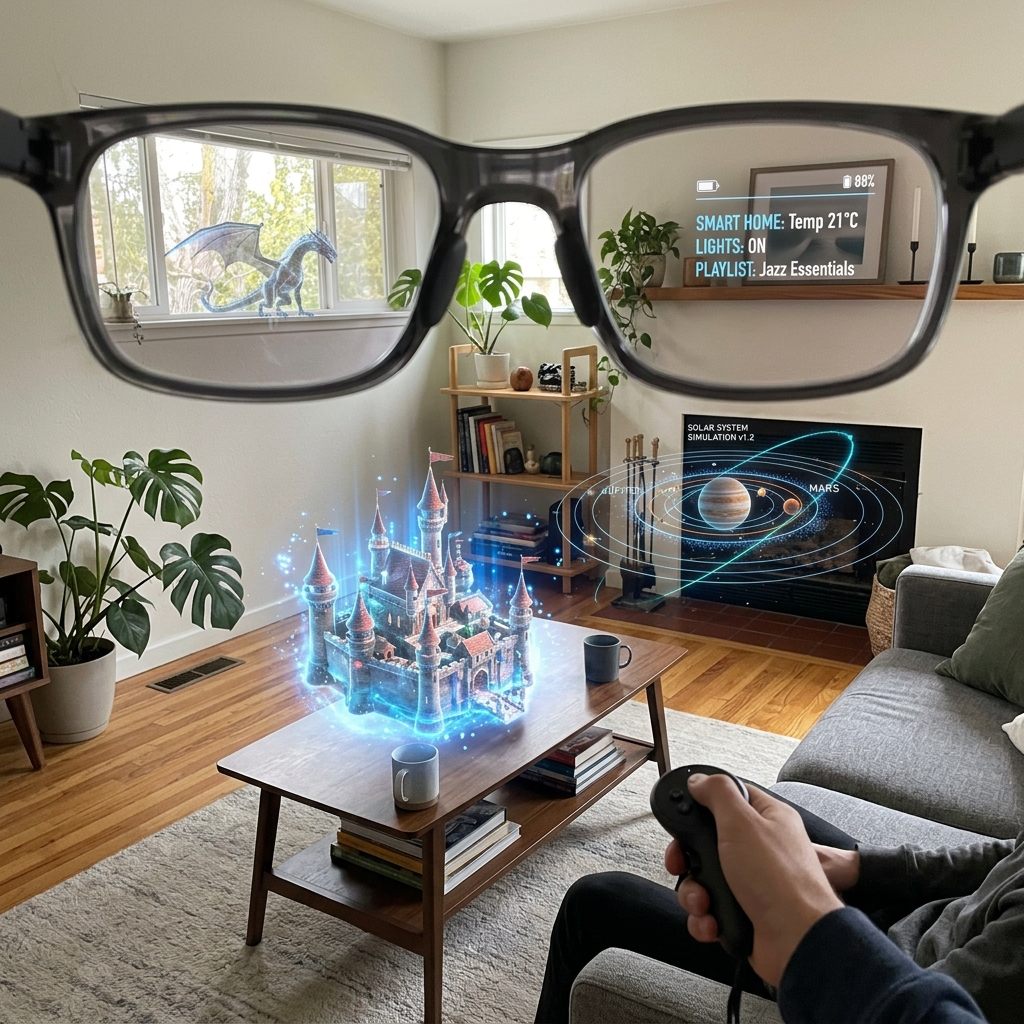
Mixed reality (MR) blends digital content with the physical environment, placing unique demands on display technology. The screen must simultaneously render virtual objects and allow the real world to remain visible, either through optical see-through waveguides in AR glasses or high-quality video passthrough cameras in VR headsets.
Waveguide Displays for AR
Waveguide technology uses thin transparent glass panels to redirect light from a tiny projector into the user eye while allowing real-world light to pass through. This enables the sleek form factor of modern AR glasses. However, current waveguides face challenges including limited field of view, rainbow-like color artifacts, and brightness uniformity issues. Advances in diffractive and holographic waveguide designs are steadily addressing these limitations.
Future Trends in AR VR Display Technology
The display industry is investing heavily in next-generation technologies that will transform immersive experiences. Holographic displays promise true 3D imagery without the need for stereoscopic tricks. Light field displays can reproduce natural depth cues including focus and accommodation, eliminating the vergence-accommodation conflict that causes eye strain in current headsets. Flexible and rollable display panels could enable foldable headsets that are as portable as a pair of sunglasses.
Conclusion
Screen technology is the foundation upon which every AR and VR experience is built. From Micro-OLED panels delivering perfect blacks and ultra-high pixel density to Micro-LED arrays enabling bright outdoor AR overlays, the choice of display technology directly determines visual quality, comfort, and immersion. As these technologies continue to advance rapidly in 2026 and beyond, we are moving closer to displays that match the full capability of human vision, making the boundary between digital and physical worlds increasingly invisible.