The State of Display Technology in 2026
As we move deeper into 2026, display technology has reached a point where the lines between digital and physical reality are increasingly blurred. Leading this charge is OLED (Organic Light-Emitting Diode) technology. While early iterations struggled with blue-light degradation and brightness ceilings, modern 2026 OLED panels utilize groundbreaking tandem architectures and phosphorescent materials to deliver 4,000+ nits of peak brightness. Whether you are using a device for van life health and fitness apps or professional creative work, the clarity provided by these modern panels is game-changing.
Unlike traditional LCDs that rely on a static backlight, every single pixel in an OLED display is its own light source. This self-emissive property allows for an "infinite" contrast ratio, as pixels can be completely turned off to produce absolute, perfect black levels.
Advanced Types: Tandem and PHOLED Infrastructure
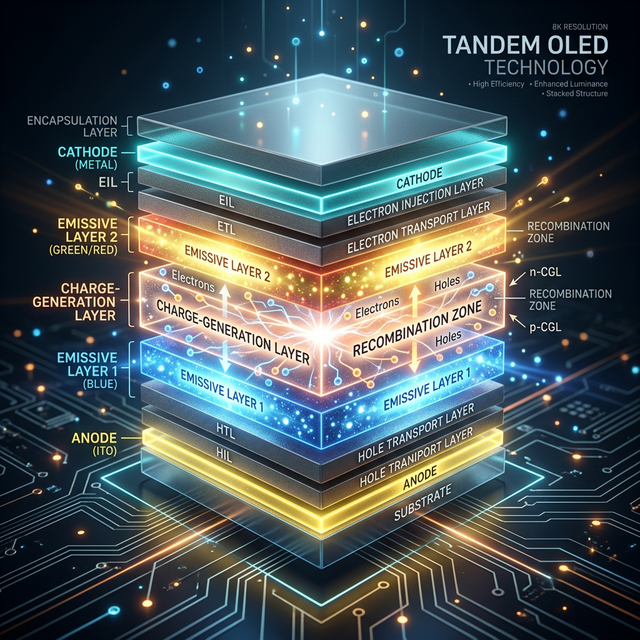
In 2026, we have moved beyond simple AMOLED panels. The industrial spotlight is now on Tandem OLED and PHOLED. Tandem OLED, pioneered by manufacturers like LG Display, stacks multiple light-emitting layers on top of each other. This dual-stack or triple-stack approach effectively doubles the brightness while significantly extending the lifespan of the display by reducing the electrical stress on each individual layer.
Complementing this is the commercialization of blue PHOLED (Phosphorescent OLED). Historically, blue subpixels were fluorescent and highly inefficient compared to their red and green counterparts. The 2026 shift to 100% phosphorescence across all colors has resulted in massive energy savings and cooler operating temperatures for flagship smartphones. Much like understanding what is RAM and its impact on speed, understanding OLED layers helps you choose the right device for your battery efficiency needs.
Micro-OLED and the AR/VR Revolution
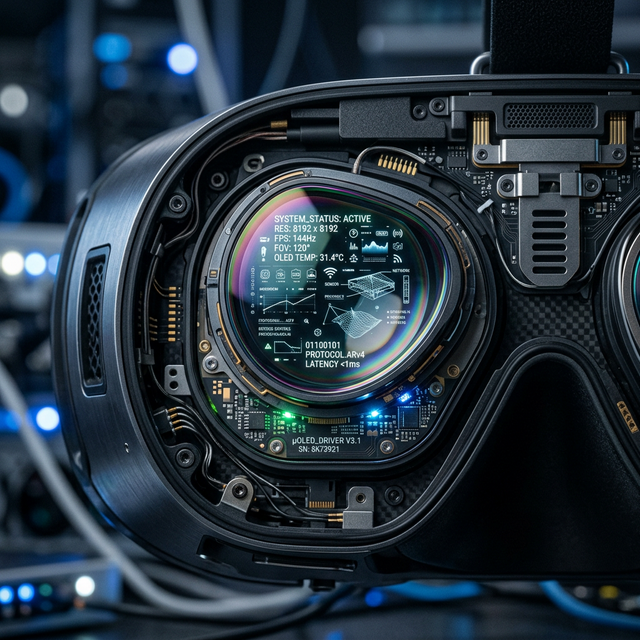
One of the most exciting applications of the year involves Micro-OLED, also known as Silicon-based OLED (OLEDoS). These tiny displays are printed directly onto silicon wafers rather than glass, allowing for unprecedented pixel density. This technology is the backbone of premium spatial computing headsets in 2026, offering 4K-per-eye resolutions that make current augmented reality experiences feel entirely lifelike.
When combined with high-speed processors found in flagship hardware—similar to calculating the Oppo Find X6 Pro PTA tax in Pakistan—these Micro-OLED panels provide the low-latency visual performance required to prevent motion sickness in virtual environments.
Key Benefits of OLED Innovation
- Infinite Contrast: Independent pixel control allows for true black levels.
- Flexible Form Factors: The absence of a rigid backlight enables foldable, rollable, and transparent designs.
- Energy Efficiency: Dark modes on these displays consume significantly less power, as dark pixels are literally powered down.
- Instant Response Times: Refresh rates in 2026 have pushed past 480Hz on high-performance gaming OLED monitors.
The Challenges: Burn-In and Manufacturing Costs
Despite the rapid innovation, OLED still faces the persistent hurdle of "burn-in" or permanent image retention. This occurs when static elements like taskbars or HUDs are left on the screen for hundreds of hours. However, in 2026, software-level mitigations involving AI pixel shifting and thermal monitoring have made this a non-issue for the average user. If you are using your device for vehicle maintenance and DIY repair apps for van life where the screen may remain static for long periods, these AI protections are vital.
Furthermore, while the Samsung Display 8.6-generation production lines have improved yields, the manufacturing cost for large-format Tandem OLED panels remains high compared to traditional Mini-LED alternatives.
OLED Display Technology Comparison (2026)
| Technology | Best For | Primary Benefit |
|---|---|---|
| Standard AMOLED | Mid-range Smartphones | Affordability and thinness. |
| Tandem OLED | Premium Laptops / Tablets | High brightness (4000+ nits) and durability. |
| Micro-OLED | AR/VR Headsets | Incredible pixel density (3500+ PPI). |
| Transparent OLED | Retail / Automotive HUDs | Futuristic see-through visual overlays. |
Frequently Asked Questions (FAQ)
Does Tandem OLED eliminate burn-in?
It doesn't eliminate it entirely, but it significantly reduces the risk. By using two or more stacks of pixels, the display doesn't have to "drive" each pixel as hard to achieve the same brightness, which helps preserve the organic material for a much longer period in 2026.
Is OLED better than Mini-LED?
It depends. OLED is unrivaled for contrast and response times, making it the choice for gaming and cinema. Mini-LED still holds an advantage in sheer sustained maximum brightness and is immune to burn-in, often making it better for bright office environments.
How do I reactivate a device that has a failed display?
If your screen is black, it might not be a display failure but an account lockout. You can learn how to reactivate an Easypaisa account if you're having issues with financial apps on your device, or check if the display connector needs repair.
What is the life expectancy of an OLED screen in 2026?
With modern phosphorescent blue materials, a premium 2026 OLED panel is rated for approximately 10 to 15 years of standard usage before significant color shift or brightness degradation occurs.