The Backbone of Mobile Performance in 2026
RAM, or Random Access Memory, is the short-term digital workspace of your smartphone. In 2026, mobile RAM has transitioned from being a simple multitasking luxury to a critical bottleneck for the most advanced features of the year: on-device artificial intelligence. As we see with devices like the Xiaomi 15, having high-speed, high-capacity memory is no longer just about keeping apps open—it's about how fast your phone can "think."
Unlike the permanent storage where you keep your photos and videos, RAM is volatile. It is hyper-fast but loses all data once power is removed. In 2026, the industry has standardized around a new, faster type of memory that is revolutionizing how we interact with our handheld devices.
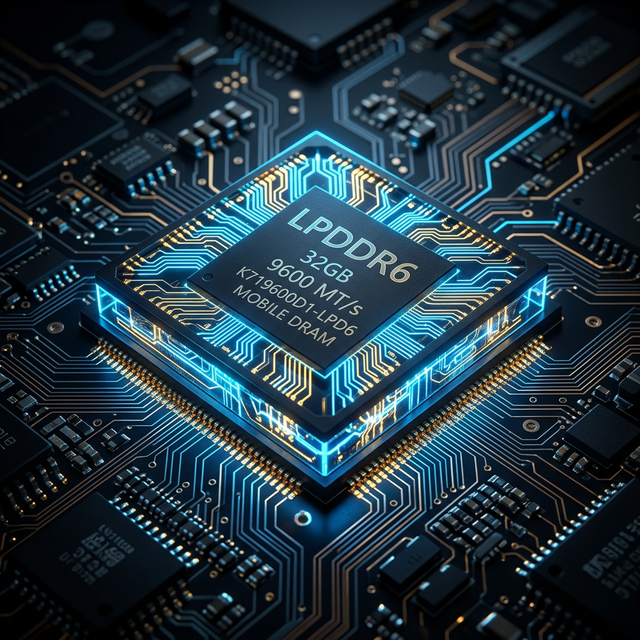
Enter LPDDR6: The 2026 Standard
Early 2026 marks the widespread debut of LPDDR6 (Low Power Double Data Rate 6) memory. This isn't just a minor iteration; it's a massive leap in bandwidth and efficiency. Designed to handle data rates exceeding 14,000 MT/s, LPDDR6 provides the raw throughput necessary for real-time video upscaling and generative AI tasks that were previously impossible on mobile hardware.
For users who prioritize performance—much like those looking for the best apps for Samsung Galaxy S23 Ultra—LPDDR6 ensures that even the most demanding professional tools run without a hint of lag. This new standard also introduces dynamic voltage scaling, which significantly improves battery life by reducing power consumption during idle periods.
Why AI Needs Substantial RAM

One of the biggest questions in 2026 is: "Why does my phone need 16GB or 24GB of RAM?" The answer lies in Large Language Models (LLMs) and on-device image generation. Modern AI features require the entire model to be "RAM resident"—meaning the AI's "brain" must sit entirely inside the RAM for instant access.
If your device has insufficient memory, those advanced AI assistants will be forced to offload data to the slower internal storage, causing noticeable delays. This is a key reason why calculating the Oppo Find X6 Pro PTA tax in Pakistan is so important for power users; you want to ensure you are importing a device that actually has the hardware specs to survive the AI-heavy landscape of 2026.
Virtual RAM vs. Physical RAM Expansion
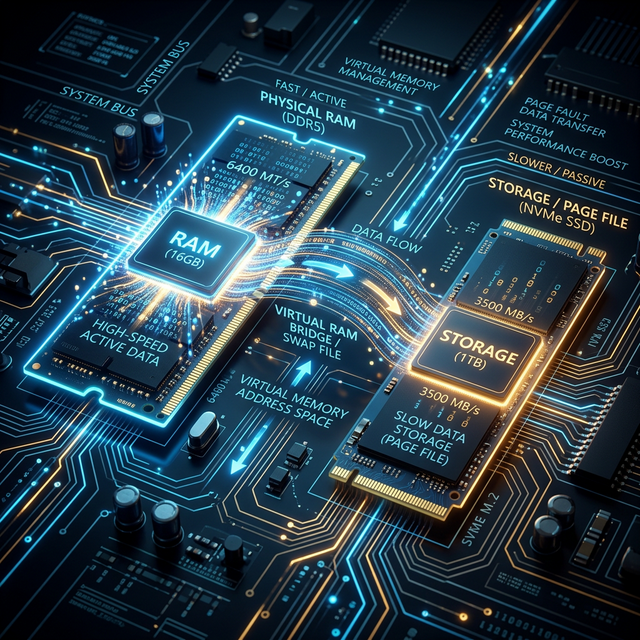
You may see manufacturers like Samsung or Realme advertising "RAM Plus" or "Dynamic RAM Expansion." It is crucial to understand that this is **Virtual RAM**, not physical hardware. It uses a small slice of your phone's UFS storage to act as emergency overflow memory.
While Virtual RAM can help keep more simple apps like social media open in the background, it is significantly slower than the physical LPDDR6 chips. It cannot boost gaming performance or AI processing speeds. When choosing a budget-friendly option like the Apple iPhone SE 3, always prioritize the physical RAM capacity over high virtual expansion numbers.
Physical RAM Comparison (2026 Tiers)
| RAM Capacity | Target User (2026) | Typical Experience |
|---|---|---|
| 8GB | Budget / Entry-level | Basic multitasking; limited on-device AI capabilities. |
| 12GB | Mid-range / Standard | Smooth performance; supports basic Gemini Nano or small LLMs. |
| 16GB - 24GB | Prosumer / Flagship | Workstation-level; full on-device AI, 8K video editing, no app refreshes. |
Frequently Asked Questions (FAQ)
Can I upgrade the RAM in my smartphone?
No. Unlike a desktop PC or many laptops, smartphone RAM is soldered directly onto the system-on-a-chip (SoC) using a Package-on-Package (PoP) method to save space and increase speed. Your only "upgrade" path is using software-based Virtual RAM expansion.
Is 8GB of RAM enough in 2026?
For basic users who only browse the web and use messaging apps, 8GB is still functional. However, if you plan to use modern AI features or high-end mobile games, you will quickly find 8GB to be the bare minimum, often leading to slower response times compared to the Google Pixel series which now favors higher RAM baselines.
Does more RAM drain the battery faster?
Technically, a larger RAM module uses slightly more power to keep refreshed, but the physical size difference is negligible. In fact, having more RAM can *save* battery because the processor doesn't have to work as hard to constantly reload apps from the storage.
What is the difference between LPDDR5X and LPDDR6?
LPDDR6 is the 2026 successor to the LPDDR5X found in older 2024 flagships. It offers roughly double the peak bandwidth and is approximately 20-30% more power-efficient under heavy AI workloads.