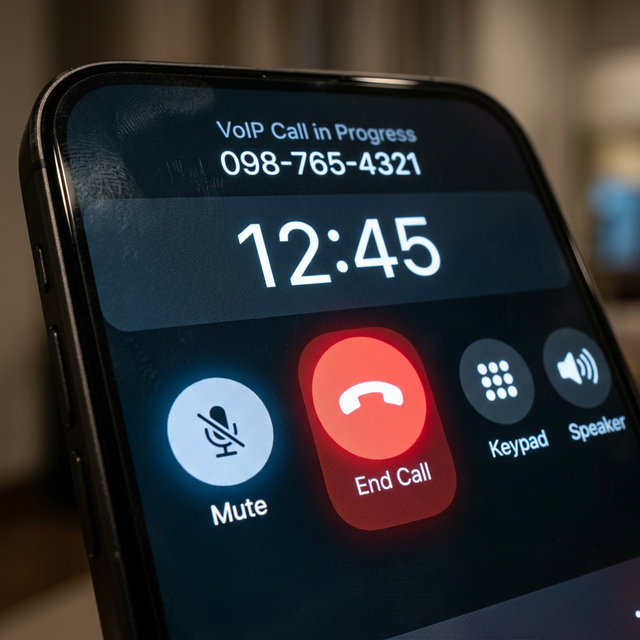
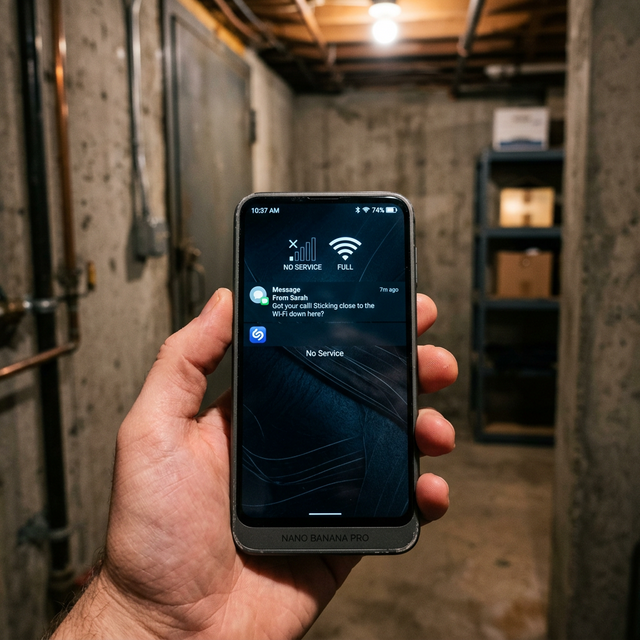
Whether you find yourself trapped in a dead zone deep inside a concrete data center, or you are a digital nomad trying to avoid exorbitant international roaming fees off the grid, relying solely on standard cellular networks in 2026 is a massive oversight. Wi-Fi calling apps bypass traditional telecommunications infrastructure entirely, utilizing Voice over Internet Protocol (VoIP) to route crystal-clear audio packets securely over any standard internet connection.
The landscape of VoIP applications is dense, ranging from massive corporate unified communication suites to lightweight, privacy-focused open-source tools. To help you eliminate dropped calls and exorbitant carrier fees, we have rigorously evaluated the market. Here are the top 15 Wi-Fi calling apps available today, ranked in descending order by verified global user ratings.
1. WhatsApp (Rating: 4.8/5)
The undisputed global champion of decentralized communication. While originally a text-first platform, WhatsApp’s VoIP infrastructure is currently unparalleled. It features aggressive end-to-end encryption by default and utilizes advanced dynamic bitrate scaling. This means if you are on a congested public cafe router, WhatsApp instantly compresses the audio codec to prevent the call from dropping, sacrificing slight fidelity for unshakeable connection stability.

2. Signal Private Messenger (Rating: 4.8/5)
Tying for the top spot, Signal is the absolute gold standard for privacy-conscious users. Every single Wi-Fi call routed through Signal utilizes the state-of-the-art open-source Signal Protocol. Unlike virtually every competitor on this list, Signal physically cannot harvest your calling metadata, ensuring your VoIP communications remain completely dark to advertisers and invasive surveillance.
3. Telegram (Rating: 4.7/5)
While its encryption implementation varies (E2EE is not default for chats), its VoIP architecture is incredibly robust. Telegram’s proprietary P2P (Peer-to-Peer) audio engineering excels at circumventing aggressive corporate firewalls that often block standard SIP traffic, making it a favorite for executing Wi-Fi calls from highly restricted enterprise networks.
4. FaceTime Audio (Rating: 4.7/5)
Excluded from the top three strictly because it remains a walled garden restricted exclusively to the Apple ecosystem. However, if both parties own an iPhone, FaceTime Audio utilizes the high-bitrate AAC-ELD (Advanced Audio Coding-Enhanced Low Delay) codec. This produces audio quality that mathematically destroys any standard cellular 5G voice protocol currently available.
5. Google Meet / Duo (Rating: 4.6/5)
Google’s consolidated communication platform is deeply integrated directly into the Android dialer. Its standout engineering feature is seamless handoff. If you initiate a Wi-Fi call in your living room and walk out your front door, Google Meet intercepts the dropping Wi-Fi signal and instantly passes the VoIP stream onto your active LTE/5G antenna with practically zero audio clipping.
6. Viber (Rating: 4.5/5)
A legacy powerhouse that refuses to die, particularly dominant in Eastern Europe and parts of Asia. Viber out (the paid VoIP-to-PSTN feature) allows you to use your Wi-Fi to call actual landlines and standard mobile numbers at a fraction of carrier costs, making it essential for international expatriates.
7. Skype (Rating: 4.5/5)
Microsoft’s venerable VoIP client has undergone a massive modernization. While slightly heavier on RAM/CPU usage than native mobile apps (read about battery capacity limits in our What is mAh Guide), its integration with Office 365 and absolute reliability on corporate networks keeps its rating exceptionally high.

8. Line (Rating: 4.4/5)
Dominating the Japanese and Southeast Asian markets, Line’s VoIP calls are heavily subsidized by its massive sticker and mini-app internal economy. It offers incredibly pristine audio localization if you are dialing servers within the APAC region.
9. WeChat (Rating: 4.3/5)
The ultimate "everything app." If you are doing any form of business involving mainland China, WeChat’s proprietary VoIP tunneling protocols are practically the only reliable method for establishing a sustained, clear Wi-Fi call across the Great Firewall without suffering aggressive packet loss.
10. TextNow (Rating: 4.3/5)
A disruptive North American app that assigns you a totally free, genuine USA/Canadian VoIP phone number. You can utilize strictly Wi-Fi to send texts and make unlimited calls to actual landlines within North America, entirely bypassing the need for a physical SIM card.
11. KakaoTalk (Rating: 4.2/5)
The absolute foundational communication tool of South Korea. While feature-heavy, its VoIP engine is highly optimized for extreme high-density urban Wi-Fi networks where interference typically destroys UDP packet delivery.
12. Discord (Rating: 4.2/5)
Primarily known for gaming, Discord’s Opus-codec audio engine is utterly phenomenal for 1-on-1 VoIP calls. It features incredibly aggressive AI background noise suppression (Krisp), making it the best app to use if you are executing a Wi-Fi call from a screamingly loud coffee shop.
13. Dingtone (Rating: 4.0/5)
Similar to TextNow, Dingtone offers free VoIP numbers but targets a much broader international audience. You earn "credits" by watching ads on Wi-Fi to fund calls to international landlines. It’s clunky, but impossible to beat for free global reach.
14. Talkatone (Rating: 3.9/5)
A reliable burner-number app. It functions purely over Wi-Fi, providing decent (if slightly artifact-heavy) audio quality for people who strictly need a secondary business or dating line without purchasing additional cellular hardware.
15. Zoiper (Rating: 3.8/5)
Rounding out the top 15, Zoiper is not a consumer app; it is a hardcore software SIP client. For advanced users who rent their own PBX cloud servers, Zoiper allows you to manually input SIP credentials and forcefully route Wi-Fi calls directly bypassing any third-party app ecosystem entirely.
Conclusion
As international travel increases and aggressive concrete construction continues to block high-frequency 5G networks, maintaining a reliable Wi-Fi Calling App on your homescreen is a pragmatic necessity. Whether defaulting to the massive encrypted architecture of WhatsApp or configuring a dedicated SIP client like Zoiper, understanding VoIP mechanics ensures you are never functionally disconnected. Compare the exact hardware powering these apps on our Mobile Phone Reviews Homepage.