The consumer electronics industry frequently distills incredibly complex electrochemical engineering down to a single, digestible number on a spec sheet: mAh (Milliampere Hour). While marketing departments tout higher mAh figures interchangeably with "better battery life," this is a massive oversimplification of modern energy storage architecture.
As we examine flagship devices in 2026, understanding exactly how energy is chemically stored, electronically managed, and thermally dissipated is critical. This comprehensive technical overview moves beyond basic consumer definitions to analyze the intricate chemistry, sophisticated Battery Management Systems (BMS), and emerging solid-state technologies that truly define mobile power delivery today.
1. The Electrochemical Reality of mAh
Strictly speaking, one milliampere-hour (mAh) represents the measurement of electric charge transferred by a steady current of one milliampere flowing for one continuous hour. In a typical modern smartphone battery boasting a 5,000 mAh capacity, this implies the cell can theoretically deliver 5 amps of current for exactly one hour before critical depletion, assuming a nominal voltage of 3.85V.
However, this perfectly linear discharge equation ignores the reality of Lithium-ion (Li-ion) cell chemistry. A battery contains three primary components: a positive electrode (cathode, typically Lithium Cobalt Oxide), a negative electrode (anode, usually porous graphite), and a liquid chemical electrolyte separator. When your phone draws power, lithium ions physically migrate from the anode through the electrolyte into the cathode, releasing electrons into the external circuit. The rate of this migration is heavily dependent on internal resistance, which violently fluctuates based on temperature and remaining charge density.

2. The True Brain: The Battery Management System (BMS)
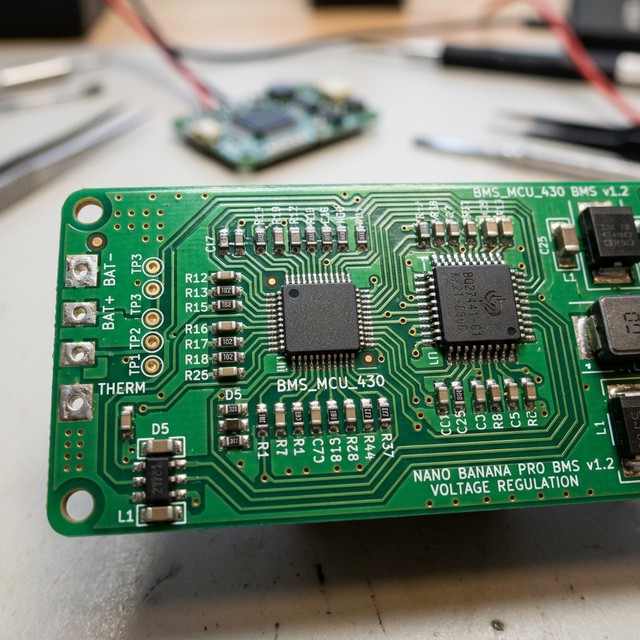
If lithium-ion cells are the raw muscle, the Battery Management System (BMS) is the vital nervous system. Because lithium-ion chemistry is highly volatile—prone to catastrophic thermal runaway if overcharged or deep-discharged—a dedicated micro-computer is permanently attached to the physical cell.
- Voltage Regulation: The BMS continuously monitors the exact voltage curve. If a charging adapter attempts to push the cell beyond its absolute maximal threshold (usually 4.35V to 4.4V on modern flagship cells), the BMS instantly severs the physical charging circuit via internal MOSFET relays, preventing a potential fire.
- Coulomb Counting: To provide the operating system with an accurate battery percentage (State of Charge), the BMS relies on extremely precise Coulomb counting algorithms, integrating the exact current flowing in and out of the cell over milliseconds.
3. Thermal Throttling and Dissipation Architecture
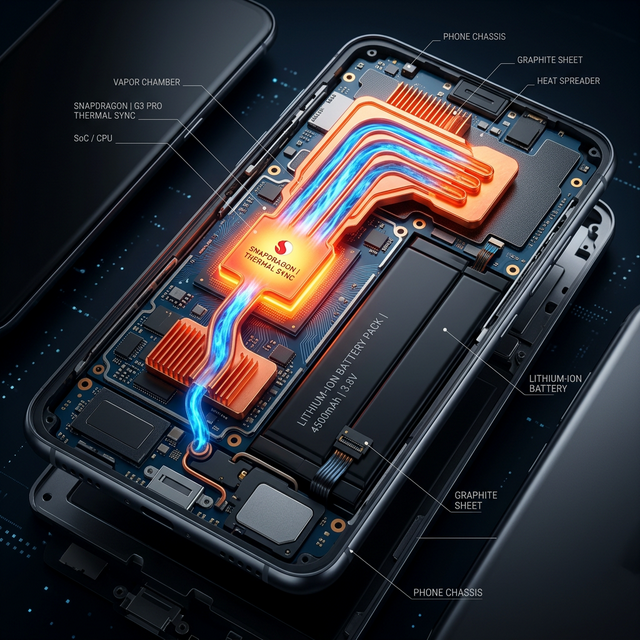
Focusing purely on raw capacity ignores the most destructive enemy of battery longevity: heat. Fast-charging a dense 5,000 mAh cell at 100W+ speeds generates immense thermal output due to the aforementioned internal resistance. If a battery is consistently subjected to temperatures exceeding 45°C (113°F), the liquid electrolyte begins to physically degrade, permanently decreasing the overall mAh capacity and increasing internal gassing (swelling).
To combat this, modern engineering incorporates extreme passive cooling. Manufacturers utilize massive copper vapor chambers, multi-layer graphene thermal pads, and specific internal layouts to draw heat directly away from the battery and SoC (System on Chip), dispersing it harmlessly across the phone’s aluminum chassis. This thermal synchronization is a critical factor we evaluate heavily in our latest Mobile Phone Reviews.
4. The Imminent Future: Solid-State Battery Tech
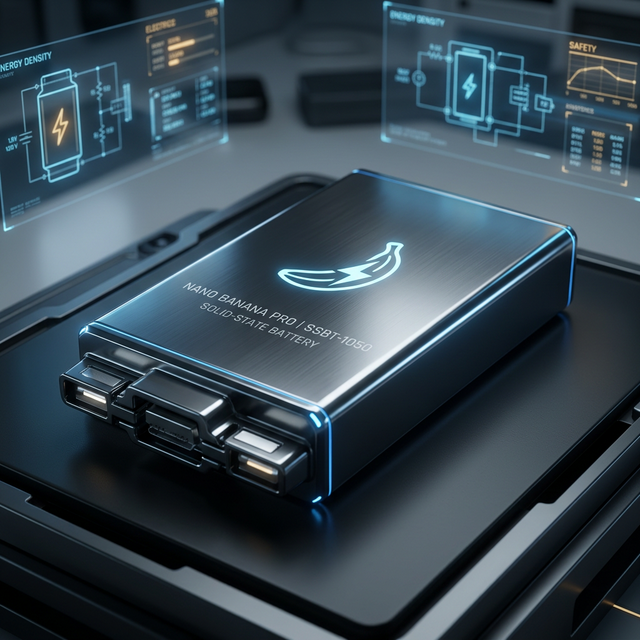
By 2026, traditional liquid-electrolyte Li-ion cells are functionally hitting their absolute theoretical limits regarding volumetric energy density. To increase mAh capacity without physically making the smartphone thicker, the industry is accelerating toward Solid-State Batteries.
By replacing the flammable, bulky liquid electrolyte with a dense solid conductive material (such as ceramics or solid polymers), engineers can pack significantly more active lithium material into the exact same physical footprint. Furthermore, solid-state cells dramatically reduce the risk of dendritic short-circuits, effectively eliminating the primary cause of battery fires. This allows the BMS to authorize much faster, sustained charging curves without initiating thermal throttling protocols. We explore exactly how processors will utilize this new power paradigm in our Samsung Galaxy vs. iPhone Technical Comparison.
Conclusion
Reducing a smartphone’s power architecture to a simple mAh number does a massive disservice to phenomenal modern engineering. A device’s true endurance is a complex mathematical equation balancing the raw electrochemical density of lithium ions, the aggressive safety protocols of the BMS, dynamic OS-level background freezing (like Android Doze modes), and advanced vapor chamber thermal dissipation. As we transition rapidly toward solid-state technology, expect the standard milliampere-hour to deliver even more astonishing sustained performance. Dive deeper into the hardware mechanics shaping your daily devices on the MobileKiShop Homepage.