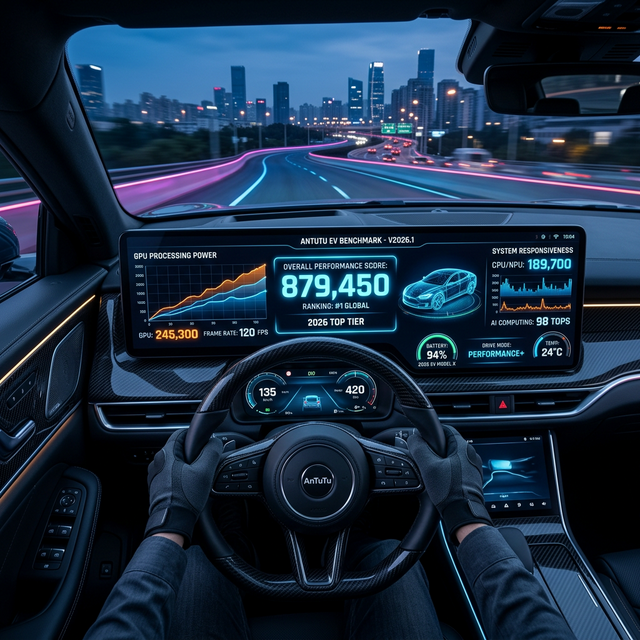
The Shift from Horsepower to Processing Power
For decades, evaluating a new car meant looking at zero-to-sixty times, torque, and cabin space. But in 2026, a drastically different metric has taken center stage: the processing power of the vehicle's central computer. Modern electric vehicles (EVs) are effectively giant computers on wheels, and laggy infotainment systems can ruin the driving experience just as quickly as a flat tire.
To address this massive technological shift, AnTuTu—the same company famous for stress-testing mobile phone processors—has developed the AnTuTu EV Benchmark. First launched conceptually in previous years, this tool has matured into a game-changing, standardized metric for 2026, allowing buyers to objectively compare how "smart" a smart car truly is before stepping onto the dealership lot.
1. What the AnTuTu EV Benchmark Actually Measures
Unlike traditional automotive testing, AnTuTu does not care about suspension geometry or battery chemistry. It focuses exclusively on the digital architecture inside the cabin. The scoring system heavily penalizes vehicles that utilize outdated silicon to run their massive central screens.
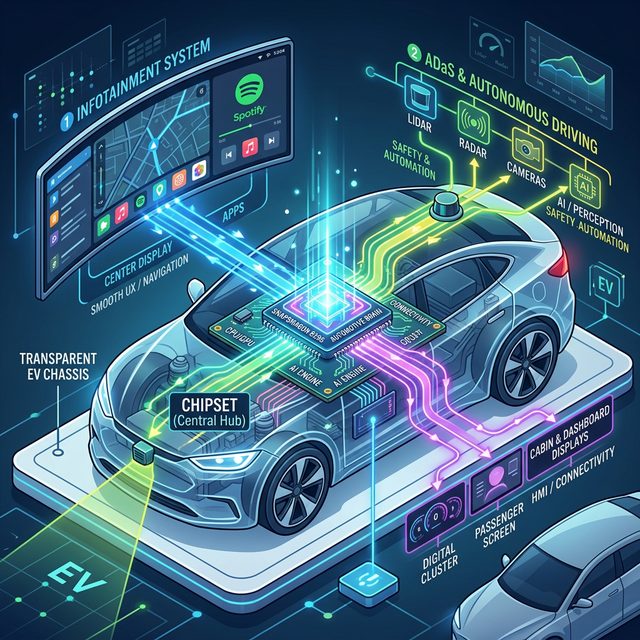
The software pushes the vehicle's internal computer to its limits across several key domains:
- Chipset CPU Performance: Measures how fast the car's brain can calculate route logic, manage autonomous driving sensor data, and run underlying operating system tasks.
- RAM and Storage Speeds: Tests how quickly the car can load massive high-resolution map tiles or buffer 4K streaming video buffers without stuttering.
- Graphics Performance (GPU): Evaluates the system's ability to render complex 3D vehicle animations on the dashboard and fluidly execute heavy gaming applications while parked at chargers.
The processing architecture inside these cars is often identical to high-end mobile devices. For example, if you understand the internal computing leaps referenced in our history of mobile network speeds, you will recognize the exact same Snapdragon architectures now powering automotive dashboards.
2. The Reign of the Snapdragon 8295
In 2026, the benchmark scores are utterly dominated by vehicles utilizing Qualcomm's Snapdragon 8295 automotive platform. This specific chipset is currently the gold standard, offering unprecedented neural processing capabilities designed explicitly for complex AI cabin integrations.
Recent chart-topping vehicles heavily feature this silicon:
- Xiaomi SU7: Xiaomi's breakout EV leverages its deep roots in the smartphone market to deliver one of the highest AnTuTu EV scores ever recorded, offering blistering interface speeds and completely seamless media integration.
- Zeekr 007 & Xpeng X9: Both flagship Chinese models utilize top-tier processing to ensure their massive panoramic cabin screens never drop a frame of animation, regardless of how many apps are running concurrently.
3. User Interface (UI) and UX Responsiveness
Raw processing power means nothing if the software layer is poorly designed. The AnTuTu EV Benchmark includes specific stress tests for User Interface (UI) fluidity and touchscreen responsiveness.
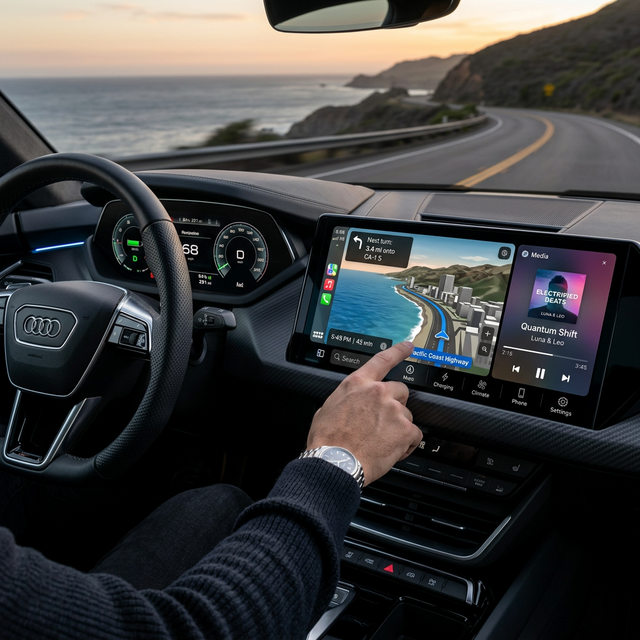
If you tap to adjust the climate control or swipe to change the media source, the response must be instantaneous. Because drivers rely entirely on these screens rather than physical buttons, lag is no longer just an annoyance; it is a critical safety hazard. Unresponsive screens force drivers to divert their eyes from the road for fatal seconds. Display hardware is also heavily scrutinized; for a breakdown of how underlying screen tech handles this data, you can review our Display Types guide.
4. Connectivity and Integration Benchmarks
Modern vehicles must act as seamless extensions of your digital life. The AnTuTu benchmark measures how efficiently the car's Bluetooth and Wi-Fi modules handshake with external devices.
This includes the speed at which wireless Apple CarPlay and Android Auto initialize upon entering the vehicle, and how stably the car handles NFC key-card authentications. Issues with wireless connectivity between phones and cars are becoming heavily documented tech pain points—such as the recent problems outlined in our iPhone 15 Pro BMW charging pad issues report.
Frequently Asked Questions
Is the AnTuTu EV Benchmark available for all cars?
Currently, the benchmark is primarily designed for Android-based automotive operating systems. Vehicles that run completely closed, proprietary operating systems (like older legacy automakers) cannot natively run the APK testing suite.
Do high benchmark scores mean the car drives better?
No. AnTuTu strictly measures the digital infotainment and cabin processing experience. It has absolutely zero indication of how the vehicle handles, accelerates, brakes, or performs structurally in a crash test.
Why does an electric car need a fast GPU?
A fast Graphics Processing Unit (GPU) ensures that the massive central and passenger screens can render complex 3D navigation routes, fluidly playback HD video, and power advanced in-car gaming systems rapidly becoming popular at public charging stations.
Can the benchmark measure my phone's connection to the car?
While AnTuTu focuses on the car's internal hardware, it does evaluate the stability and speed of the car's wireless connectivity arrays. However, it cannot overcome a fundamentally poor Bluetooth connection originating from an older phone device itself.