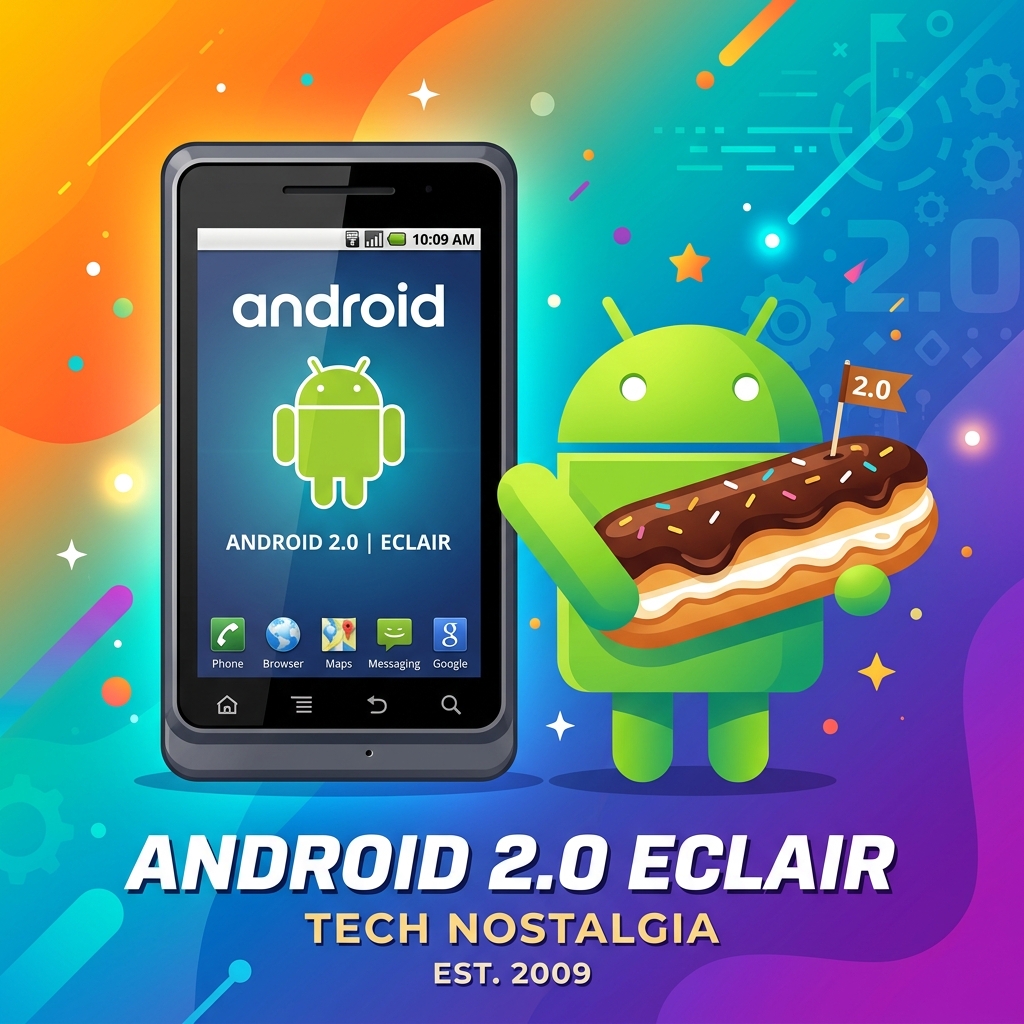
Android 2.0, officially codenamed Eclair, was released on October 26, 2009, and it stands as one of the most pivotal updates in the entire history of the Android operating system. Launched alongside the iconic Motorola Droid, Android 2.0 introduced a wave of features that transformed Android from a promising newcomer into a serious competitor against Apple iOS. This deep-dive review covers everything about Android 2.0 Eclair: its key features, the hardware it ran on, its historical significance, and how it shaped the modern Android experience we use in 2025.
What Was Android 2.0 Eclair?
Android 2.0 was the fourth major version of the Android operating system, developed by Google and the Open Handset Alliance. It followed Android 1.6 (Donut), which had been released just weeks earlier in September 2009. The jump from 1.6 to 2.0 was substantial, representing a major leap in both functionality and polish.
The Eclair codename was part of Google's tradition of naming Android versions after desserts in alphabetical order. "E" followed "D" for Donut, establishing a pattern that would continue for over a decade until Android 10, when Google retired the dessert naming convention for public releases.
The timing of Android 2.0 was critical. Verizon and Motorola were aggressively marketing the Droid as an iPhone alternative with the memorable "Droid Does" campaign. Android 2.0 was the software powering that narrative, and it delivered on the promise.
Key Features of Android 2.0 Eclair
Multiple Account Support and Exchange Sync
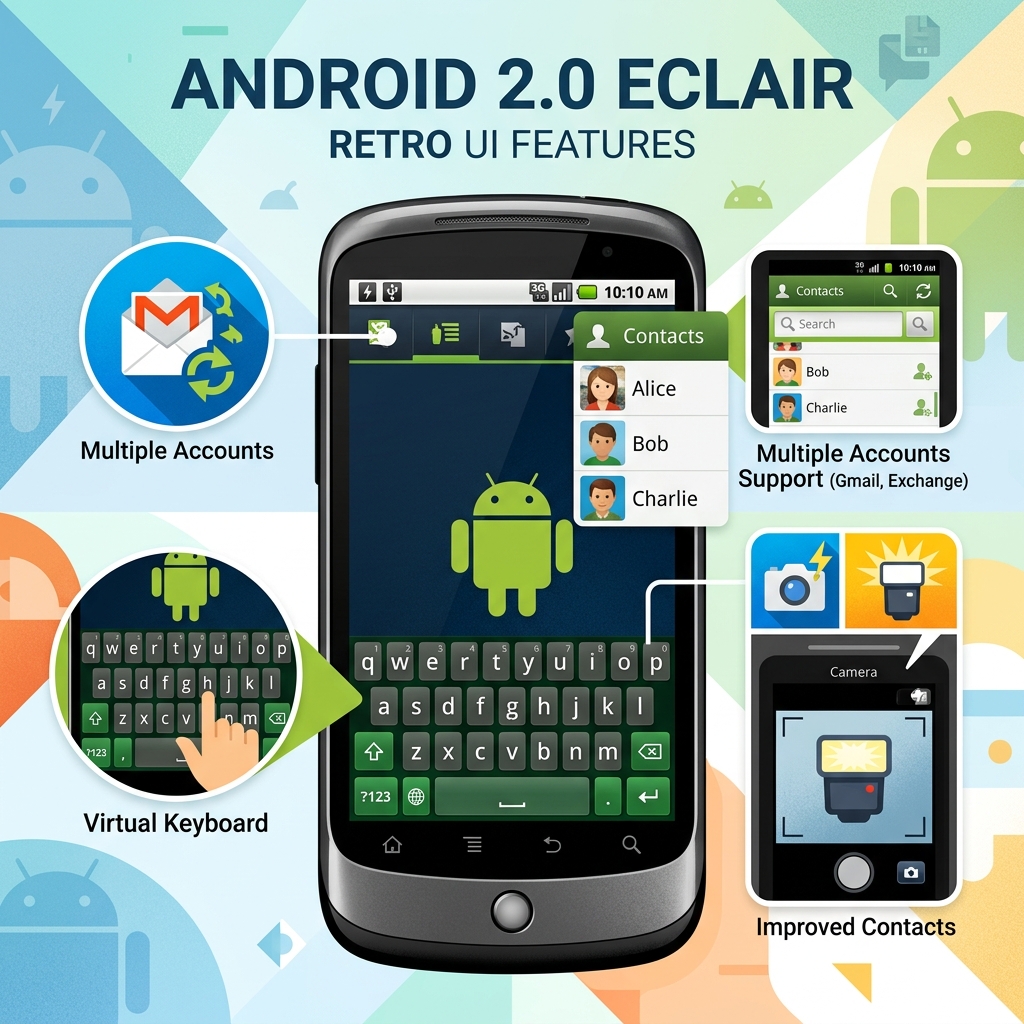
One of the biggest enterprise-focused additions in Android 2.0 was the ability to add multiple Google accounts and Microsoft Exchange accounts to a single device. Before Eclair, Android only supported a single Google account. This change was a direct response to BlackBerry and Windows Mobile domination in the corporate sector.
With Exchange support baked in, Android 2.0 could sync corporate email, calendar entries, and contacts natively without requiring third-party software. A new unified inbox allowed users to see messages from multiple email accounts at once, a feature that remains part of Android email clients today.
Quick Contact Integration
Android 2.0 introduced Quick Contact, a feature that let users tap on a contact's profile photo anywhere in the OS to instantly launch a pop-up menu with options to call, text, or email that person. This made communication faster and more intuitive, eliminating the need to open the Contacts app and navigate to a person's profile manually.
Camera Upgrades: Flash, Zoom, and Scene Modes
Prior to Android 2.0, the camera app was rudimentary. Eclair overhauled the camera with several meaningful additions:
- Flash support: Hardware flash could now be controlled through the camera app for photos and video.
- Digital zoom: Users could zoom in before taking a photo using a pinch gesture or slider.
- Scene modes: Dedicated shooting modes like Night, Sports, Landscape, and Portrait were introduced.
- White balance and color effects: Manual white balance adjustments and color filters were added to the camera settings.
- Macro focus: Close-up photography became possible for the first time on Android.
Improved Browser with HTML5 Support
The Android 2.0 browser received a visual overhaul that included bookmark thumbnails, a unified address and search bar, and double-tap zoom for web pages. More importantly, it introduced early support for HTML5, positioning Android as a forward-thinking mobile web platform at a time when the mobile web was just beginning to mature.
Enhanced Virtual Keyboard with Multi-Touch
The soft keyboard in Android 2.0 was significantly improved. It supported multi-touch input for the first time, allowing users to type more quickly and accurately by registering simultaneous key presses. The keyboard also gained smarter auto-correction and a more refined key layout that reduced typing errors.
SMS and MMS Search
Android 2.0 introduced the ability to search through all saved SMS and MMS messages using the system search function. Users could also delete entire conversation threads in one tap, a basic but highly requested feature that dramatically improved messaging management.
Live Wallpapers and New Home Screen
Eclair introduced live wallpapers, animated interactive backgrounds that could respond to touch, show real-time data, or display dynamic visuals. While this was partly a showcase feature, it demonstrated the graphical capability of Android hardware at the time and became a beloved differentiation point against iOS, which did not offer live wallpapers until iOS 16 in 2022.
Bluetooth 2.1 and Multi-Resolution Screen Support
Android 2.0 upgraded Bluetooth support to version 2.1, improving wireless audio quality, pairing speed, and range. It also expanded the display framework to support a wider range of screen sizes and pixel densities, laying groundwork for Android's eventual domination across devices of every size.
Google Maps Navigation: The Killer Feature of Android 2.0
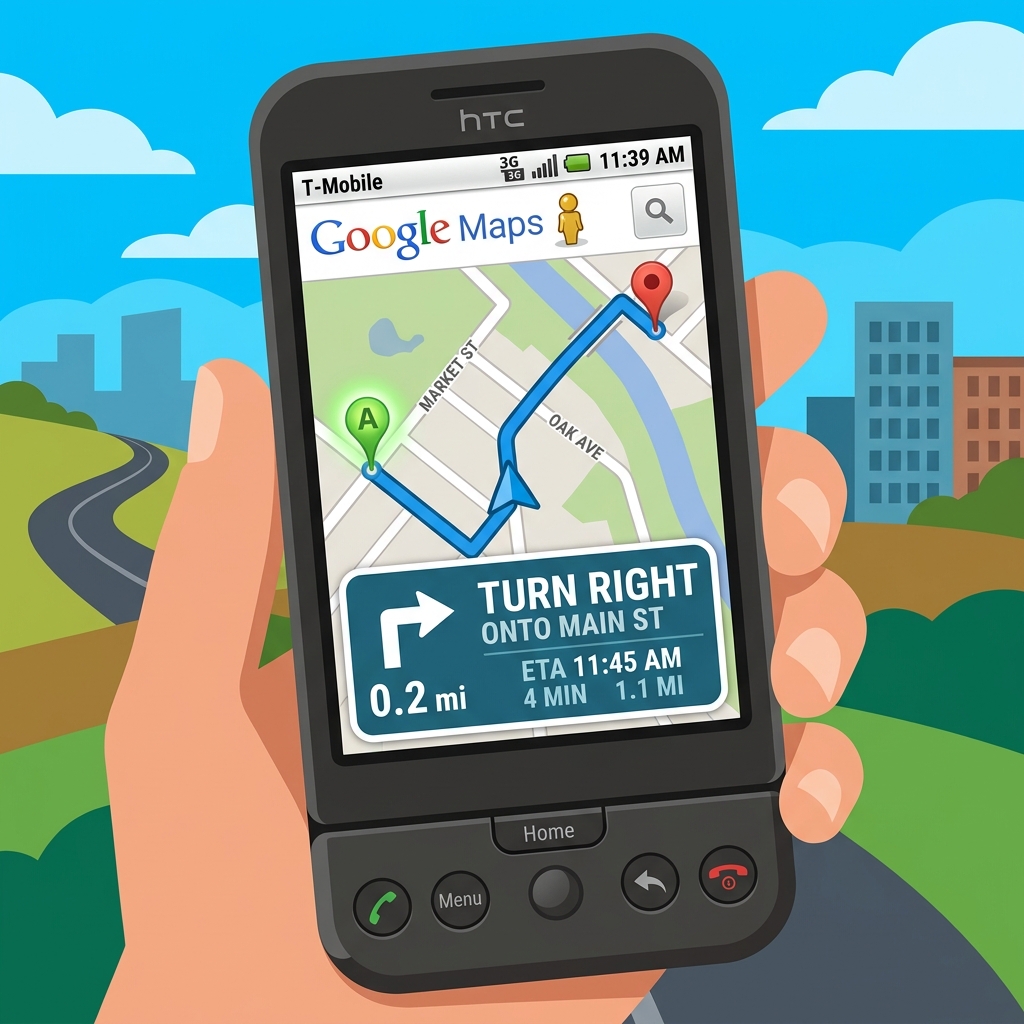
Of all the features introduced in Android 2.0, none was more disruptive than Google Maps Navigation. Announced at the same event as the Motorola Droid launch, Maps Navigation offered free, voice-guided, turn-by-turn GPS navigation. At the time, dedicated GPS devices from Garmin and TomTom sold for $100 to $300. Dedicated navigation apps on smartphones like AT&T Navigator cost an additional $10 per month subscription fee.
Google Maps Navigation was completely free. It used live traffic data, satellite imagery, Street View integration, and the full Google Maps database. Analysts at the time estimated that the announcement wiped hundreds of millions of dollars from the market capitalizations of Garmin and TomTom in a single day.
This moment illustrated a fundamental truth about Android: Google's ability to bundle powerful services for free gave Android a competitive advantage that was nearly impossible for competitors to match. Google Maps Navigation remains one of the most-used apps on Android devices globally in 2025.
Devices That Launched with or Received Android 2.0
The flagship device for Android 2.0 was the Motorola Droid, released on November 6, 2009, exclusively on Verizon Wireless in the United States. It featured a physical QWERTY keyboard, a 3.7-inch display, and a 5-megapixel camera. The Droid was a massive commercial success and helped drive Android adoption to new heights.
Other devices that received Android 2.0 or its follow-up version 2.1 included:
- HTC Nexus One: The first Nexus device, released in January 2010 running Android 2.1 Eclair and later updated to Froyo.
- Sony Ericsson Xperia X10: Launched with Android 1.6 but updated to Android 2.1.
- Samsung Galaxy S: Launched with Android 2.1 and went on to become Samsung's most successful early flagship series.
- Motorola Milestone: The international version of the Droid, sold across Europe and Asia.
Android 2.0 vs Android 1.6 Donut: What Changed?
Android 1.6 Donut, released in September 2009, was primarily an incremental update focused on performance improvements, multi-network CDMA support, and an expanded Android Market. Android 2.0 Eclair, arriving just weeks later, was a far more ambitious release. The key differences were:
- Multiple account sync (Exchange support) was new in 2.0, absent in 1.6.
- Google Maps Navigation did not exist until 2.0.
- Live wallpapers, HTML5 browser, and multi-touch keyboard were all 2.0-exclusive features.
- The camera was significantly enhanced in 2.0 with flash, scene modes, and zoom.
Android Version History: From 2.0 to Android 15 in 2025
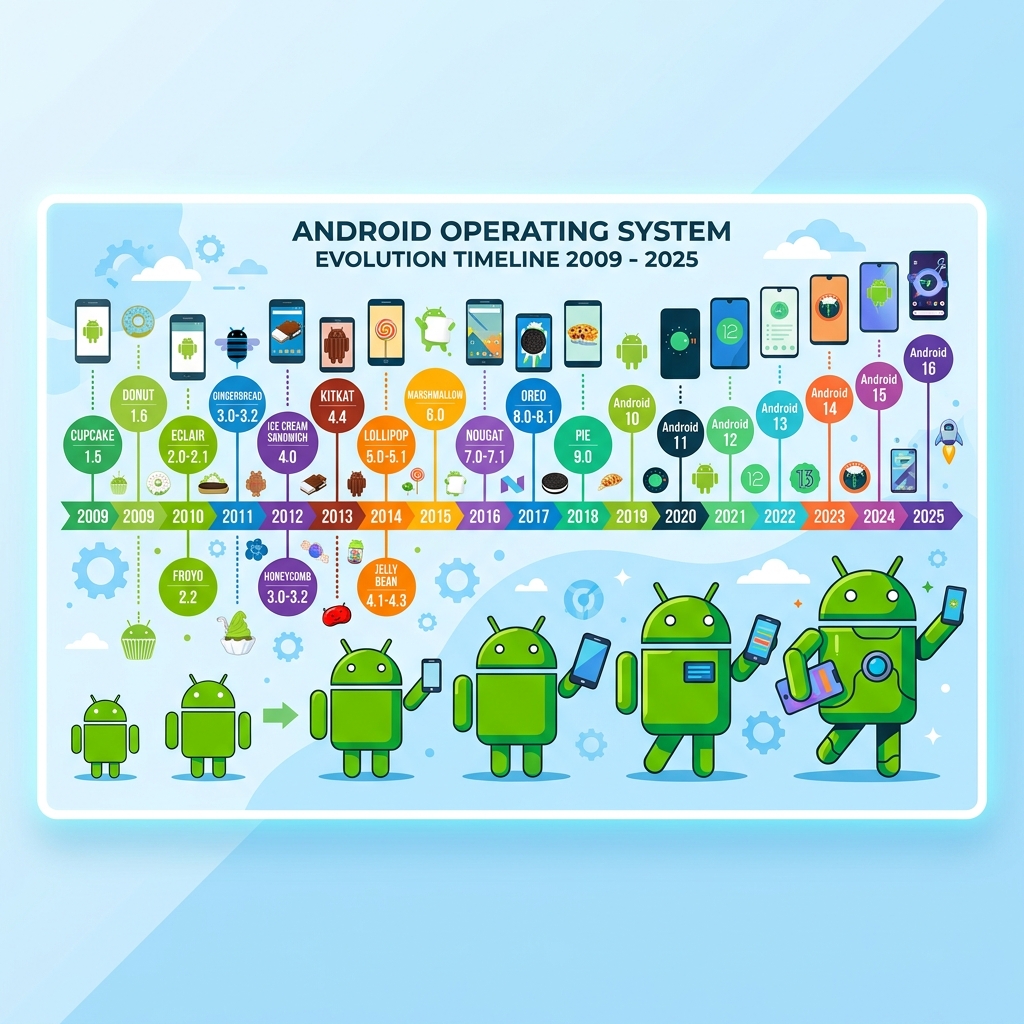
Android 2.0 was a turning point that set the trajectory for all future versions. Here is a brief timeline of how Android evolved after Eclair:
- Android 2.2 Froyo (2010): Added JIT compiler for dramatically faster app performance, Wi-Fi hotspot support, and Adobe Flash.
- Android 2.3 Gingerbread (2010): Polished UI, NFC support, improved gaming performance with NDK enhancements.
- Android 3.0 Honeycomb (2011): Tablet-focused release with a redesigned UI and hardware acceleration.
- Android 4.0 Ice Cream Sandwich (2011): Unified phone and tablet UI with Holo design language, face unlock, and Android Beam.
- Android 5.0 Lollipop (2014): Introduced Material Design, ART runtime, and 64-bit support.
- Android 10 (2019): Dropped dessert names publicly, introduced gesture navigation and a system-wide dark mode.
- Android 15 (2024): Advanced privacy controls, satellite connectivity support, improved adaptive refresh rate, and enhanced foldable device support.
Looking at this timeline, it is clear that Android 2.0 Eclair established many patterns: bundled Google services as value-adds, multi-account support, and a progressive camera improvement strategy that continues to define Android devices in 2025.
Why Android 2.0 Still Matters in 2025
From a technical standpoint, no device runs Android 2.0 in 2025. It is a 16-year-old operating system with no security patches, no modern app support, and no compatibility with current hardware. However, its historical significance is immense:
- It proved Android could compete with iOS on features and user experience.
- Google Maps Navigation redefined what free mobile software could be.
- Exchange support opened the enterprise market to Android for the first time.
- The Motorola Droid partnership model became the blueprint for Android OEM strategy.
Android 2.0 was the moment Google made a clear statement: Android was not just a platform, it was a complete ecosystem built around free, powerful services that would improve with the scale of adoption. That vision, articulated first in Android 2.0, is exactly what drives the Android platform's dominance in 2025, with more than 70 percent of all global smartphones running some version of Android.
Frequently Asked Questions About Android 2.0
What was the official name of Android 2.0?
Android 2.0 was officially codenamed Eclair. It was the fourth version of the Android operating system and followed Android 1.6 Donut. Google used alphabetical dessert codenames for Android versions from Cupcake (1.5) through Pie (9.0).
When was Android 2.0 released?
Android 2.0 was released on October 26, 2009. It launched alongside the Motorola Droid on Verizon Wireless in the United States on November 6, 2009.
What phone came with Android 2.0?
The Motorola Droid was the primary device launched with Android 2.0. It was the first phone marketed as a second-generation Android device and played a crucial role in Android gaining mainstream adoption in the United States.
Is Android 2.0 still used today?
No modern device uses Android 2.0. It is no longer supported, receives no security updates, and is incompatible with all current apps. The minimum Android version supported by the Google Play Store is Android 5.0 (Lollipop). For anyone looking for the best Android smartphones running the latest software in 2025, check out the reviews and buying guides on MobileKishop.
What was the biggest feature added in Android 2.0?
Google Maps Navigation is widely considered the most impactful feature introduced in Android 2.0. It delivered free, voice-guided, real-time turn-by-turn navigation at a time when dedicated GPS units and navigation app subscriptions cost substantial money, fundamentally disrupting the GPS and navigation industry overnight.
Conclusion
Android 2.0 Eclair was a landmark release that transformed Android from a promising platform into a genuine smartphone powerhouse. Its introduction of free turn-by-turn navigation, multi-account Exchange support, live wallpapers, an improved browser, and a refined camera set standards that reverberated through every Android version that followed. For anyone interested in how today's Android 15 came to be, Android 2.0 is where the real story begins. It was the version of Android that said, clearly and boldly, that this platform was here to stay.