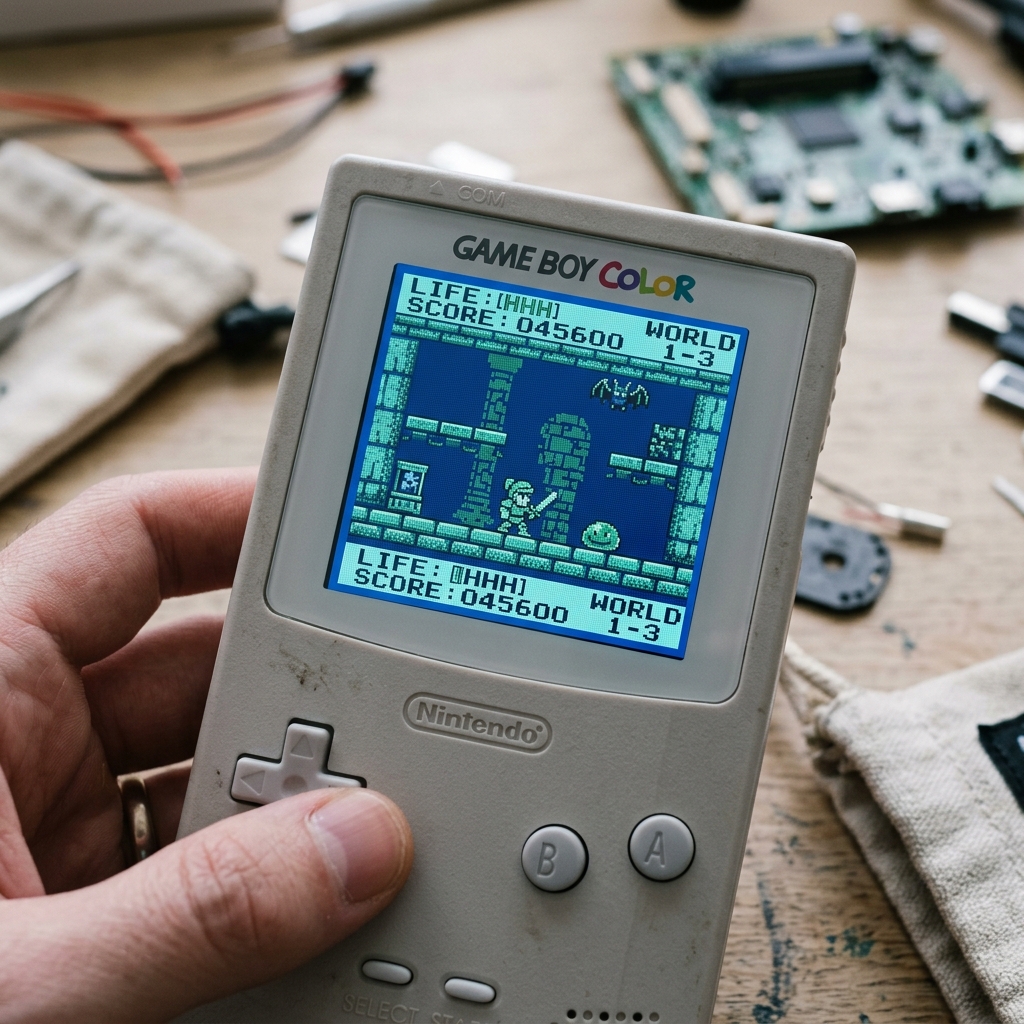
Super Twisted Nematic (STN) LCD is a liquid crystal display technology that was widely used in the 1990s and early 2000s in a broad range of mobile devices, calculators, early mobile phones, and handheld gaming devices. While largely replaced by more advanced display technologies in consumer electronics today, STN LCD remains in active use in industrial equipment, medical devices, and low-power embedded systems where cost, power consumption, and reliability are prioritized over image quality. This guide explains everything you need to know about STN LCD technology.
What is STN LCD?
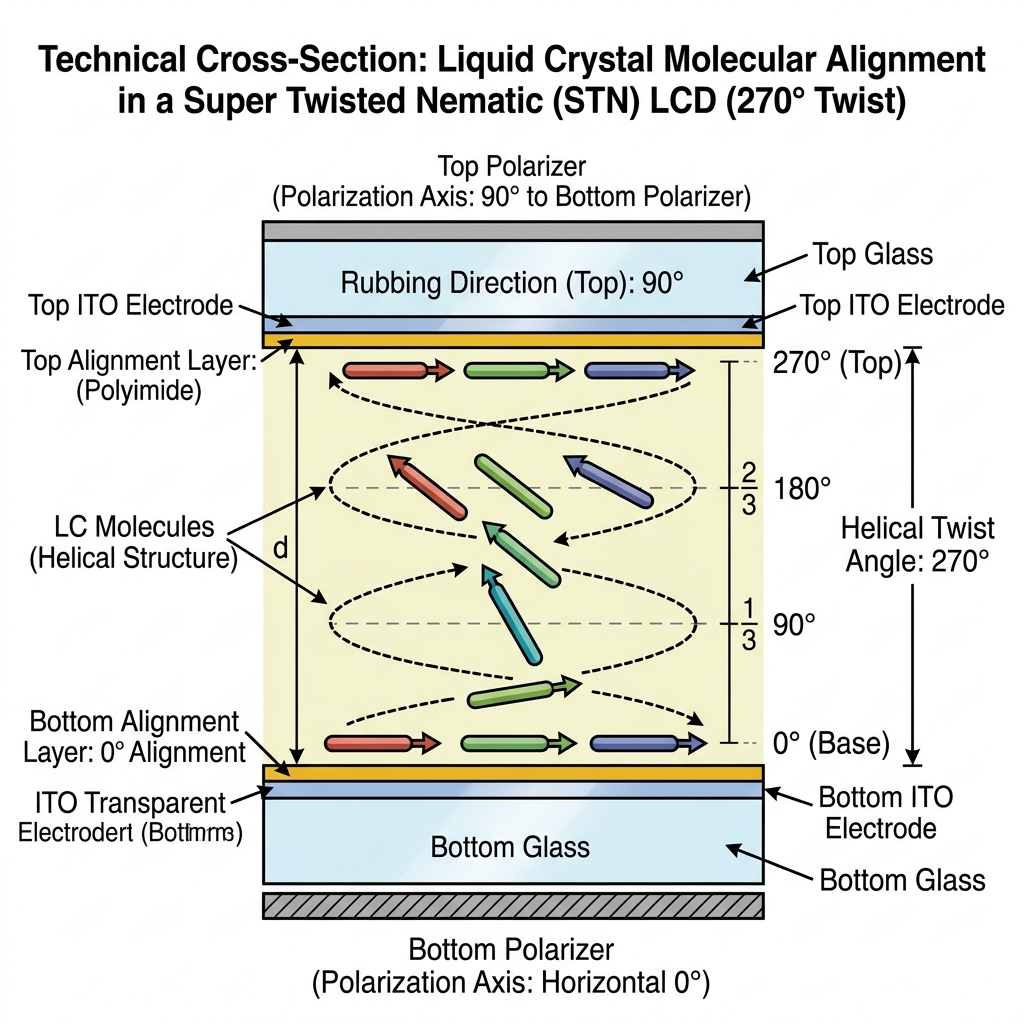
Super Twisted Nematic LCD is a passive matrix liquid crystal display technology. The name "Super Twisted Nematic" refers to the way liquid crystal molecules are arranged and twisted within the display. In STN displays, the liquid crystal molecules twist at an angle between 180 and 270 degrees from one glass substrate to the other, compared to the 90-degree twist used in the earlier and simpler TN (Twisted Nematic) displays. This greater twist angle gives STN displays better contrast and wider viewing angles than TN displays, though they still fall significantly short of modern IPS or OLED displays in these qualities.
History and Development of STN LCD
The first TN LCD (Twisted Nematic LCD) was developed in the early 1970s and powered the first generation of liquid crystal displays used in calculators and watches. However, TN displays were limited by poor contrast, narrow viewing angles, and sluggish response times that made them unsuitable for more complex applications. STN LCD was developed in the mid-1980s as an improvement over TN technology. The increased twist angle in STN panels produced significantly sharper transitions between on and off pixel states (known as a steeper electro-optical curve), enabling STN to drive much larger display matrices with more pixels than TN could handle. The first mass-market product to popularize STN LCD was the original Nintendo Game Boy, released in 1989, which used a reflective STN display. Throughout the 1990s, STN became the dominant display technology for mobile phones, personal digital assistants (PDAs), and laptop computers before being superseded by TFT (Thin Film Transistor) active matrix displays.
How STN LCD Works
Liquid Crystal Molecular Alignment
Like all LCD technology, STN relies on liquid crystal molecules whose optical properties change when an electric field is applied. In an STN display, the liquid crystal molecules are aligned so they rotate gradually from one orientation to another as you move through the depth of the liquid crystal layer. The total rotation from the front glass to the back glass is between 180 and 270 degrees. At 180 degrees the technology is sometimes called Super Twisted Birefringent Effect (SBE), while at 240 degrees it is the most common STN configuration. This high twist angle creates a sharper optical switching effect compared to TN, which means the pixels switch more definitively between light and dark states, improving contrast ratio and enabling passive matrix addressing of more pixels.
Passive Matrix Addressing
STN uses a passive matrix addressing scheme, meaning each pixel is addressed by the intersection of a row and column electrode without a dedicated transistor for each pixel (unlike active matrix TFT displays). Row and column electrodes are etched onto the glass substrates and a voltage is applied sequentially across each row while appropriate column voltages are applied simultaneously to set the state of each pixel in that row. The passive matrix approach that STN uses is simpler and cheaper to manufacture than active matrix TFT but results in lower contrast, slower response times, and cross-talk between pixels that limits resolution and refresh rates.
Reflective, Transflective, and Transmissive STN
STN displays are available in three backlight configurations. Reflective STN uses ambient light reflected off a mirror layer at the back of the display, consuming almost no power (used in early calculators and Game Boy). Transflective STN can use both reflected ambient light and a backlight, combining readability in sunlight with usability in low light (common in early mobile phones). Transmissive STN requires a backlight for visibility and offers the brightest display in artificial lighting conditions but at higher power cost.
STN LCD Variants
Several improved variants of STN LCD were developed to address its limitations.
DSTN (Double Super Twisted Nematic)
DSTN adds a second compensating liquid crystal layer on top of the first. This second layer cancels the undesirable color cast (typically blue-green or yellow) that standard STN panels exhibit, producing a more neutral black and white image. DSTN was commonly used in early laptop displays during the mid-1990s before color TFT became affordable. The trade-off of DSTN was added cost and thickness compared to standard STN.
FSTN (Film Super Twisted Nematic)
FSTN adds a compensation film (retardation film) to the outside of the display glass rather than a second liquid crystal layer, achieving similar color correction to DSTN at lower cost and thinner form factor. FSTN became the preferred high-contrast STN variant for industrial displays, medical equipment panels, and low-cost consumer applications. FSTN panels are recognizable by their sharp black characters on a white or light gray background.
CSTN (Color Super Twisted Nematic)
CSTN adds a color filter layer to produce color images. This was a key technology in the first generation of color mobile phones during the early 2000s. CSTN color displays suffered from slow response times (ghosting during animation) and limited color depth compared to TFT, but offered a lower-cost path to color displays during the transition era before TFT became affordable in mass-market phones.
STN LCD in Consumer Devices
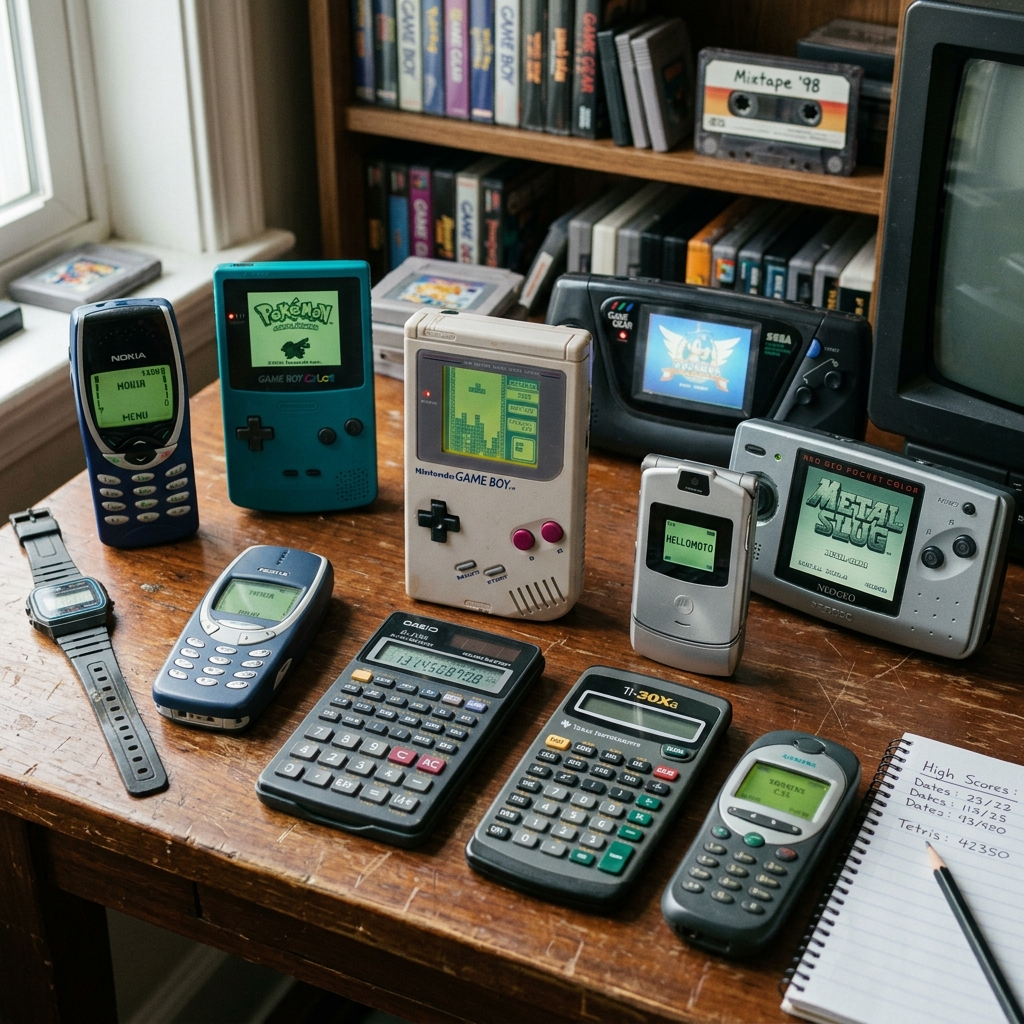
STN LCD powered many iconic consumer products across the 1990s and early 2000s. The Nintendo Game Boy (1989) used a reflective STN display and became one of the best-selling gaming devices in history. The original Nokia 3310 and many Nokia feature phones of the early 2000s used monochrome STN displays. Early IBM ThinkPad and other laptop computers used DSTN LCD screens before transitioning to TFT. Palm PDAs and early organizers used STN for text-focused interfaces. Most calculators still use monochrome STN (or simpler TN) LCD panels today due to their extremely low power consumption and long lifespan. Digital watches and alarm clocks with segment displays still commonly use STN technology.
Advantages of STN LCD
Very Low Power Consumption
Reflective and transflective STN displays require very little power, especially in passive reflective mode where no backlight is needed. This makes STN ideal for battery-powered devices that need to display information for extended periods such as calculators, medical monitoring devices, electronic shelf labels, and industrial handhelds where battery life is measured in months or years rather than hours.
Low Cost
STN panels are significantly cheaper to manufacture than TFT or OLED displays of the same size because they do not require the thin film transistor fabrication process. For applications where basic readability is sufficient and cost matters more than image quality, STN remains a cost-effective solution in industrial, medical, and embedded systems.
Wide Operating Temperature Range
STN LCD panels can operate across a much wider temperature range than IPS or OLED displays, including extended low-temperature operation below freezing. This makes STN suitable for outdoor industrial equipment, cold storage environments, and military applications where extreme temperatures are a factor.
Long Lifespan
STN panels have no organic material that degrades over time (unlike OLED), offer no burn-in risk, and can last for decades under normal operating conditions. This long lifespan makes STN the preferred technology for industrial control panels, laboratory equipment, and embedded systems that are expected to operate for 10 to 20 years without replacement.
STN LCD vs TN, IPS, and OLED
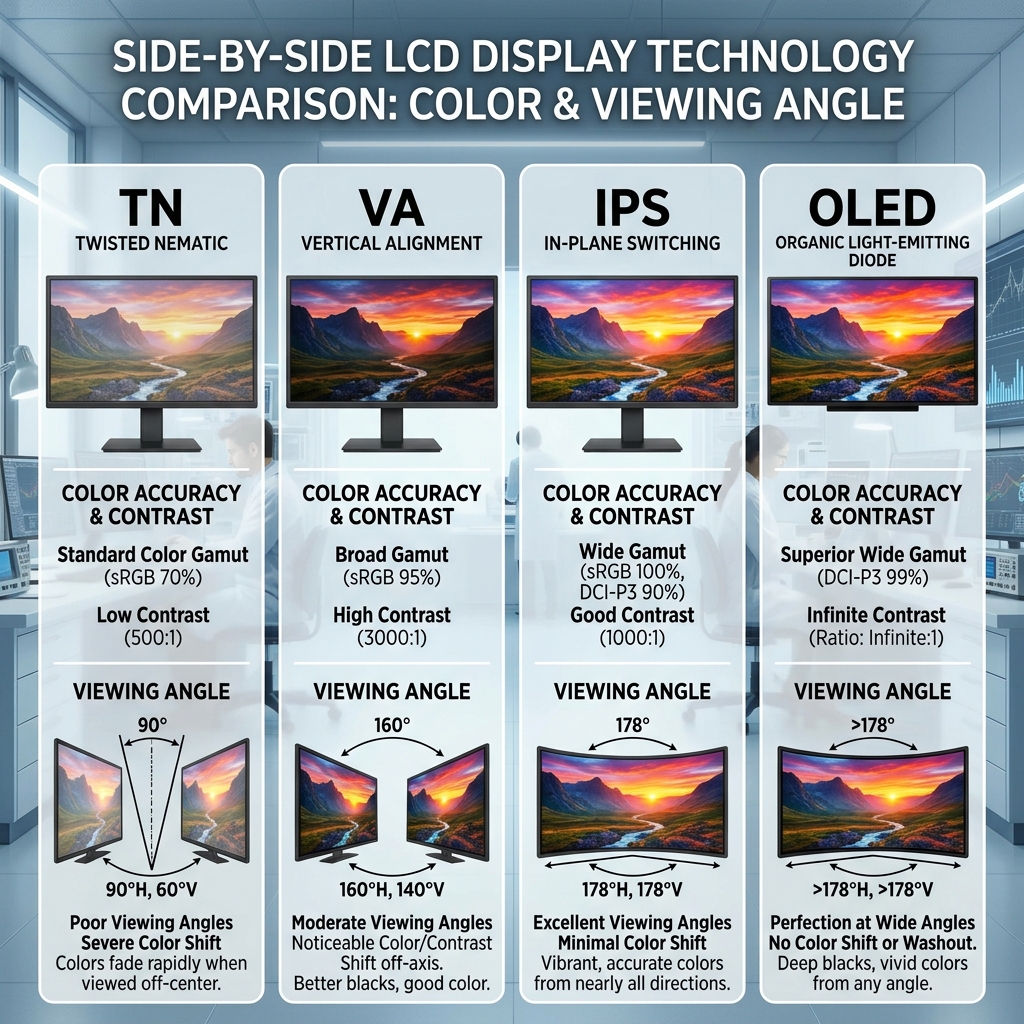
| Feature | STN LCD | TN LCD | IPS LCD | OLED |
|---|---|---|---|---|
| Twist Angle | 180-270 degrees | 90 degrees | 0 degrees (in-plane) | N/A |
| Contrast Ratio | Low-Medium | Low | Medium | Very High |
| Color Quality | Poor (or mono) | Poor-Fair | Excellent | Excellent |
| Power Use | Very Low | Low | Medium | Low-Medium |
| Cost | Very Low | Low | Medium | High |
| Lifespan | Very Long | Long | Long | Medium |
| Burn-In Risk | None | None | None | Possible |
Where STN LCD is Still Used Today
Despite being overshadowed by TFT and OLED in consumer electronics, STN LCD technology remains actively produced and used in 2026 in several important market segments. Industrial machine control panels and HMI (Human-Machine Interface) displays in factories and manufacturing equipment commonly use FSTN or CSTN panels for their durability and temperature range. Medical devices such as glucose meters, blood pressure monitors, and portable patient monitors use STN for its low power consumption and readability. Electronic shelf labels in retail stores use reflective STN for displays that must run for months on a small battery. Automotive instrument clusters and dashboard sub-displays in some vehicles use STN for auxiliary information readouts. Scientific instruments, test equipment, and laboratory devices frequently use STN for their display panels due to the long operational lifespan.
Conclusion
Super Twisted Nematic LCD technology played a foundational role in the development of portable and mobile display technology from the mid-1980s through the early 2000s. While modern consumer electronics have moved on to TFT, IPS, and OLED displays that offer far superior image quality, STN LCD technology remains relevant and widely deployed in industrial, medical, and embedded applications where its extremely low power consumption, wide temperature range, low cost, and exceptional longevity make it the right choice for the application. Understanding STN technology provides important context for the history of display technology and explains why it continues to occupy a distinct niche in 2026.