What Are Samsung Exynos Processors?
Samsung Exynos is the in-house line of mobile processors designed by Samsung Semiconductor. These System-on-Chip (SoC) processors power a wide range of Samsung Galaxy smartphones, tablets, and wearables. In 2026, Samsung has made its most ambitious move yet with the Exynos 2600 — the world's first 2nm mobile chip — signaling a new era of mobile performance and efficiency.
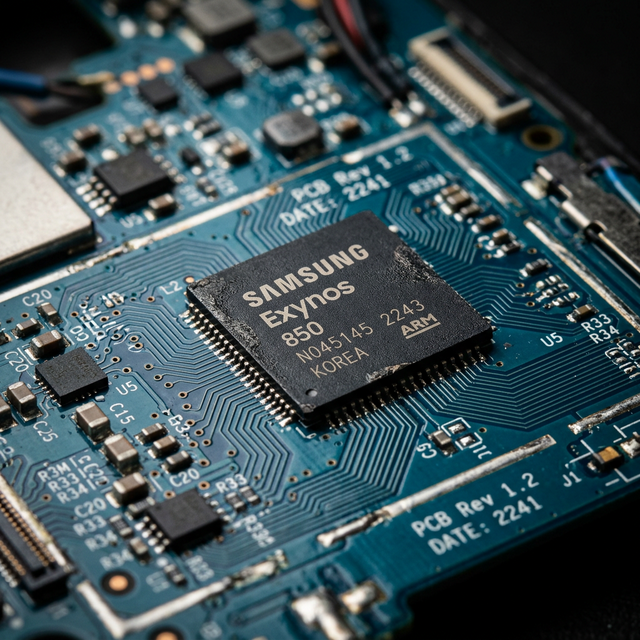
While Qualcomm Snapdragon processors remain the dominant choice for premium flagship devices globally, Samsung continues to invest heavily in Exynos to reduce its reliance on external chipmakers and deliver more integrated mobile experiences.
Samsung Exynos 2600 – The 2nm Breakthrough
Architecture and Manufacturing
The Exynos 2600 is the crown jewel of Samsung's processor lineup in 2026. It is manufactured using Samsung Foundry's cutting-edge 2nm Gate-All-Around (GAA) process, making it the world's first 2nm mobile chip. The GAA transistor architecture provides superior power efficiency and performance density compared to older FinFET designs.
CPU Configuration
The Exynos 2600 features a powerful 10-core CPU arrangement based on ARM architecture:
- 1x ARM C1-Ultra core at 3.8GHz (peak performance)
- 3x C1-Pro cores at 3.25GHz (high performance)
- 6x C1-Pro cores at 2.75GHz (efficiency)
Benchmark Performance
In Geekbench 6 testing, the Exynos 2600 delivers impressive results:
- Single-core: 3,105 – 3,455 points
- Multi-core: 10,444 – 11,621 points
Samsung claims a 7% CPU performance improvement compared to the Snapdragon 8 Elite used in the Galaxy S25 series.
GPU: Xclipse 960 (AMD RDNA)
The Exynos 2600 integrates the Xclipse 960 GPU, built on AMD's RDNA architecture. This GPU delivers a 29% performance boost over the previous generation and achieves a 50% improvement in ray tracing compared to the Xclipse 950. In Basemark's In Vitro ray tracing benchmark, the Xclipse 960 scored a top-tier 8,262 points.
NPU and AI Performance
The neural processing unit in the Exynos 2600 is a game-changer for on-device AI. Samsung reports a 113% improvement in generative AI performance with a 32K MAC NPU, enabling faster photo editing, real-time translation, and intelligent camera features. This NPU is 40% faster than the Snapdragon 8 Elite's AI capabilities.
Thermal Management
The Exynos 2600 includes a Heat Path Block (HPB) technology for improved heat dissipation, helping sustain peak performance longer during gaming and intensive tasks. However, some tests show thermal throttling after 30 minutes of heavy gaming, with temperatures reaching around 49.5°C.
Samsung Exynos 2500 – The 3nm Pioneer
Overview
Released in 2025, the Exynos 2500 was Samsung's first chip on the 3nm GAA process. While it didn't reach flagship-level performance compared to the Snapdragon 8 Elite, it was a critical stepping stone for Samsung's in-house chip development.
Performance Specs
- Geekbench Single-core: 1,751 – 2,356
- Geekbench Multi-core: 5,432 – 8,076
- AnTuTu: ~1,777,598 points (up to 2.1 million in some tests)
- GPU: Xclipse 950 (competitive in OpenCL benchmarks)
Thermal Challenges
The Exynos 2500 faced notable thermal throttling issues, dropping to 45% of maximum performance after a 15-minute CPU stress test. This limited its appeal for sustained gaming and heavy multitasking. For tips on managing battery during intensive use, read our guide on adjusting screen settings to extend battery life.
Complete Exynos Processor Comparison 2026
| Feature | Exynos 2600 | Exynos 2500 | Snapdragon 8 Elite Gen 5 |
|---|---|---|---|
| Process Node | 2nm GAA | 3nm GAA | 3nm (TSMC) |
| CPU Cores | 10 (1+3+6) | 10 | 8 |
| Peak Clock Speed | 3.8GHz | 3.2GHz | 4.32GHz |
| GPU | Xclipse 960 (RDNA) | Xclipse 950 (RDNA) | Adreno 830 |
| GB6 Single-Core | 3,105 – 3,455 | 1,751 – 2,356 | ~3,600+ |
| GB6 Multi-Core | 10,444 – 11,621 | 5,432 – 8,076 | ~12,500+ |
| Ray Tracing | 8,262 (Basemark) | Supported | Supported |
| NPU | 32K MAC, 113% faster | Standard | Hexagon |
| Galaxy Devices | Galaxy S26, S26+ | Galaxy Z Flip 7 | Galaxy S26 Ultra |
Exynos vs. Snapdragon: Which Is Better in 2026?
Raw Performance
The Snapdragon 8 Elite Gen 5 maintains a 10–18% lead in single-core and overall multi-core benchmarks. However, the Exynos 2600's 10-core design helps close the gap in multi-threaded workloads.
Graphics and Gaming
The Exynos 2600's Xclipse 960 GPU with AMD RDNA architecture excels in OpenCL and ray tracing benchmarks, often outperforming the Snapdragon's Adreno GPU. For dedicated mobile gamers, the Exynos 2600 offers competitive — and sometimes superior — graphics performance. If you enjoy mobile gaming, check out our list of cooperative games for multi-players.
AI and Machine Learning
Samsung's 32K MAC NPU in the Exynos 2600 delivers 40% faster AI performance than the Snapdragon 8 Elite's Hexagon processor. This translates to better on-device language models, faster computational photography, and improved voice recognition.
Efficiency and Battery Life
The 2nm GAA process gives the Exynos 2600 a theoretical efficiency advantage, though real-world battery life depends on software optimization. Samsung's HPB thermal management also contributes to more consistent power delivery.
Which Galaxy Phones Use Exynos?

Regional Distribution
Samsung uses Exynos processors in Galaxy phones sold in specific regions:
- Exynos regions: Europe, Middle East, Africa, South/Southeast Asia, South America
- Snapdragon regions: North America, China, South Korea, Japan
- Galaxy S26 Ultra: Uses Snapdragon 8 Elite Gen 5 globally
If you're in Pakistan, most Samsung phones come with Exynos processors. Browse our collection of Samsung mobile phones to see the latest models and their specifications.
Samsung's Future Strategy
Samsung aims to equip all Galaxy devices with Exynos processors eventually, reducing reliance on Qualcomm. The upcoming Exynos 2700 (expected in 2027) is projected to exceed 14,000 multi-core points in Geekbench, potentially closing the performance gap entirely.
Legacy Exynos Processors
Exynos 2400 and 2200
Previous-generation chips like the Exynos 2400 (Galaxy S24) and Exynos 2200 (Galaxy S22) introduced AMD RDNA graphics to mobile devices for the first time. While they faced criticism for thermal management and raw performance, they laid the groundwork for the Exynos 2600's success.
Exynos 1380 and 1280
Samsung's mid-range Exynos chips like the 1380 and 1280 power popular budget devices in the Galaxy A series. These chips deliver reliable everyday performance at a lower price point. Looking for budget options? See our guide on the best affordable smartphones in Pakistan.
Frequently Asked Questions (FAQ)
Is the Exynos 2600 better than Snapdragon 8 Elite Gen 5?
The Exynos 2600 leads in GPU ray tracing and AI performance, while the Snapdragon 8 Elite Gen 5 has a slight edge in raw CPU benchmarks. For most users, the difference is negligible in daily tasks.
Why doesn't Samsung use Exynos in all phones?
Samsung's Exynos chips have historically trailed Qualcomm in some performance areas. Samsung uses Snapdragon in key markets like North America where performance comparisons are more scrutinized. The company plans to transition to Exynos-only devices as its chips become more competitive.
Do Exynos phones have worse battery life?
Not necessarily. The Exynos 2600's 2nm process is designed for superior power efficiency. Real-world battery differences between Exynos and Snapdragon variants of the same phone are typically within 5–10%. For tips on maximizing battery life, read our guide on adjusting screen settings.
What processor does the Galaxy S26 Ultra use?
The Galaxy S26 Ultra uses the Qualcomm Snapdragon 8 Elite Gen 5 globally. The standard Galaxy S26 and S26+ use the Samsung Exynos 2600 in most regions.
Will Samsung stop using Qualcomm?
Samsung has stated its goal of equipping all Galaxy devices with Exynos processors eventually. However, this transition is expected to happen gradually as Exynos chips continue to improve in performance and efficiency.