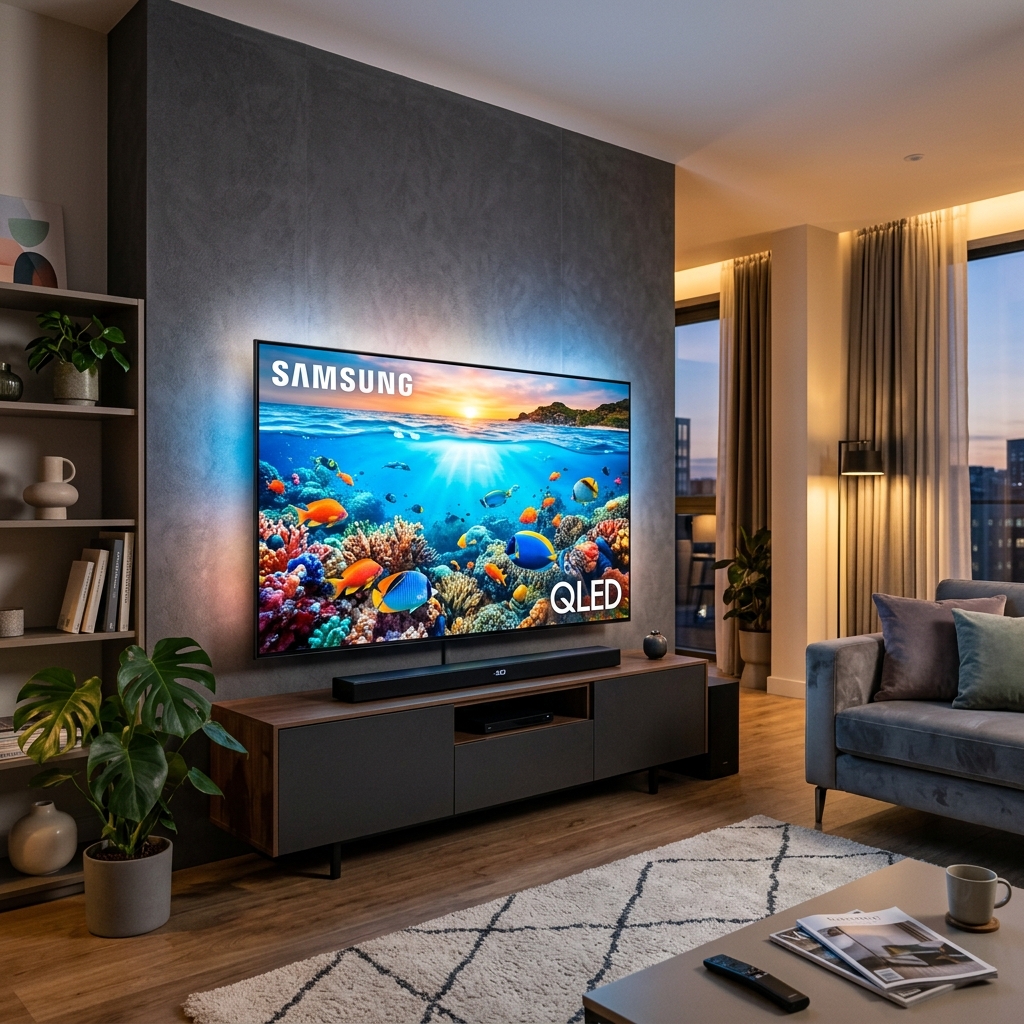
QLED (Quantum Light Emitting Diode) is a display technology that uses quantum dots to enhance the color and brightness of LCD televisions. Pioneered and popularized by Samsung, QLED has become one of the leading premium TV display technologies in the market, delivering exceptional brightness, a wide color gamut, and outstanding HDR performance. This comprehensive guide explains exactly what QLED technology is, how quantum dots work, how QLED compares to OLED, and what to expect from QLED TVs in 2026.
What is QLED?
QLED stands for Quantum Light Emitting Diode, though technically the current generation of QLED TVs are more accurately described as quantum dot enhanced LCD displays. In these displays, a layer of quantum dots is placed in front of the LED backlight to improve the quality of the light before it reaches the liquid crystal and color filter layers. The quantum dot layer converts the blue LED backlight into a precisely tuned spectrum of red, green, and blue light, resulting in purer colors, higher brightness, and better energy efficiency than traditional LED LCD displays without quantum dots.
What Are Quantum Dots?
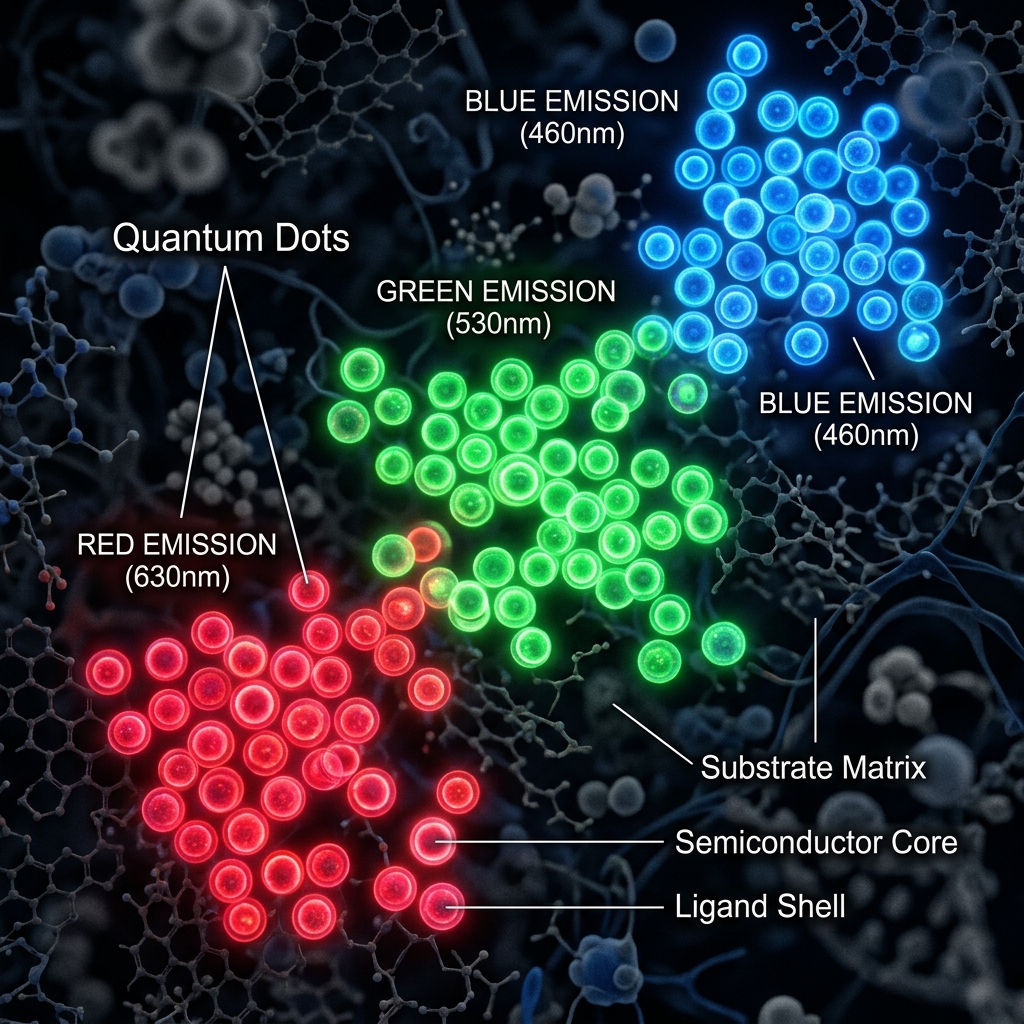
Quantum dots are semiconductor nanocrystals so small that their optical and electronic properties are determined by quantum mechanical effects rather than the bulk properties of the material. The key characteristic that makes quantum dots extraordinary for display technology is that the size of the quantum dot determines the wavelength (color) of light it emits. Larger quantum dots emit red light, medium-sized quantum dots emit green light, and smaller quantum dots emit blue light. By precisely controlling the size of quantum dots during manufacturing, engineers can produce nanocrystals that emit exactly the wavelength of red and green light needed for a display with extremely high color purity. When the blue LED backlight of a QLED TV shines through the quantum dot film, the quantum dots convert that blue light into ultra-pure red, green, and blue light that then passes through the LCD panel to create the final image. This conversion process is highly efficient, typically above 90%, meaning very little light energy is wasted as heat.
How QLED Technology Works Step by Step
A QLED TV panel is essentially an advanced LCD display with a quantum dot enhancement layer. The complete light path works as follows. First, a blue LED backlight behind the panel generates intense blue light. This blue light passes through the quantum dot film where some of the blue photons are absorbed by quantum dots and re-emitted as precisely tuned red and green photons, while some blue light passes through unchanged. The combination produces broad-spectrum white light with an exceptionally well-defined red, green, and blue peak that matches the color filters in the LCD panel almost perfectly. This light then passes through the LCD panel consisting of polarizers, liquid crystal layer, and color filters which modulate the light to create the image. Because the quantum dot light source produces purer primary colors than a standard white LED or even a standard blue LED backlight, the color filters can select a much purer red, green, and blue from the incoming light, resulting in a wider color gamut and better color accuracy.
Key Advantages of QLED Technology
Exceptional Brightness
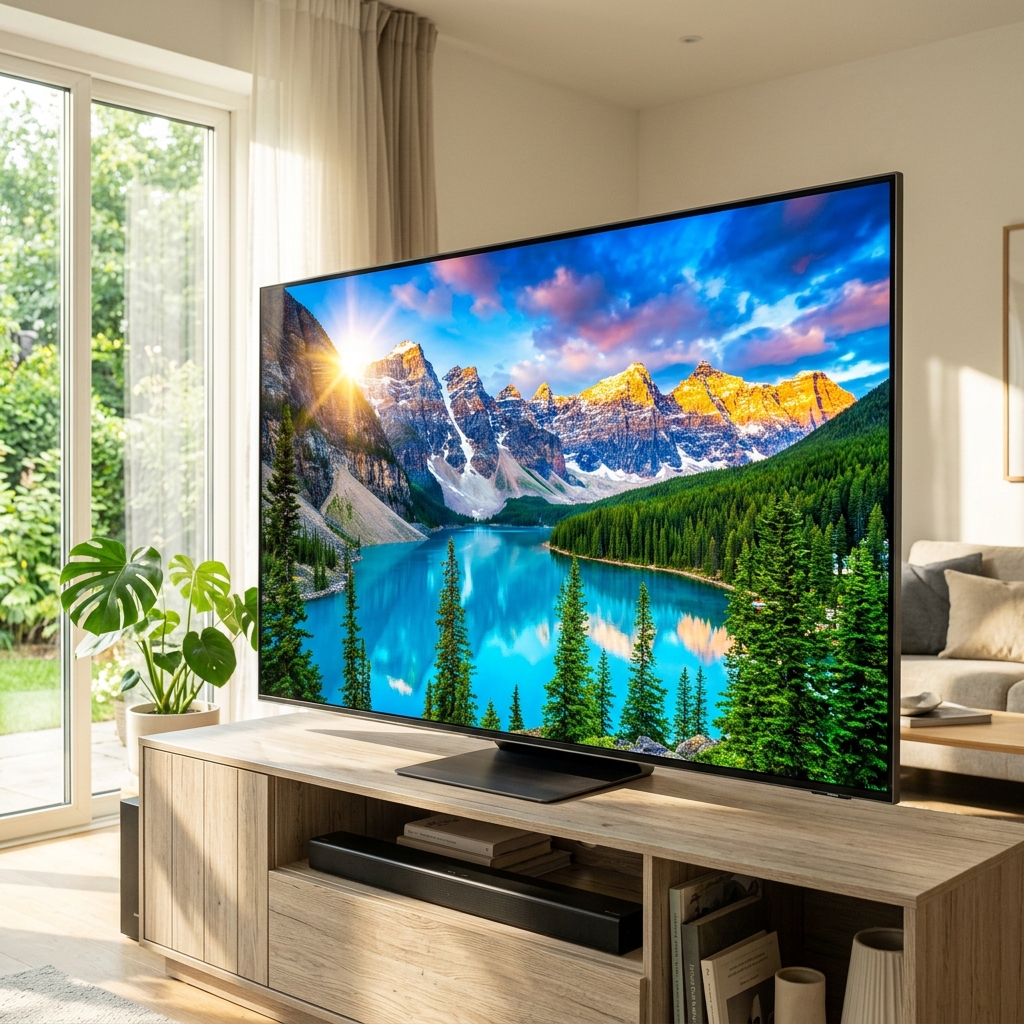
QLED TVs are capable of reaching extremely high peak brightness levels, with flagship Samsung QLED models achieving 2,000 to 4,000 nits of peak brightness or more in small-window HDR highlights. This makes QLED TVs exceptionally well-suited for bright viewing environments where ambient light would wash out a less bright display. The high brightness also makes QLED TVs extremely effective at rendering HDR (High Dynamic Range) content where very bright specular highlights need to pop against darker surrounding areas of the image.
Wide Color Gamut
QLED displays can cover 100% of the DCI-P3 color space and significant portions of the wider Rec. 2020 color space used for premium HDR content. This means QLED TVs can display colors that are more vivid, saturated, and accurate than what was possible with traditional LED LCD displays. The expanded color coverage is particularly noticeable in natural content like sunsets, lush greenery, and vibrant ocean scenes where the additional color depth produces images that feel remarkably lifelike.
No Burn-In Risk
Unlike OLED displays where organic materials can degrade unevenly over time when static images are displayed for extended periods (causing permanent burn-in), QLED TVs are based on inorganic quantum dots and an LED backlight that do not suffer from burn-in. This makes QLED an excellent choice for users who display static images for long periods such as those using their TV as a PC monitor, displaying news tickers, sports scoreboards, or gaming HUDs for many hours daily.
Long Lifespan
The quantum dot material used in QLED displays is inorganic and does not degrade in the same way that the organic compounds in OLED displays do. Samsung rates its QLED quantum dot material for over 100,000 hours of use before significant color degradation, compared to shorter lifespans for OLED panels especially at high brightness levels. For consumers who keep their TVs for many years or use them for commercial applications, the longevity advantage of QLED is meaningful.
Limitations of QLED Technology
Black Level Limitation (No True Black)
The most significant limitation of current QLED TVs is that they use an LCD panel with a backlight, which means they cannot produce true black. Even when a pixel should be black, some backlight leakage passes through the liquid crystal layer, resulting in a dark gray rather than absolute black. This limits the native contrast ratio of QLED TVs to approximately 3,000:1 to 6,000:1 for standard edge-lit panels, compared to the near-infinite contrast ratio achievable by OLED displays that can turn individual pixels completely off. Samsung addresses this limitation in premium QLED models with Mini-LED backlighting, which uses thousands of tiny LED zones to allow much finer local dimming control, dramatically improving perceived contrast in dark scenes.
Viewing Angle
Most QLED TVs use VA (Vertical Alignment) LCD panels which offer excellent contrast ratios but narrower viewing angles compared to IPS LCD panels used in many OLED-alternative displays. Colors and contrast can shift when viewing from an angle exceeding about 40 degrees from center. Samsung has introduced Ultra Viewing Angle technology in some QLED models that adds an optical layer to widen the viewing angle, though this slightly reduces the peak contrast ratio.
QLED vs OLED: A Detailed Comparison
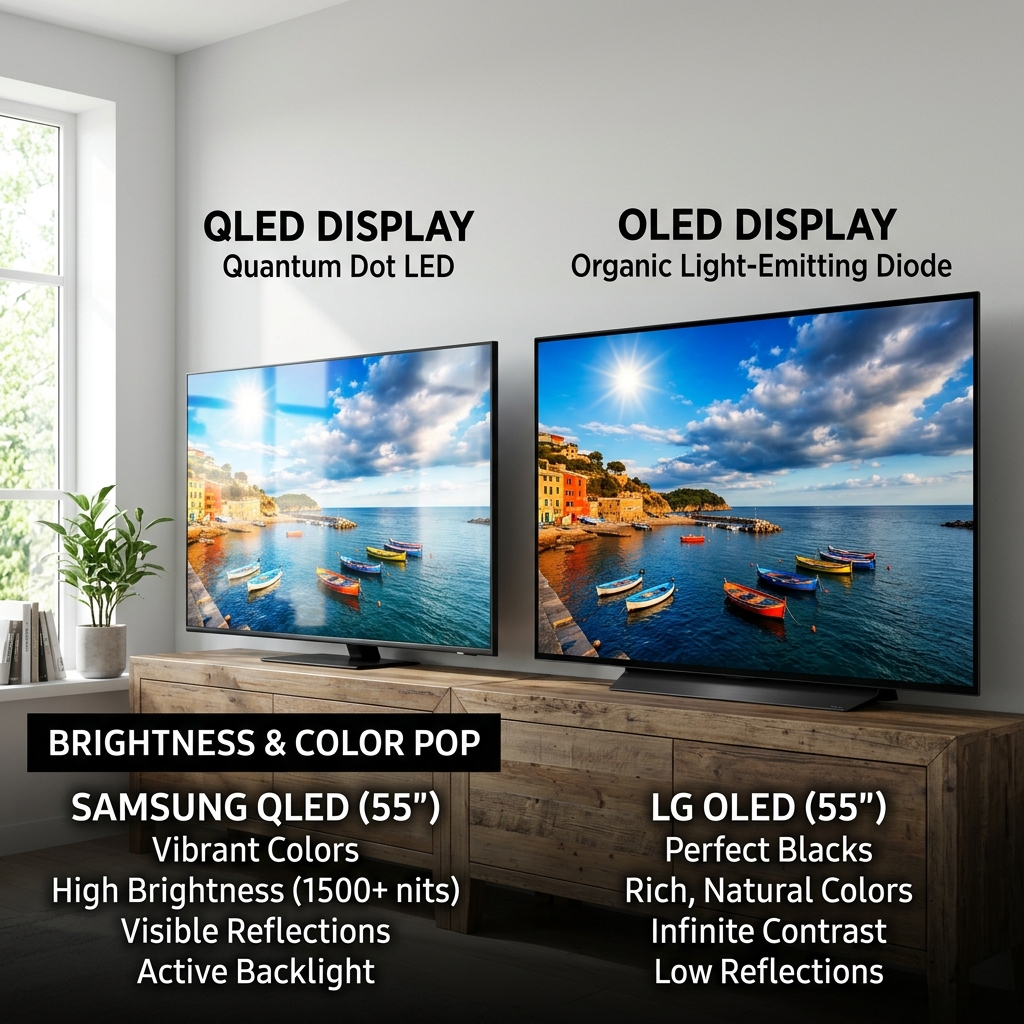
| Feature | QLED | OLED |
|---|---|---|
| Peak Brightness | 2,000-4,000+ nits | 800-1,500 nits typical |
| Black Levels | Near black (backlight glow) | True black (pixel off) |
| Contrast Ratio | Good (higher with Mini-LED) | Excellent (near-infinite) |
| Color Gamut | 100% DCI-P3 | 100% DCI-P3 |
| Burn-In Risk | None | Possible with static images |
| Lifespan | 100,000+ hours | Shorter at high brightness |
| Best Environment | Bright rooms | Dark or controlled lighting |
| Sizes Available | 43 to 98 inches | 42 to 97 inches |
| Price | Medium to High | High to Very High |
Neo QLED and QD-OLED: The Next Evolution
Neo QLED (Mini-LED QLED)
Samsung Neo QLED TVs combine quantum dot technology with a Mini-LED backlight consisting of thousands of tiny LEDs arranged in hundreds or thousands of independently controlled dimming zones. This local dimming capability dramatically improves black levels and HDR performance by allowing parts of the screen to be very bright while adjacent areas are kept very dark. The Neo QLED technology brings QLED much closer to OLED in terms of contrast performance while maintaining the brightness and longevity advantages of QLED.
QD-OLED
QD-OLED (Quantum Dot OLED) is a hybrid technology developed by Samsung Display and used in some Sony and Samsung premium televisions and monitors. QD-OLED uses a blue OLED panel as the light source (instead of a white OLED panel with color filters) and places quantum dots on top of the OLED layer to produce pure red and green light. This combines the true black levels and infinite contrast of OLED with the expanded color gamut of quantum dot technology, producing displays with exceptional color accuracy, true black, and no color filter losses. QD-OLED represents the most advanced fusion of QLED and OLED technology available in 2026.
Is QLED Right for You?
QLED is the ideal choice if you watch TV in a bright room with a lot of natural light where the high brightness of QLED ensures excellent picture visibility and HDR impact. It is also ideal if you plan to display static content like news, sports scores, or a gaming HUD for many hours daily without worrying about burn-in. QLED suits buyers who want a very large screen (75 inches and above) where the greater range of QLED sizes is an advantage. It is also well suited for those seeking a long-lasting TV investment where panel longevity over many years is a priority. OLED would be a better choice if you watch in a dark or well-controlled lighting environment where OLED true blacks and infinite contrast create a more cinematic experience.
Conclusion
QLED technology represents a major advancement over traditional LED LCD displays, bringing significantly wider color gamut, exceptional brightness, excellent HDR performance, and outstanding longevity to the television market. While OLED holds advantages in true black levels and contrast in dark rooms, QLED and especially Neo QLED with Mini-LED backlighting deliver a compelling premium viewing experience that excels in bright rooms and offers peace of mind regarding burn-in and long-term reliability. As QD-OLED further blurs the line between the two technologies in 2026, consumers have access to the most capable display options in television history.