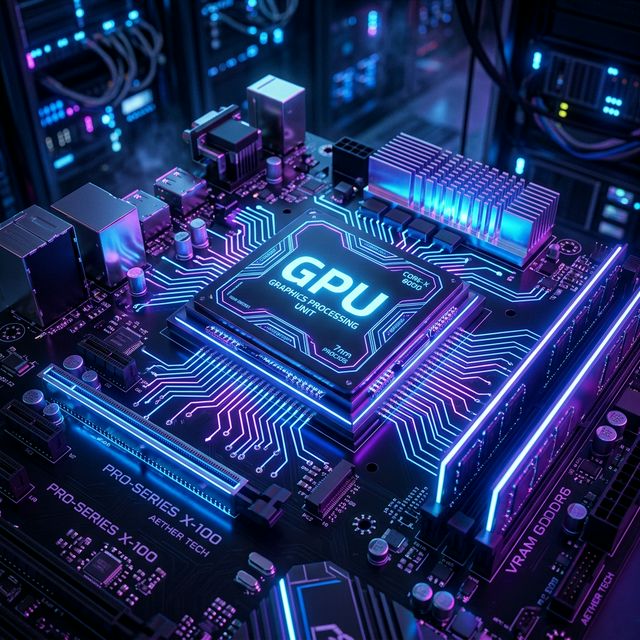
Whether you are building a custom high-end gaming computer, buying a reliable new laptop for work, or simply reading about the latest breakthroughs in artificial intelligence, you have undoubtedly encountered the term GPU. But what exactly is a GPU, and why has it become arguably the most critical piece of hardware in modern computing? Let us dive into the fascinating technology powering the screens we look at every single day.
Exactly What is a GPU and Why is it Important?
GPU stands for Graphics Processing Unit. At its most fundamental level, a GPU is a specialized electronic circuit specifically designed to rapidly manipulate and alter memory to accelerate the creation of images in a frame buffer intended for output to a display device. While your computer’s CPU (Central Processing Unit) acts as the general-purpose brain handling sequential tasks and operating system functions, the GPU acts as the specialized muscle dedicated solely to handling complex visual information.
Without a graphics processing unit, your computer would brutally struggle to perform even the most basic visual tasks, such as rendering the smooth animations of your desktop environment or scrolling rapidly down a highly visual webpage without immense lag.
How Parallel Processing Changes Everything
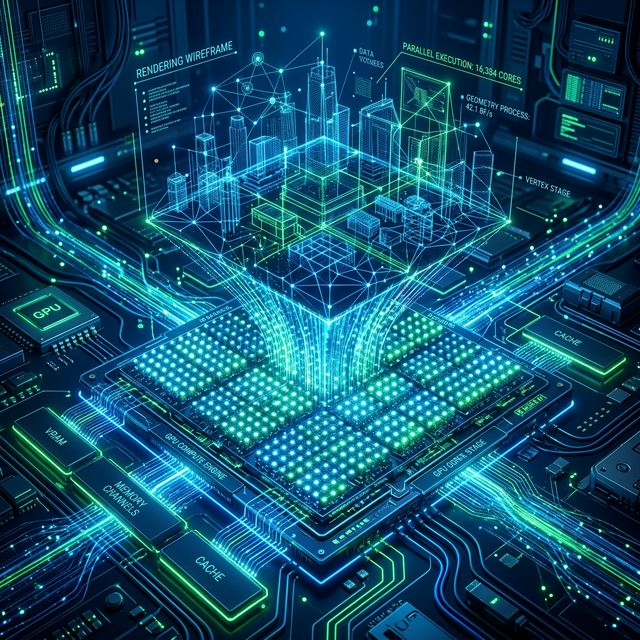
To truly understand what makes a GPU incredibly special, you need to understand parallel processing. A standard CPU usually features a handful of heavily optimized, extremely powerful processing cores designed to tackle a few complex tasks incredibly quickly in a sequential manner. In contrast, a modern GPU is built with literally thousands of smaller, more specialized cores designed to handle thousands of mathematical equations simultaneously.
When rendering a 3D environment, the computer must calculate the exact color, lighting, shading, and position of millions of individual pixels incredibly fast—often sixty to over a hundred times per single second. A CPU would choke on this workload, but a GPU’s thousands of specialized cores efficiently split the workload, executing the calculations in mass parallel harmony.
The Role of the GPU in Modern PC Gaming
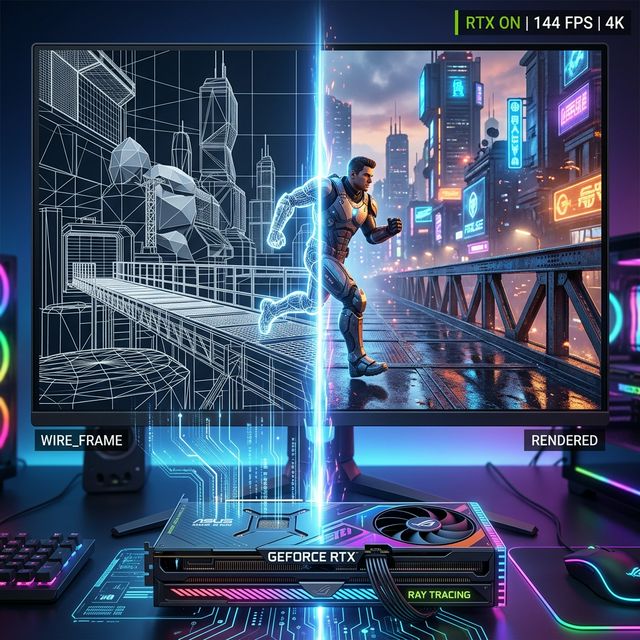
The gaming industry has been the absolute primary driving force behind the continuous, rapid advancement of GPU technology. As consumer expectations for graphical fidelity skyrocketed, GPU manufacturers like NVIDIA, AMD, and Intel have constantly pushed the boundaries of what silicon hardware can theoretically achieve.
Today, elite GPUs handle breathtaking real-time ray tracing—an incredibly demanding rendering technique that accurately simulates the physical behavior of light, producing hyper-realistic shadows, reflections, and global illumination. They also utilize highly advanced upscaling equations, allowing competitive gamers to achieve incredibly high frame rates on stunning 4K monitors without sacrificing overall visual quality or experiencing detrimental screen tearing.
Beyond Gaming: Artificial Intelligence and Machine Learning
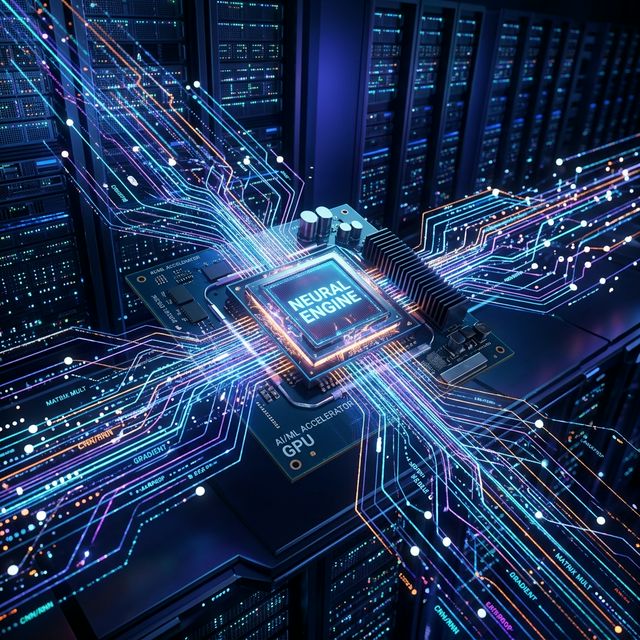
While originally designed strictly for pushing thousands of polygons to a screen, the inherent parallel processing architecture of the GPU turned out to be the absolute perfect hardware to power the modern Artificial Intelligence revolution. Complex machine learning algorithms and Large Language Models require massive amounts of simultaneous matrix multiplications—a task CPUs perform terribly at, but GPUs excel at profoundly.
Because of this unprecedented versatility, GPUs are no longer just for hardcore PC gamers or professional video editors. They are currently the heavily-relied-upon engine aggressively powering advanced scientific simulations, autonomous driving calculations, and the very foundation of the modern generative AI platforms deployed inside advanced data centers worldwide.