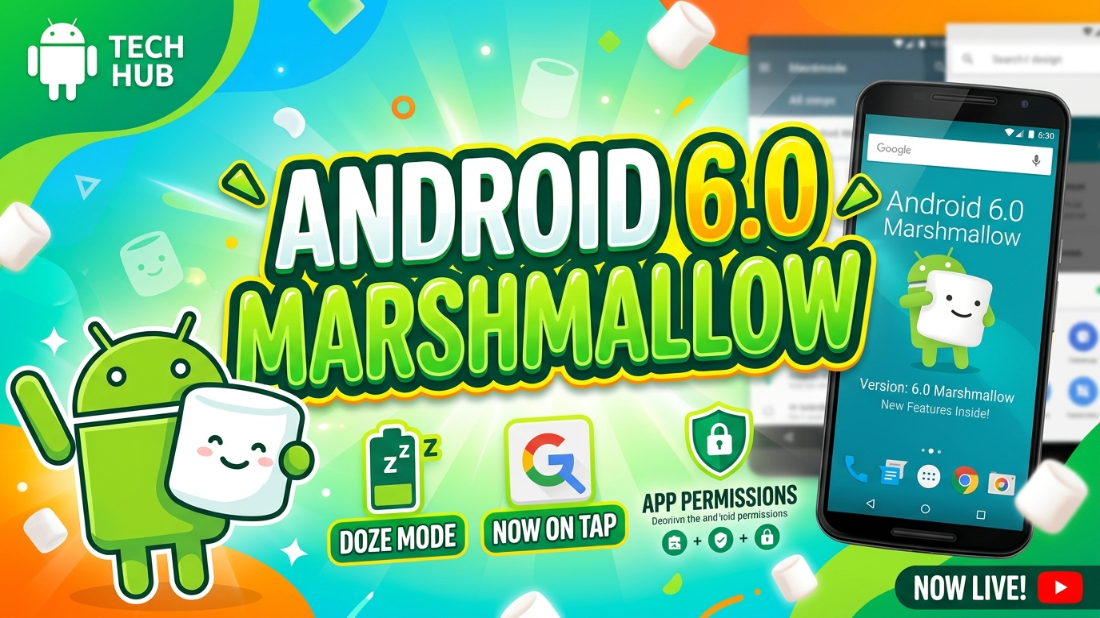
The Evolution of Android 6.0 Marshmallow
Android 6.0, widely known as Marshmallow, stands as one of the most pivotal updates in the history of mobile operating systems. Released back in late 2015, this monumental version set the underlying foundation for the modern Android experience we enjoy even in 2026. Rather than completely overhauling the visual interface like its predecessor Lollipop, Android 6.0 chose to focus on refining the user experience, boosting security, and dramatically optimizing battery life.
Revolutionary Battery Life: The Introduction of Doze Mode
Prior to Android 6.0, smartphone users constantly battled background battery drain. Marshmallow introduced a completely new system-level feature called Doze Mode. When the device remains stationary and unplugged for a period of time, Doze automatically places it into a deep sleep state, pausing unnecessary background network activity and syncing. This singular feature resulted in massive standby battery improvements for millions of devices worldwide.
Additionally, App Standby was introduced to identify applications that users rarely interact with. By limiting the network access of these neglected apps, Android 6.0 ensured battery resources were dedicated solely to the tools users currently needed. You can further explore modern technical optimizations in our related guide here Technical Optimizations.
Granular App Permissions: A Massive Step for Privacy
In older Android versions, users had to agree to a blanket list of permissions before installing an application. Android 6.0 changed this entirely by introducing a granular permission model. Users were finally given the ability to grant or deny specific permissions—like accessing the camera, microphone, or location reports—only when the app actually needed to use them. This user-centric privacy shift fundamentally changed mobile security.
For more insights on maintaining software security, read our security breakdown.
Google Now on Tap: The Precursor to AI Assistants
Before the Google Assistant became a ubiquitous presence on every smart device, Android 6.0 brought us Google Now on Tap. By long-pressing the home button, the system would analyze whatever was actively displayed on the screen and instantly pull up relevant contextual information, locations, and shortcuts. This early AI integration demonstrated the power of machine learning and deep system-level data parsing.
Adoptable Storage: Seamless Memory Expansion
For users dealing with restricted internal storage, Android 6.0 introduced Adoptable Storage. This feature allowed a removable microSD card to be formatted and treated exactly like internal system storage. Applications and their robust data files could be moved seamlessly to the external card, effectively giving budget smartphones a massive expansion capability. Check out other hardware insights at our hardware center.
USB Type-C and Native Fingerprint Support
Hardware paradigms were shifting rapidly around the release of Android 6.0. The operating system officially integrated native support for USB Type-C, which allowed for faster charging and vastly superior data transfer speeds. Simultaneously, Marshmallow included standard API support for fingerprint scanners, laying the groundwork for secure biometric authentication in mobile payment systems like Android Pay.
To discover how hardware integrations continue to evolve, Hardware trends.
Conclusion: The Lasting Legacy of Android 6.0
The updates presented in Android 6.0 Marshmallow were not flashy graphical overhauls, but rather essential architectural improvements. Granular permissions, Doze battery savings, and native biometric standards formed the rock-solid base that future operating systems built upon. Its legacy is unmistakable, continuing to influence the mobile computing landscape to this day.