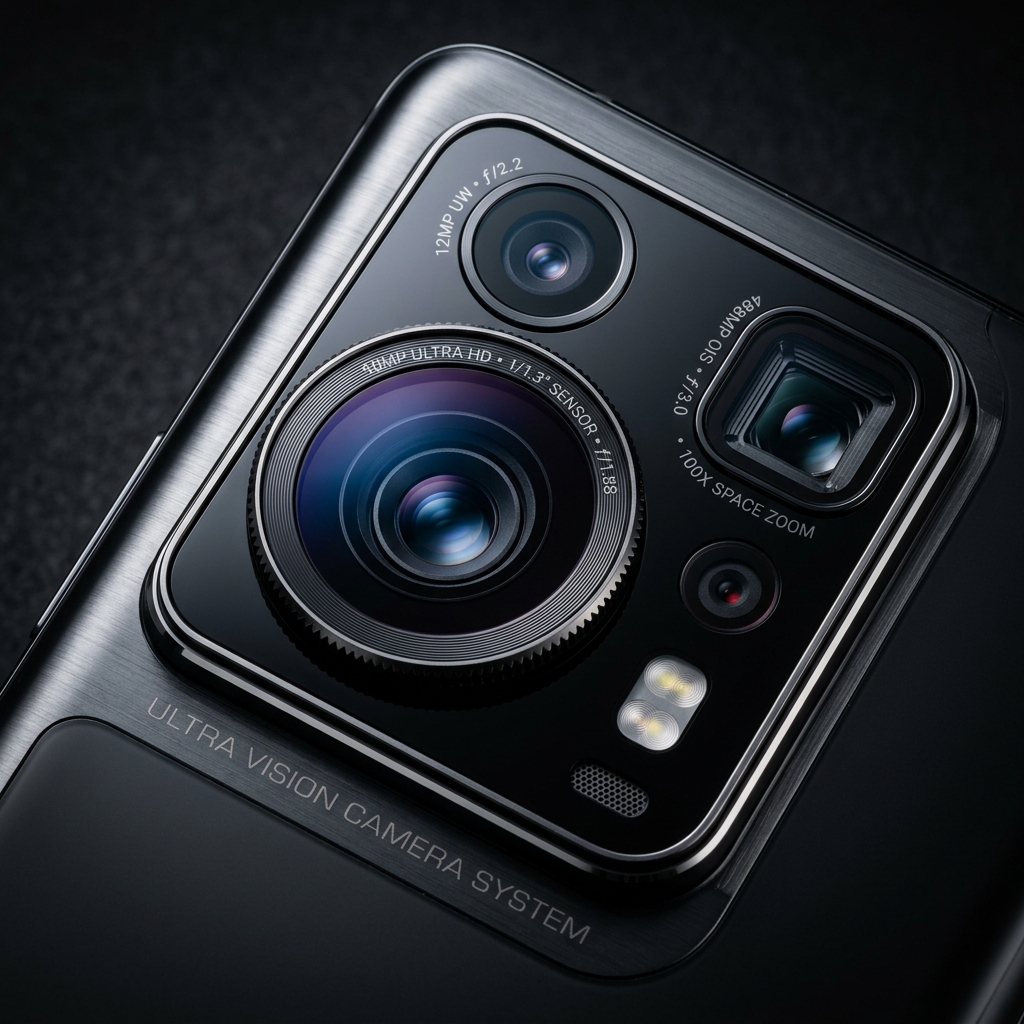
When browsing smartphone specifications, you will frequently encounter the term "main rear camera" listed as the primary camera on the back of the device. Modern smartphones may feature two, three, four, or even five rear cameras, but the main rear camera is always the most important one. This guide explains exactly what the main rear camera is, how it differs from other cameras on your phone, and why it matters most for your photography experience in 2026.
Definition of the Main Rear Camera
The main rear camera, also commonly referred to as the primary camera or wide camera, is the principal imaging sensor on the back of your smartphone. It is the camera that opens by default when you launch the camera app. Among all the cameras on a multi-camera phone, the main rear camera always has the largest image sensor, the widest aperture lens (allowing the most light in), and the highest overall image quality. It is the camera that produces the best photos in almost every lighting condition.
How to Identify the Main Camera
On a multi-camera smartphone, the main camera is typically the largest lens in the camera module. On specification sheets, it is listed first and usually has the highest megapixel count or the largest sensor size. For example, if a phone is listed as having a 200MP + 12MP + 10MP camera system, the 200MP sensor is the main camera. The main camera usually has a focal length equivalent of approximately 24mm to 26mm, providing a natural field of view that closely resembles what the human eye sees.
How the Main Rear Camera Works
Understanding the components that make up the main camera helps explain why it produces superior results compared to the secondary cameras.
The Image Sensor
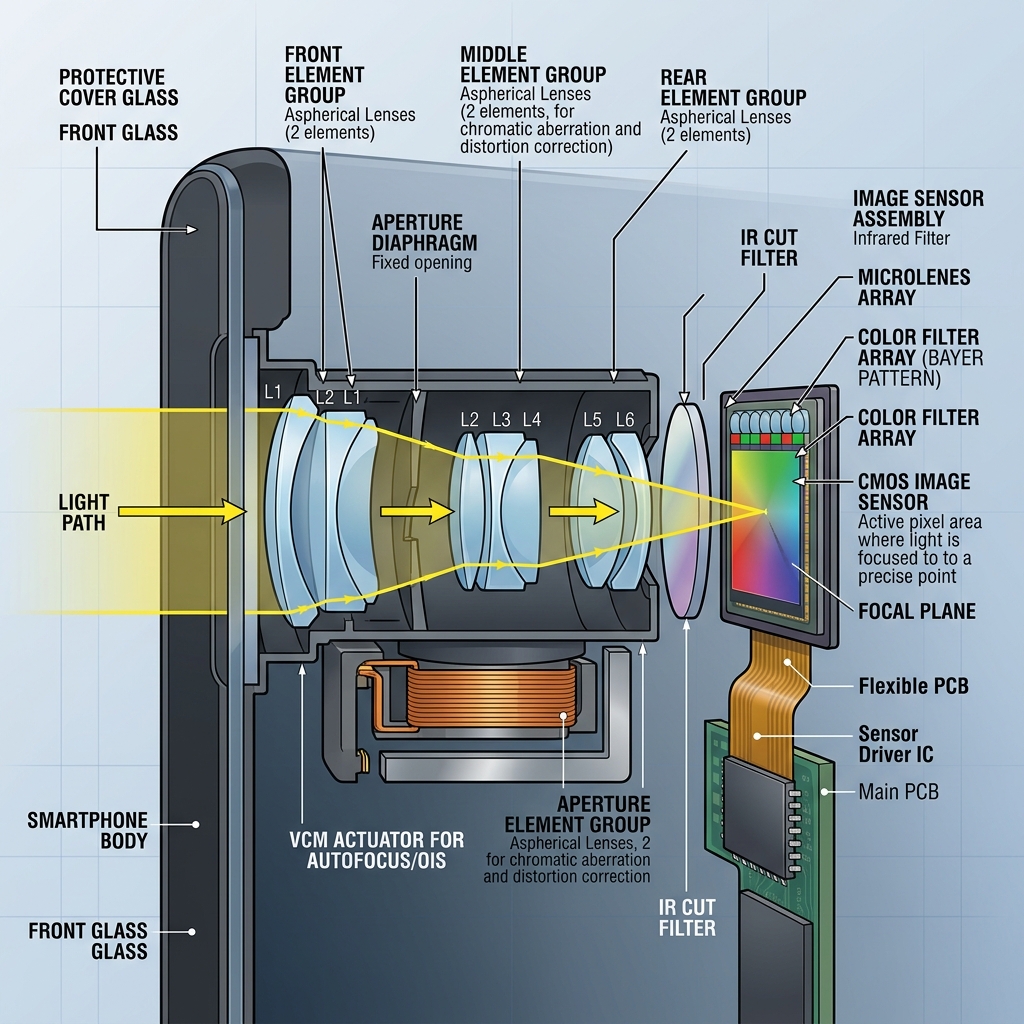
At the heart of the main camera is the image sensor, a semiconductor chip covered with millions of tiny light-sensitive photodiodes (pixels). When you take a photo, the lens focuses incoming light onto the sensor surface. Each photodiode converts the light hitting it into an electrical signal proportional to the brightness. These electrical signals are then processed by the Image Signal Processor (ISP) to create the final digital photograph. The main camera sensor is always physically larger than the sensors used by secondary cameras on the same phone.
The Lens System
The main camera lens consists of multiple glass or plastic optical elements stacked together to focus light accurately onto the sensor. Modern flagship main cameras use 7 to 9 lens elements arranged in a precise configuration to minimize optical distortion, chromatic aberration, and light falloff at the edges. The aperture, expressed as an f-number like f/1.5 or f/1.8, determines how much light the lens can collect. A lower f-number means a wider aperture that lets in more light, which is why the main camera always has the widest aperture of any camera on the phone.
Optical Image Stabilization (OIS)
Most main rear cameras in mid-range and flagship smartphones include OIS, a system that physically moves the lens or sensor to counteract hand shake during photo capture. OIS is essential for sharp handheld photos in low light conditions where longer exposure times are needed. It also smooths out video footage by compensating for natural hand movement. Budget phones may only have Electronic Image Stabilization (EIS) which uses software processing instead of physical movement.
Main Camera vs Other Rear Cameras
Modern smartphones include multiple cameras for different focal lengths and specialized functions. Understanding how the main camera compares to these secondary cameras helps you know when to use each one.
Main Camera vs Ultrawide Camera
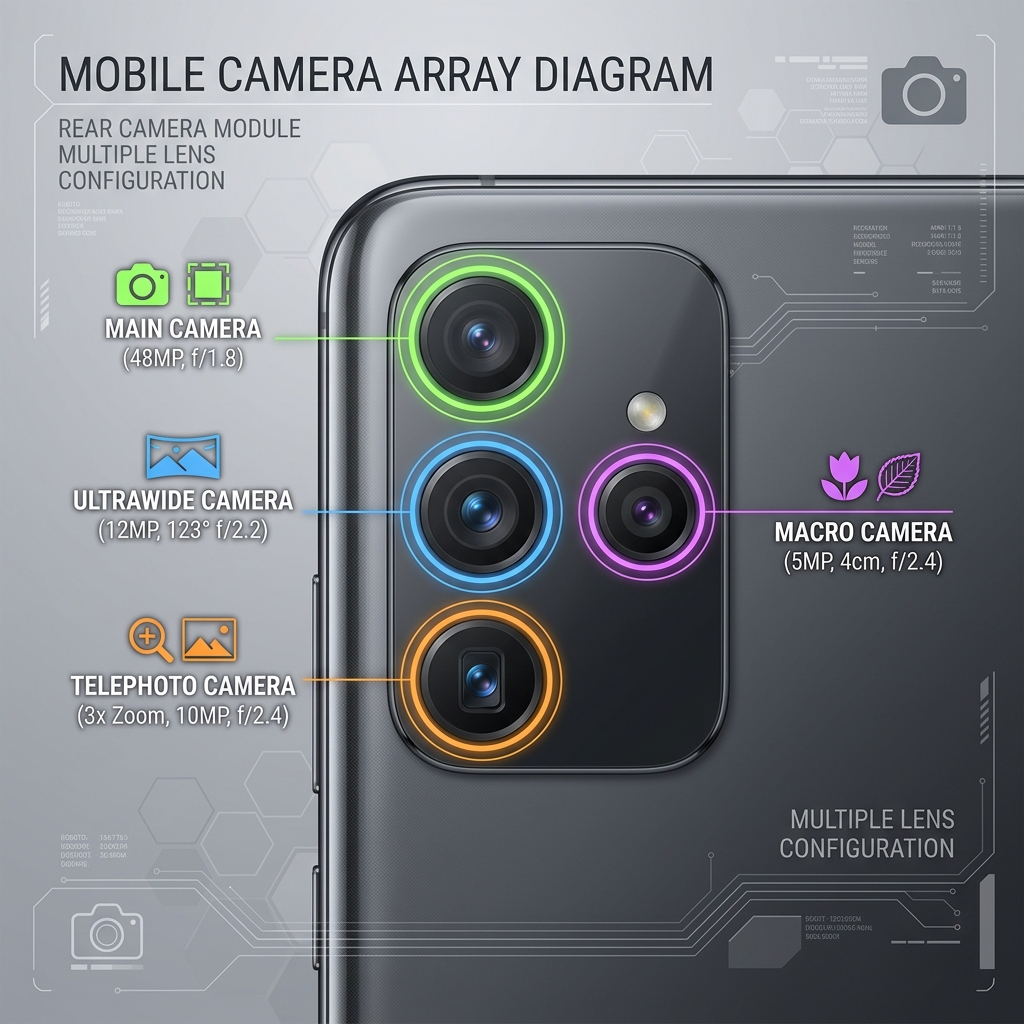
The ultrawide camera captures a much wider field of view (typically 120 degrees compared to the main camera 80 degrees), making it ideal for landscapes, architecture, and group photos in tight spaces. However, the ultrawide sensor is significantly smaller than the main camera sensor, resulting in lower image quality, more noise in low light, and more distortion at the edges of the frame. Always use the main camera when image quality is the priority and switch to ultrawide only when you need the wider perspective.
Main Camera vs Telephoto Camera
The telephoto camera provides optical zoom capability, typically offering 2x, 3x, 5x, or even 10x magnification. While telephoto cameras excel at capturing distant subjects with true optical quality, they use smaller sensors than the main camera and have narrower apertures that collect less light. In low-light conditions, the main camera with digital crop often produces better zoomed results than the dedicated telephoto camera, which is why many phones automatically switch to the main camera crop when zooming in dim environments.
Main Camera vs Macro Camera
Macro cameras are designed for extreme close-up photography of small subjects like flowers, insects, and textures. However, most smartphone macro cameras use very small 2MP or 5MP sensors with fixed focus, producing significantly lower quality images compared to the main camera. In many cases, you will get better macro results by shooting with the main camera at its minimum focus distance and cropping the image afterward, especially on phones with high megapixel main sensors.
Key Specifications to Look For
When evaluating the main rear camera of any smartphone, these specifications matter most for real-world photo quality.
Sensor Size
The physical size of the sensor is the single most important factor affecting image quality. Larger sensors collect more light and produce cleaner images with better dynamic range. Sensor size is usually expressed as a fraction like 1/1.3 inches or 1/1.56 inches. A 1/1.3-inch sensor is larger (and better) than a 1/1.56-inch sensor. Flagship phones in 2026 typically feature main camera sensors around 1/1.3 inches, while budget phones use smaller sensors around 1/2.0 inches.
Pixel Size
Pixel size, measured in micrometers (um), determines how much light each individual pixel can collect. Larger pixels produce cleaner images with less noise. When pixel binning is applied (combining multiple pixels into one), the effective pixel size increases dramatically. A 200MP sensor with 0.6um pixels can produce 12.5MP images with 2.4um effective pixel size through 16-in-1 binning, delivering excellent low-light performance.
Aperture
The aperture value (f-number) indicates the maximum width of the lens opening. Main cameras in flagship phones typically have apertures between f/1.5 and f/1.8. Some premium phones like the Samsung Galaxy S series feature variable aperture systems that can switch between f/1.5 (maximum light) and f/2.4 (sharper detail in bright conditions). A wider aperture also creates a shallower depth of field, producing natural background blur in close-up shots.

Why the Main Camera Produces the Best Photos
The main rear camera consistently outperforms all other cameras on the phone because it receives the most engineering investment from the manufacturer. It gets the largest sensor, the best lens, OIS hardware, and the most sophisticated computational photography algorithms. The ISP and AI processing pipeline are primarily optimized for the main camera sensor. Features like Night Mode, Portrait Mode, HDR processing, and multi-frame noise reduction perform best when using the main camera. This is why professional smartphone photographers use the main camera for the vast majority of their shots.
Conclusion
The main rear camera is the most important camera on your smartphone. It features the largest sensor, widest aperture, best optical stabilization, and most advanced image processing of any camera in the multi-camera system. While ultrawide, telephoto, and macro cameras serve specialized purposes, the main camera is your go-to for the highest quality photos and videos in every lighting condition. When comparing smartphones in 2026, paying close attention to the main camera sensor size, pixel size, and aperture will give you the best indication of real-world photo quality.